Last Updated: October 5, 2026
A patient with diabetes may have a care plan, regular check-ins, and medications that are being monitored. Yet preventive needs can still be missed between appointments; a screening may be overdue, a vaccination may need attention, or a follow-up may never make it onto the care team’s schedule.
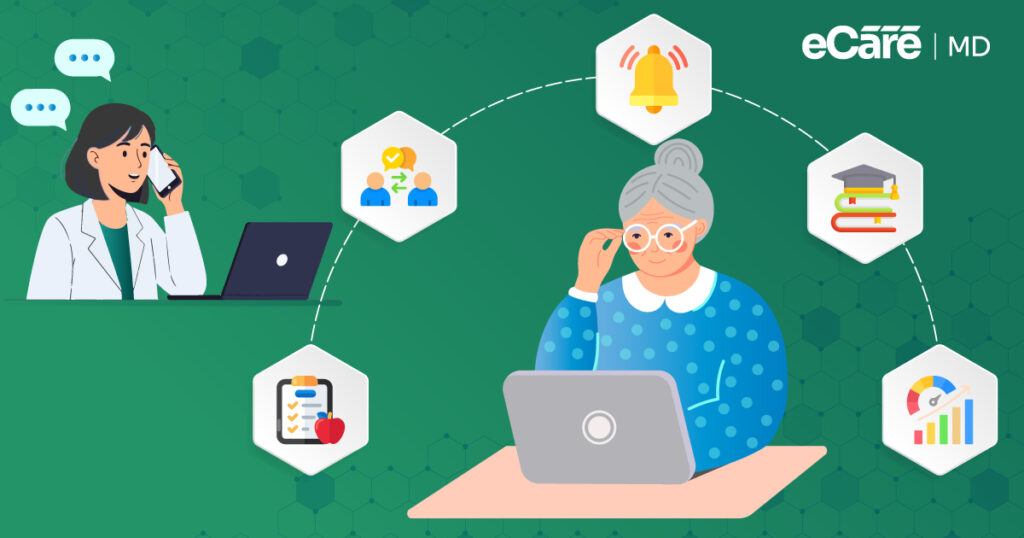
Chronic care management creates more opportunities to catch these needs before they become bigger concerns. This is where CCM preventive care becomes valuable. Through ongoing patient engagement, care coordination, and follow-up, CCM gives care teams a structured way to identify preventive needs alongside the day-to-day management of chronic conditions.
Instead of treating prevention as a separate task, teams can make it part of the ongoing care process. This approach also supports chronic disease prevention by helping teams address potential gaps early and keep patients connected to appropriate preventive health services.
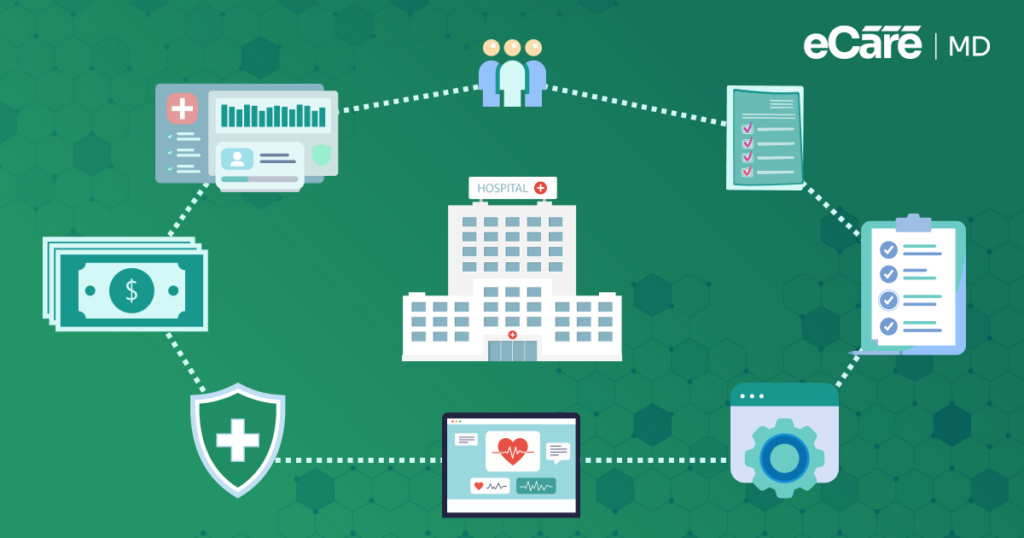
As these activities increase across a growing patient population, technology can help organize, track, and coordinate them more consistently. Practices looking to connect these workflows with existing records can also consider CCM software compatible with Epic EHR to support more connected preventive-care processes.
This guide explores how chronic care management and preventive care work together, practical preventive-care strategies, the role of technology, and how eCareMD can support these workflows.
What Is Preventive Care in Chronic Care Management?
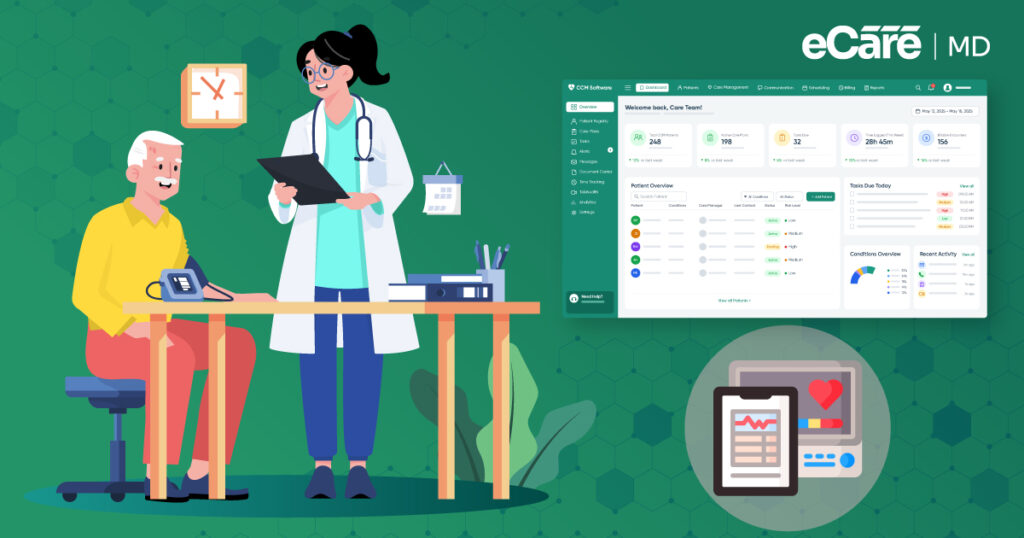
Managing a chronic condition is not only about treating symptoms. Patients also need regular screenings, preventive services, and support to reduce the risk of complications. This makes CCM preventive care an important part of ongoing chronic care.
Chronic care management and preventive care work together by helping teams identify preventive needs and support appropriate screenings, services, and healthy behaviors. The goal is not only to manage an existing condition but also to prevent it from getting worse and reduce avoidable complications.
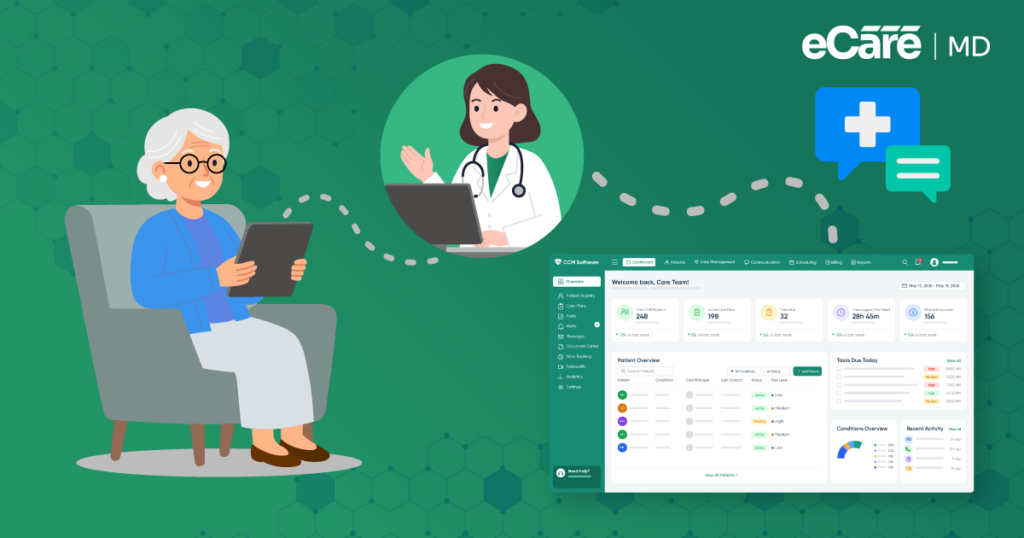
Regular CCM interactions give care teams more opportunities to spot missed preventive needs during routine follow-ups. A simple check-in may uncover an overdue screening or another gap that needs attention, allowing the team to coordinate the right follow-up instead of letting it slip through the cracks.
How Chronic Care Management Supports Preventive Care
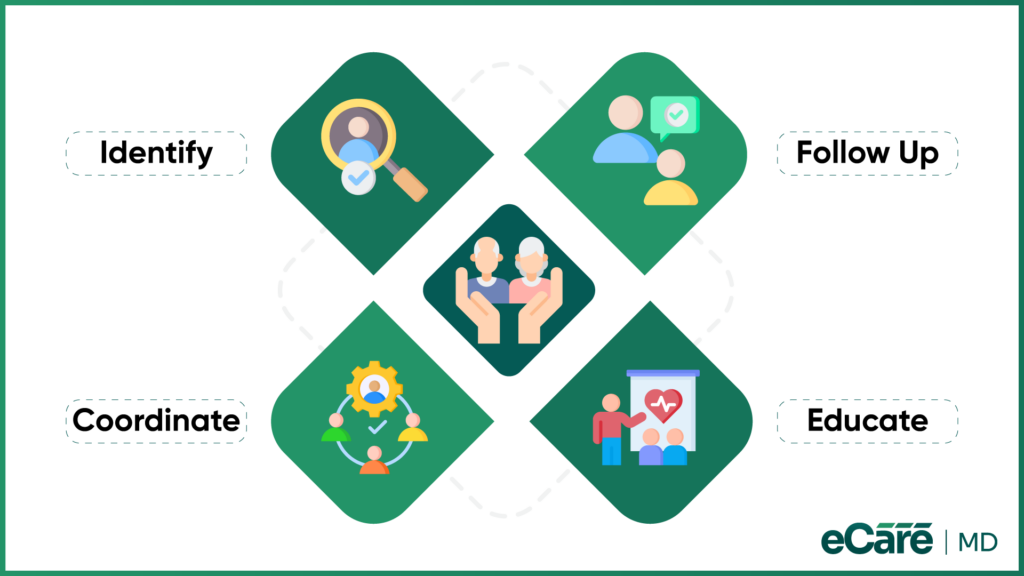
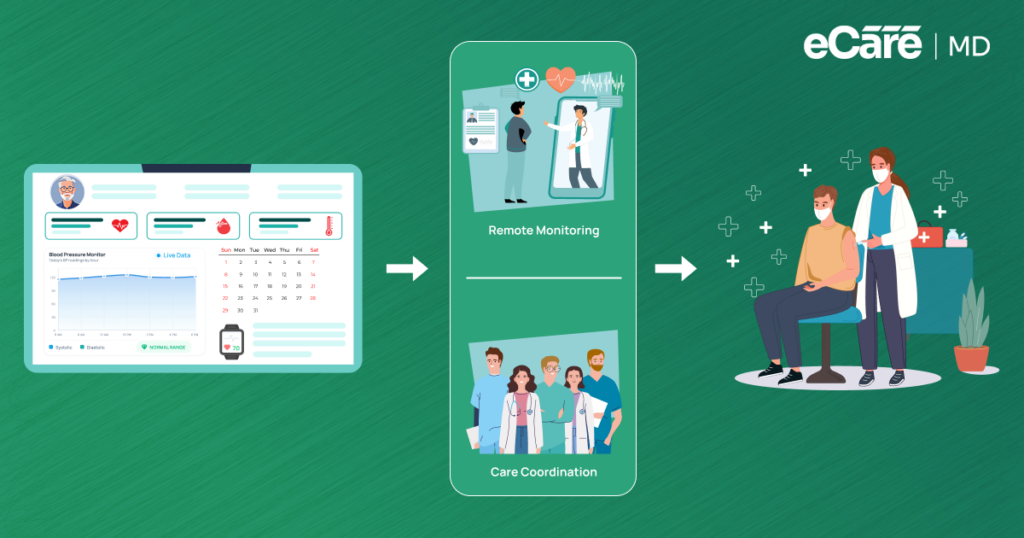
Preventive care works best when it stays part of the care routine rather than becoming a once-a-year task. This is one reason why chronic care management supports preventive care. Regular CCM interactions give care teams ongoing opportunities to notice gaps, coordinate services, and follow up with patients throughout the year.
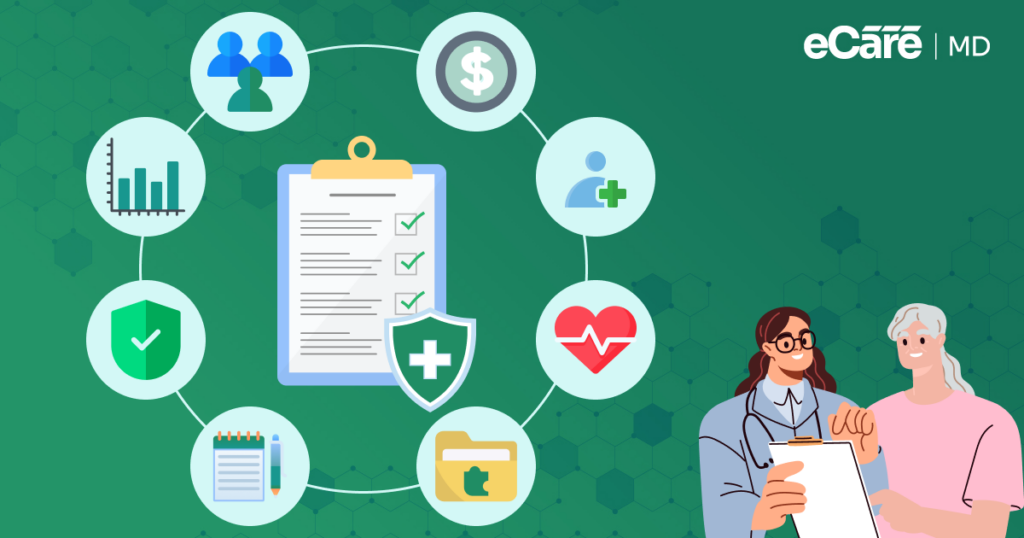
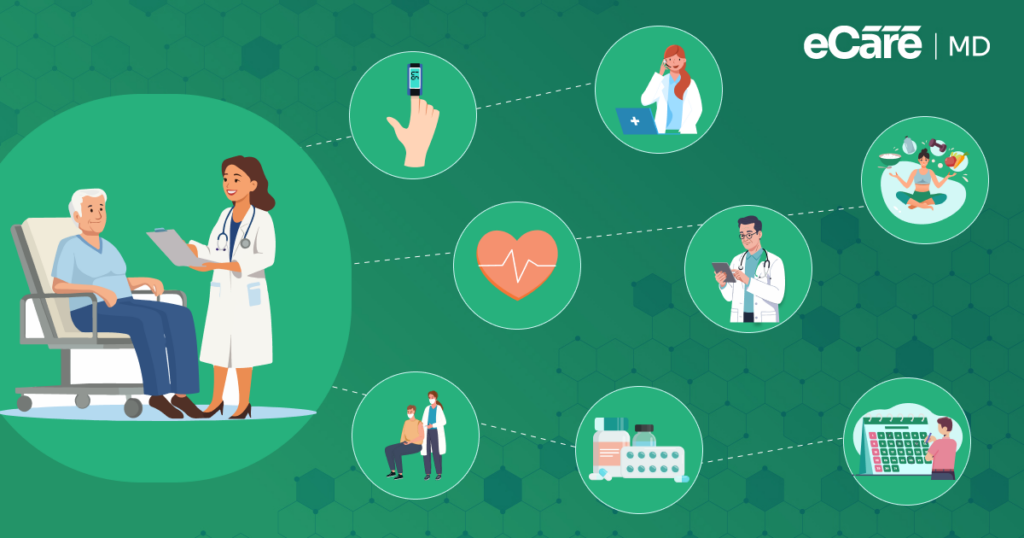
- Identifying Preventive-Care Needs: Care teams can review relevant patient information to recognize missed screenings, upcoming preventive needs, or other gaps that may require attention.
- Coordinating Preventive Services: When a need is identified, teams can help connect patients with the appropriate screenings, providers, follow-ups, or preventive services.
- Maintaining Regular Follow-Up: Recurring CCM interactions make it easier to revisit outstanding preventive needs and check whether recommended services have been completed.
- Supporting Healthy Behaviors: CCM interactions can also provide opportunities to reinforce appropriate health behaviors and preventive education based on the patient’s needs.
Together, these activities connect prevention with ongoing chronic-condition management. Instead of treating preventive care as a separate process, CCM helps make it a natural part of continuous patient care.
Preventive Care Strategies for Chronic Care Management
Effective preventive care strategies for chronic care management do not require a separate workflow for every preventive need. They can be built into the care team’s existing CCM process, making chronic disease prevention a regular part of ongoing care.
Prioritize Preventive Needs: Focus on preventive priorities based on each patient’s circumstances, condition, and care needs.
- Integrate Prevention Into Routine CCM Interactions: Include preventive-care discussions during regular check-ins instead of treating them as isolated activities.
- Track Preventive-Care Follow-Up: Keep visibility into recommended services, outstanding needs, and follow-up activities.
- Coordinate Across Providers: Support communication and continuity when patients receive care from multiple providers.
- Educate and Reinforce: Provide clear information about preventive health services for chronic conditions and relevant healthy behaviors.
- Reassess Over Time: Revisit preventive priorities as a patient’s health, needs, or circumstances change.
A Simple CCM Workflow in Practice
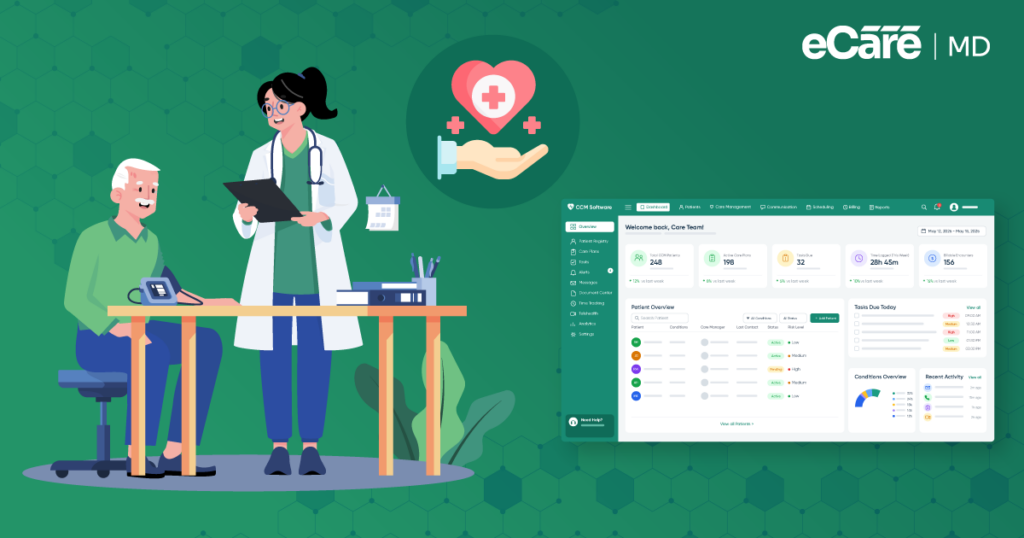
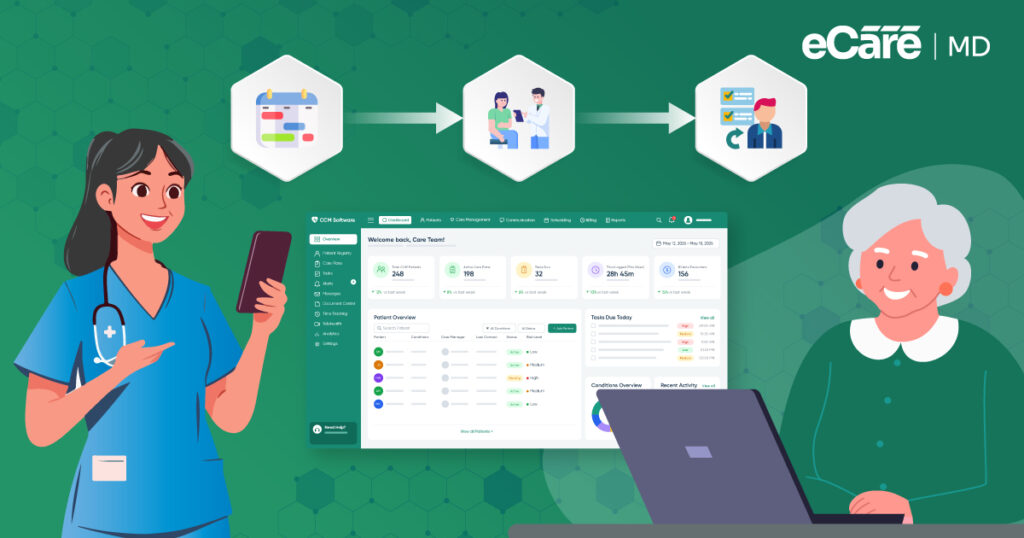
During a routine CCM check-in, a care coordinator may notice that a recommended preventive service is overdue. The team can identify the gap, coordinate the appropriate service, document the activity, and follow up to confirm that the need has been addressed.
Identify → Coordinate → Document → Follow Up
This simple cycle helps connect preventive care and chronic disease needs with the patient’s ongoing CCM plan.
How Technology Supports Preventive Care in CCM
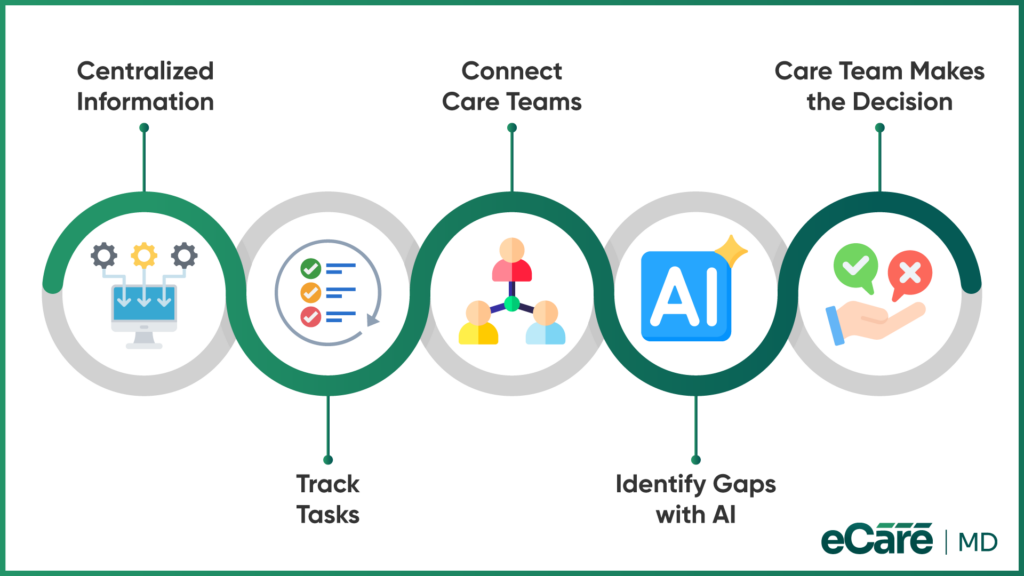
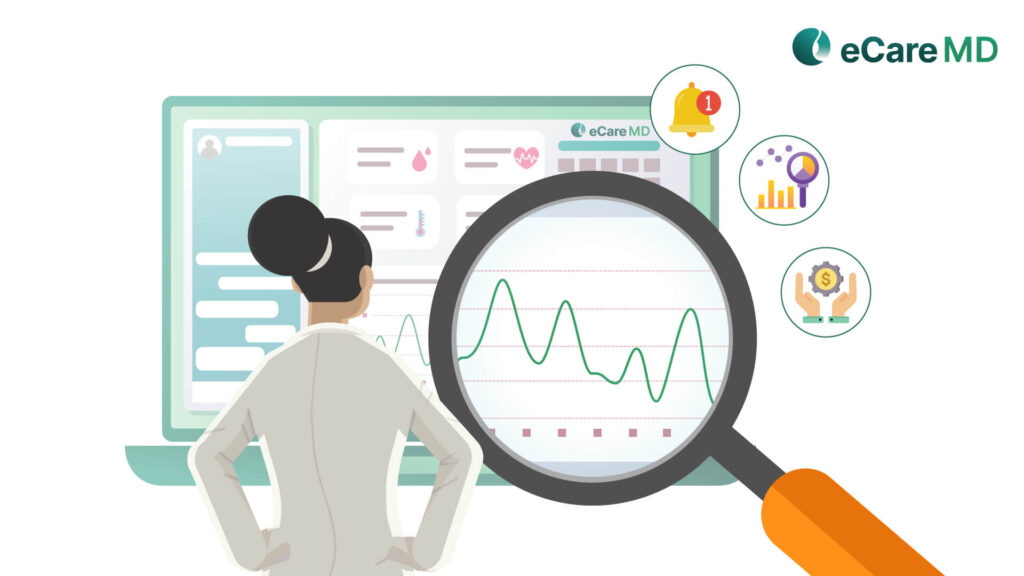
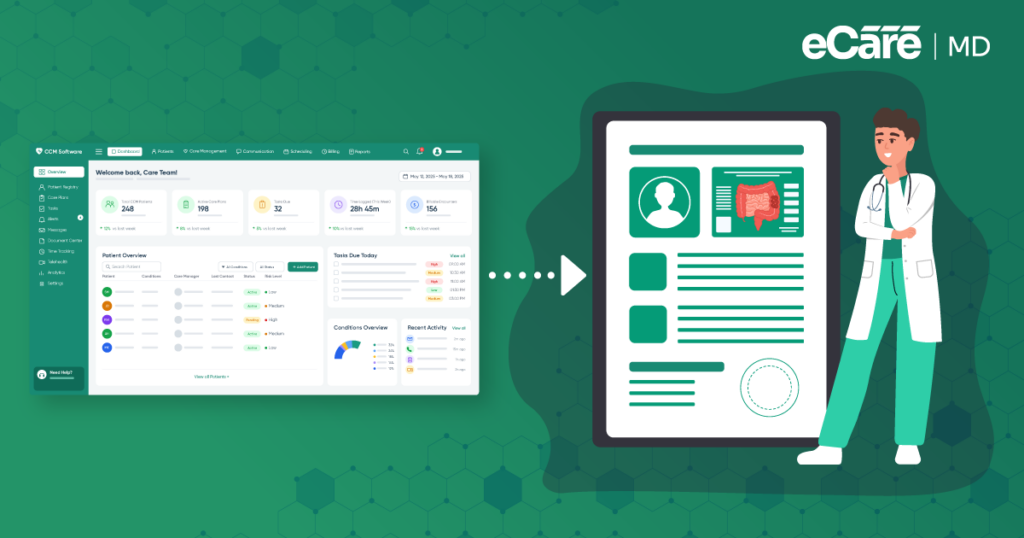
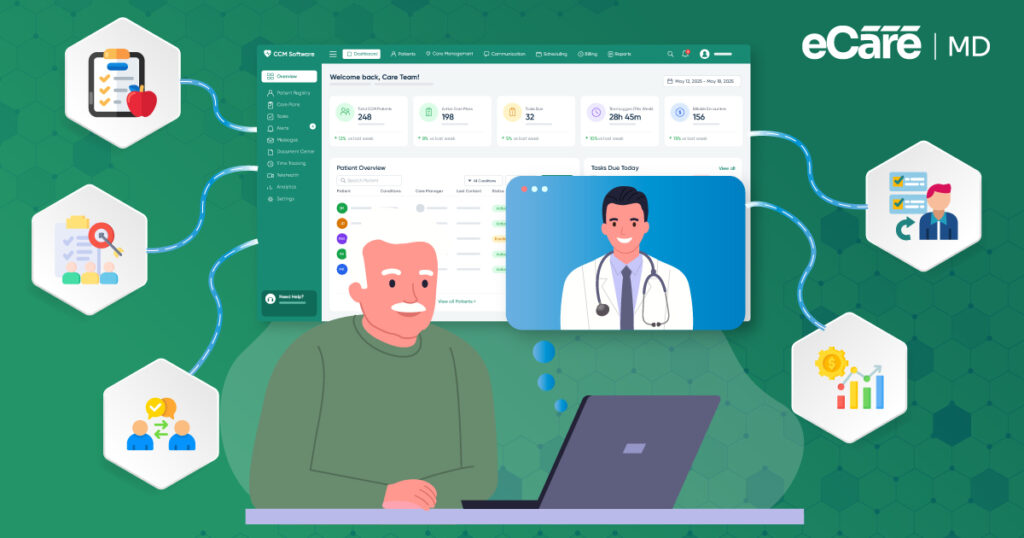
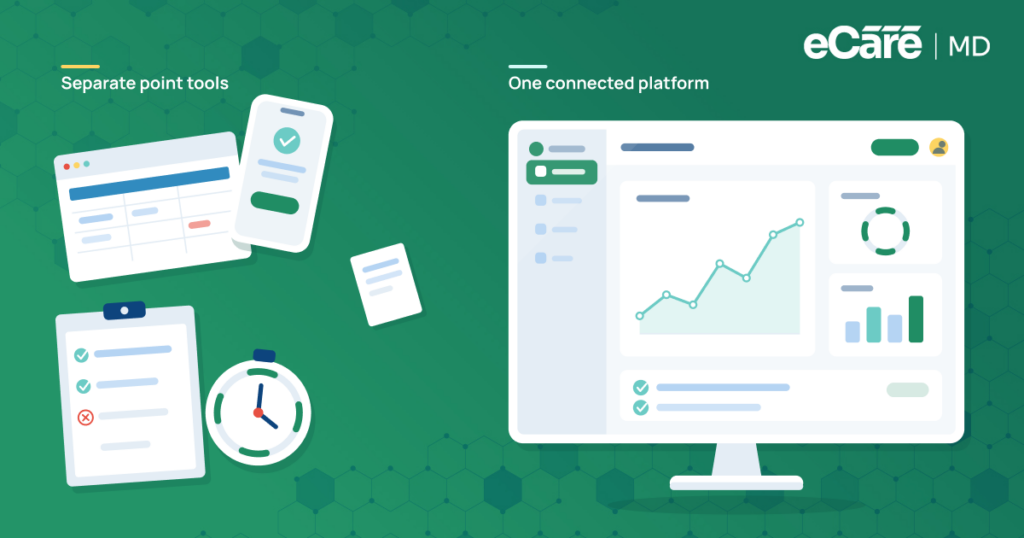
As preventive activities increase, keeping track of every need manually can become difficult. Technology helps care teams organize this work and maintain a clearer view of what needs attention.
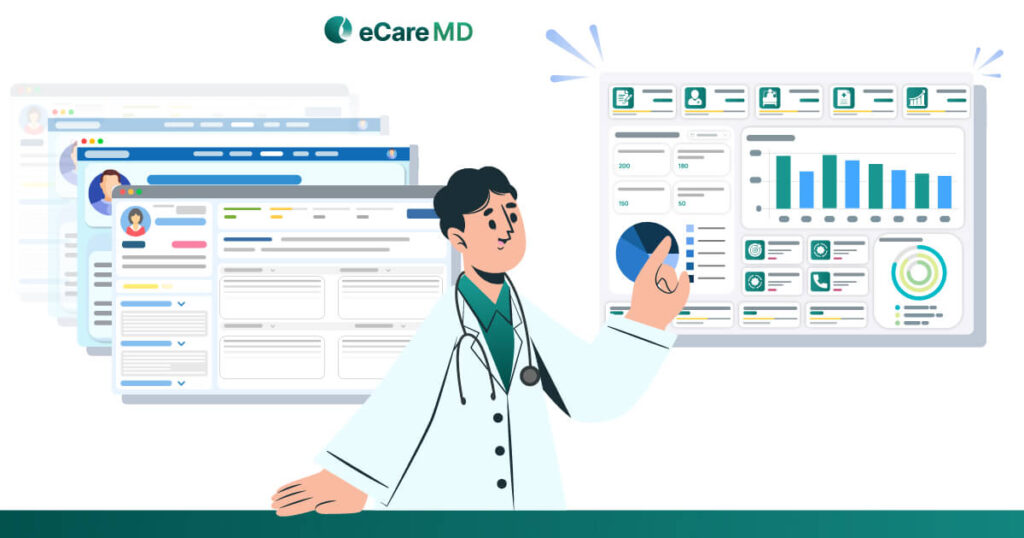
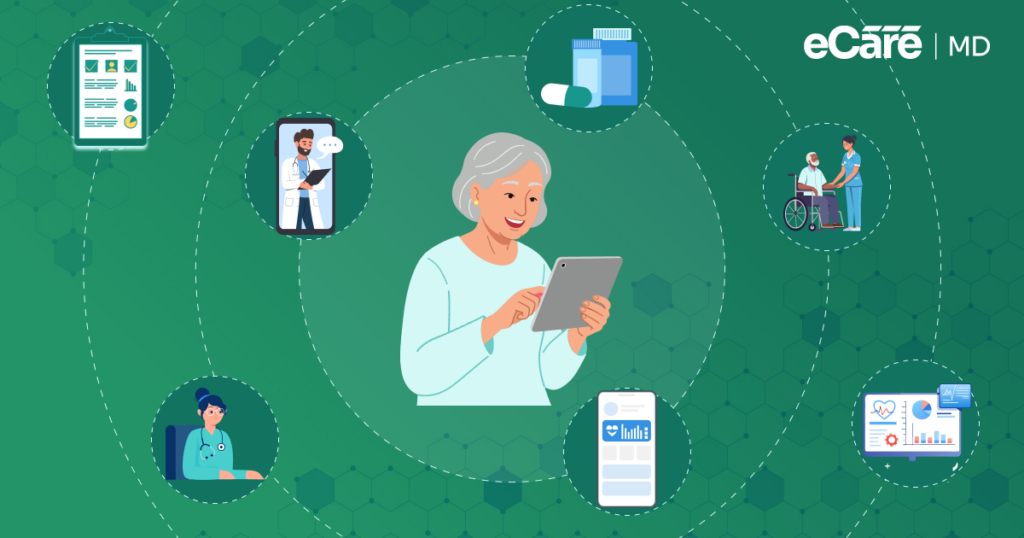
- Centralized Patient Information: A centralized view can give care teams easier access to relevant patient information and preventive-care needs.
- Task and Follow-Up Tracking: Digital workflows can organize reminders, outstanding activities, and follow-ups so important tasks are less likely to be missed.
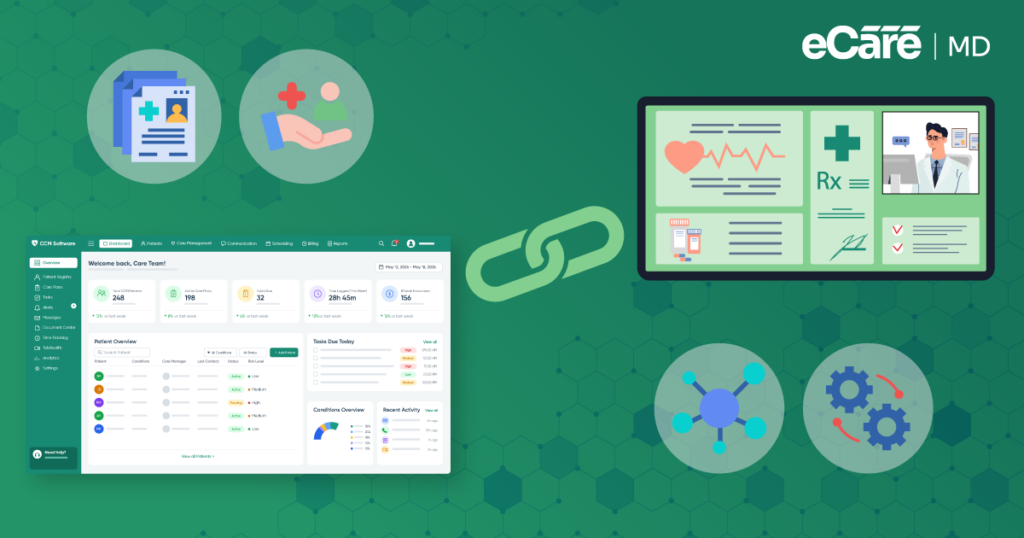
- Connected Care Workflows: EHR-compatible technology can help information move between systems and care-team members, supporting more connected preventive-care workflows.
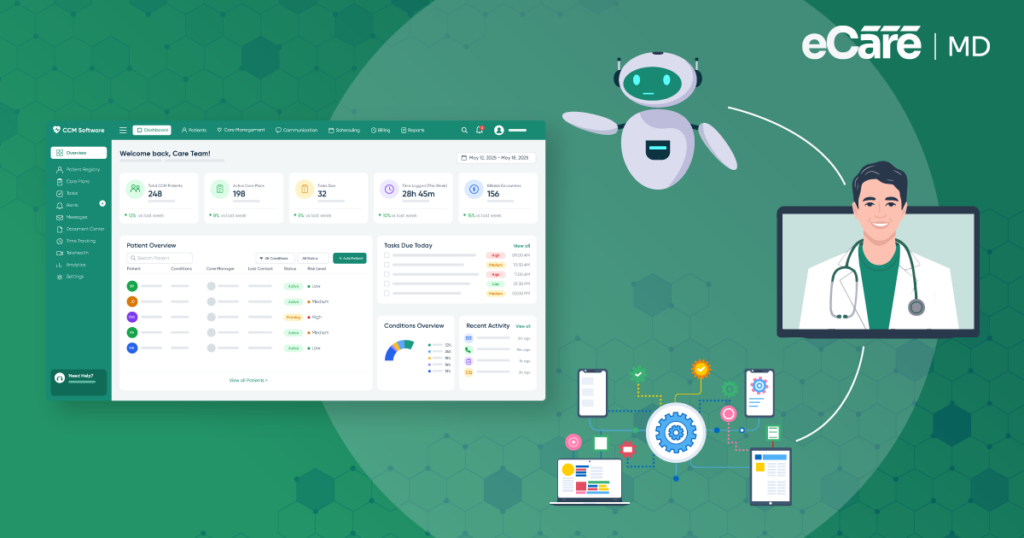
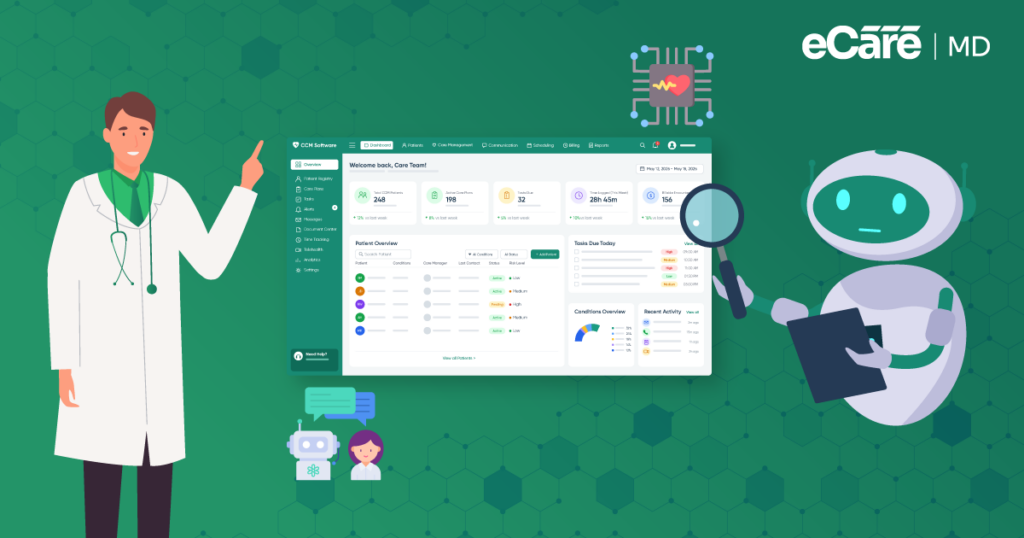
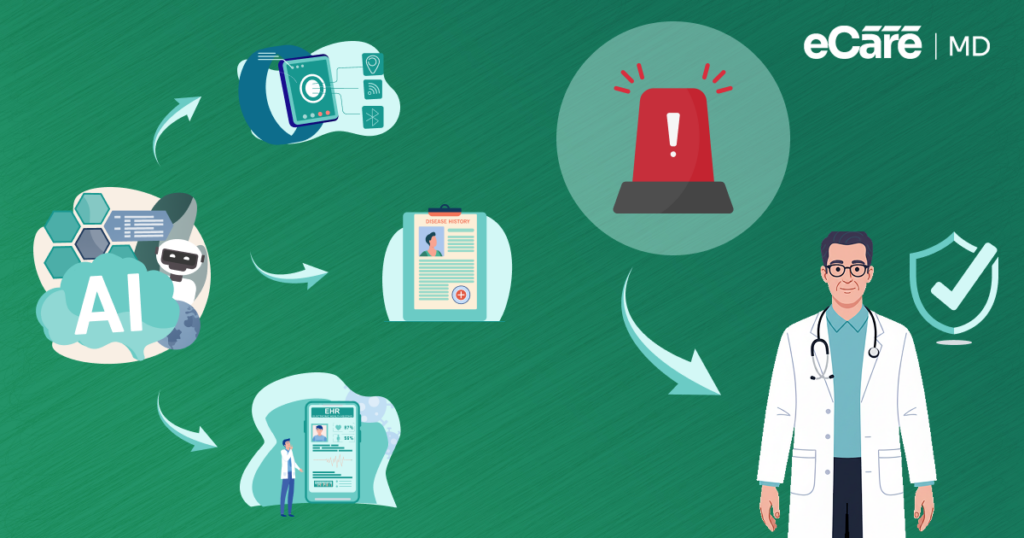
- AI-Assisted Identification: AI may help surface relevant information or potential preventive-care gaps within patient data. However, it should support—not replace—clinical judgment. For practices exploring these capabilities, AI chronic care management software can add another layer of support to preventive-care workflows.
The goal is simple: use technology to make preventive care more organized and consistent while keeping clinical decisions with the care team.
Effective preventive care strategies for chronic care management do not require a separate workflow for every preventive need. They can be built into the care team’s existing CCM process, making chronic disease prevention a regular part of care.
How eCareMD Supports Preventive Care in CCM
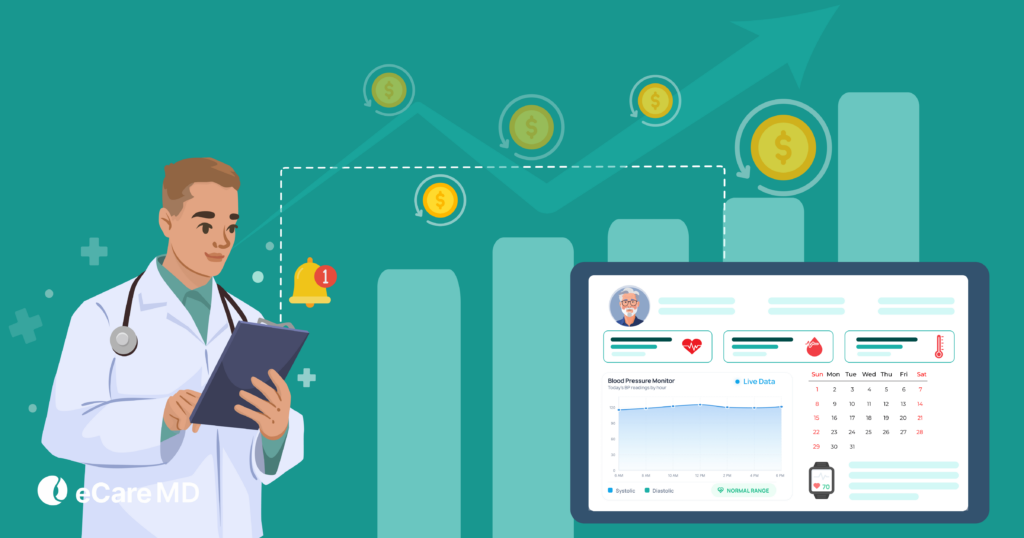
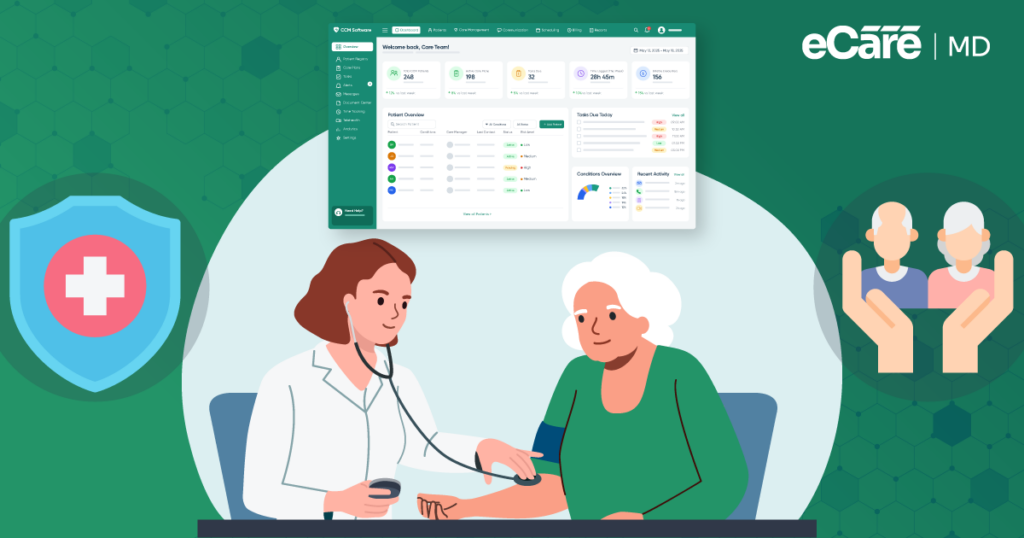
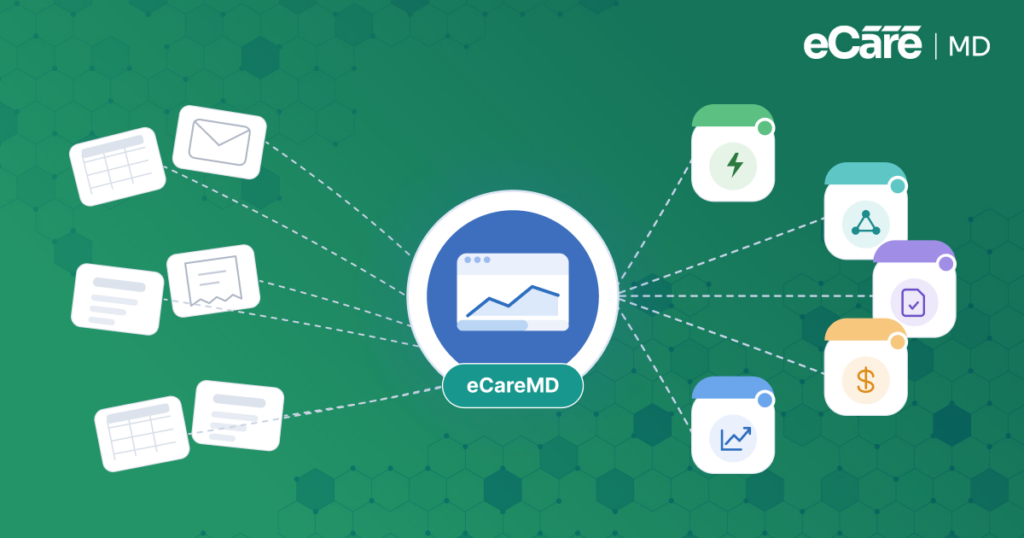
Once preventive care becomes part of ongoing CCM, teams need a consistent way to manage the work. eCareMD can help care teams maintain visibility into patient information and care activities, making it easier to keep preventive needs connected to the broader care plan.
The platform can also support recurring CCM activities and preventive-care follow-ups by helping teams organize tasks and outstanding activities. With better visibility across care activities, team members can coordinate responsibilities and maintain continuity as patients receive ongoing care.
Regular CCM interactions also create opportunities for preventive education and follow-up. eCareMD can support these ongoing interactions, while AI-assisted capabilities may help surface relevant information for the care team.
However, the platform does not independently determine preventive recommendations; clinical decisions remain with qualified healthcare professionals. Overall, eCareMD helps practices incorporate preventive care into their existing CCM workflows without treating it as a separate process.
Conclusion
CCM preventive care makes prevention part of ongoing chronic-care management rather than a separate, occasional task. By following a simple process—Identify Needs → Prioritize → Coordinate → Follow Up → Reassess—care teams can keep preventive needs connected to each patient’s ongoing care.
Consistent workflows and the right technology can make this process easier to organize across a growing patient population. For practices looking for CCM software for healthcare providers, eCareMD provides a structured platform to support patient information, care activities, follow-ups, and ongoing engagement within CCM workflows.
AI can also provide additional support by helping surface relevant information for care teams. However, clinical decisions remain with healthcare professionals. Practices exploring AI chronic care management software can use these capabilities to complement—not replace—their preventive-care workflows.
Frequently Asked Question’s
CCM software can be safe and secure when it uses appropriate safeguards for protecting patient information. Practices should evaluate security controls, access management, encryption, compliance practices, and certifications before choosing a platform. Staff training and proper security procedures are also important for protecting patient data.
CCM software costs vary based on factors such as features, number of users, patient volume, integrations, and pricing structure. Some vendors charge monthly subscription fees, while others offer customized pricing. Practices should compare the total cost with the workflows, support, and capabilities included in the platform.
Look for features that support patient management, care-plan tracking, task and follow-up management, documentation, care-team coordination, reporting, and EHR integration. A user-friendly interface and scalable workflows are also important, particularly for practices managing larger chronic-care populations.
Chronic care management software can support privacy and security through measures such as role-based access, encryption, secure authentication, audit controls, and appropriate data-management practices. Practices should also confirm that the vendor follows applicable healthcare privacy and security requirements and provides safeguards appropriate for protected health information.
Yes, many chronic care management platforms can integrate with existing EHR systems. Integration can help reduce duplicate data entry and provide care teams with more connected patient information. Practices should confirm which EHRs, interoperability standards, and integration methods a specific platform supports before implementation.
CCM software can support patients with various chronic conditions, including diabetes, hypertension, heart disease, COPD, and other long-term conditions. The software supports care-management workflows, documentation, communication, and follow-up, while healthcare professionals determine the appropriate care approach for each patient.
Providers can use CCM software to maintain regular communication, schedule follow-ups, track care-plan activities, and document patient interactions. Personalized outreach and clear education can also encourage engagement. Technology supports these activities, but sustained adherence depends on the patient’s needs, preferences, and relationship with the care team.

![The Future of Remote Patient Monitoring: CMS Innovations & Emerging Trends [2026]](/wp-content/uploads/2024/07/Blog-36-The-Future-of-Remote-Patient-Monitoring_-Trends-AI-Innovation-CMS-Updates-for-2026-1024x538.png)