Last Updated: August 26, 2026
Chronic care is becoming a larger part of the US healthcare landscape. The growing number of people living with long-term conditions is one reason practices are seeing more demand for ongoing care.
Almost 129 million people in the US have at least 1 major chronic disease. For many practices, this creates a rising need for ongoing care coordination and a real opportunity for building a sustainable CCM program. However, there is a catch.
Even though more CCM patients mean more reimbursement, it also brings more staff time, technology expenses, billing work, and day-to-day operating costs. So, even if your program looks profitable from its reimbursement numbers alone, it may paint a very different picture once those expenses are taken into account.
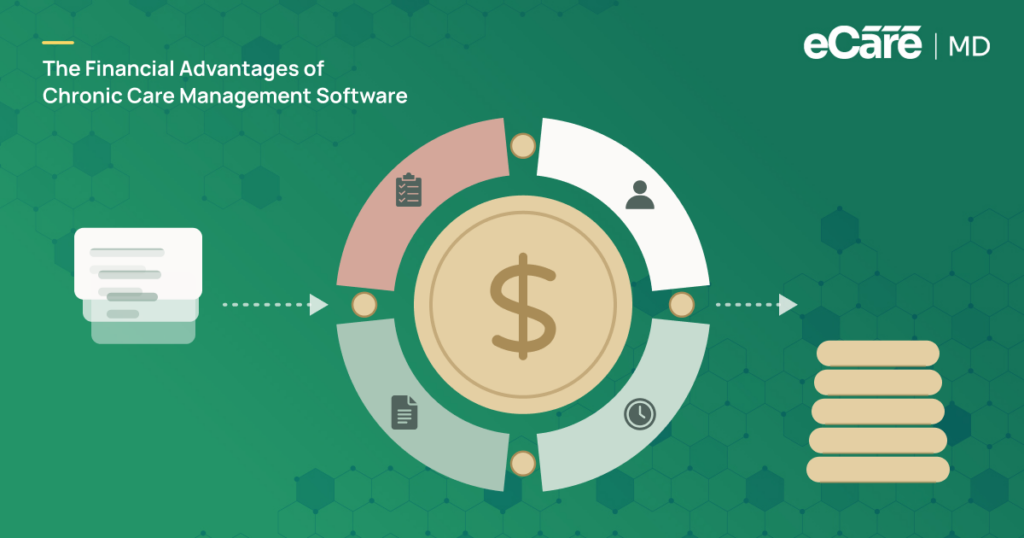
This is the key difference between CCM program return on investment and gross revenue. The real return actually relies on how many patients are enrolled, how the team is staffed, what technology your practice uses, and how much it spends for operating the program.
With the right AI chronic care management software, it becomes easier to reduce manual work while keeping all these costs under control. So, before your practice decides to scale CCM, one important thing to keep in mind is: What is it actually getting back from what it is putting in?
That’s exactly what this guide will help to answer by looking at chronic care management ROI, potential cost savings, financial benefits, and the key factors that determine whether a CCM program is truly worth the investment.
What Goes Into the ROI of a CCM Program?
There are always two sides to every story, and a CCM program is not exceptional. A CCM program also has two sides: what your practice puts into it and what it gets back. If you look at only one side, it can give you a misleading picture of how well the program is performing.
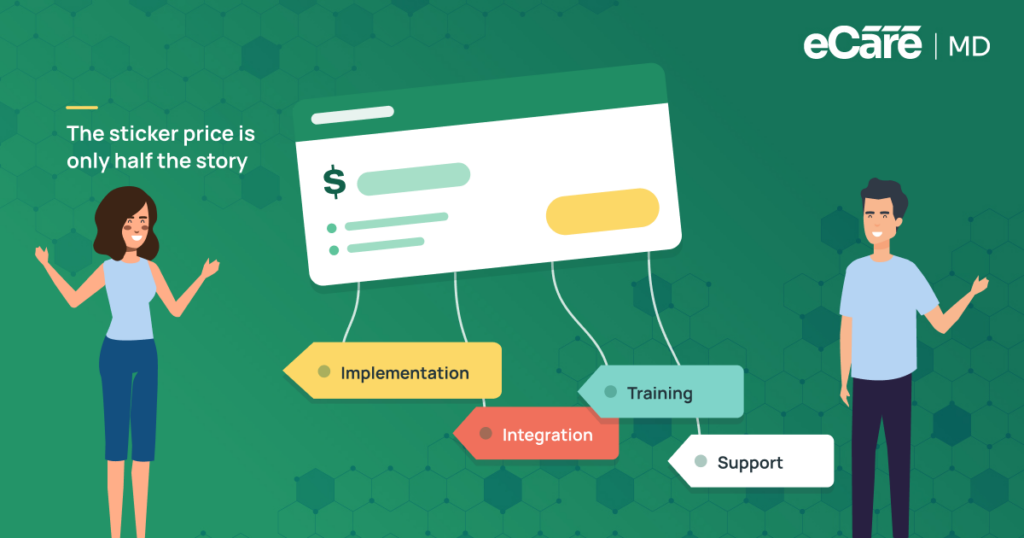
On the investment side, your practice may spend money on staff, technology, implementation, and ongoing operations. Your staff may handle patient outreach, care coordination, documentation, and billing.
On the other hand, technology may involve CCM software, integrations, devices, or other tools required for managing the program. All these together can lead to upfront implementation costs and ongoing expenses for training, support, and administration.
The flip side of the coin goes beyond monthly CCM reimbursement. Even though CCM revenue is a key part of it, so is the time and effort saved through more efficient workflows. For example, reducing manual data entry or simplifying care coordination helps your staff manage more patients without adding the same amount of labor.
All these efficiencies can translate into chronic care management cost savings over time. The core goal here is not just to simply see whether CCM brings in more money than it costs. Your practice should measure both sides together. When the revenue and savings consistently outweigh the resources required to run the program, CCM becomes easier to sustain and scale.
Simply put, ROI tells the story of what went into the program versus what came back out of it. The clearer both sides are, the easier it becomes to see whether the program is financially sustainable.
How Do You Calculate the ROI of a Chronic Care Management Program?
Calculating CCM ROI starts with a simple formula:
ROI (%) = (Program Gains − Program Costs) ÷ Program Costs × 100
Program gains include CCM revenue and measurable savings, while program costs include staffing, technology, implementation, billing, and other operating expenses. Comparing both gives a clearer picture of the program’s actual return.
Example CCM ROI Calculation
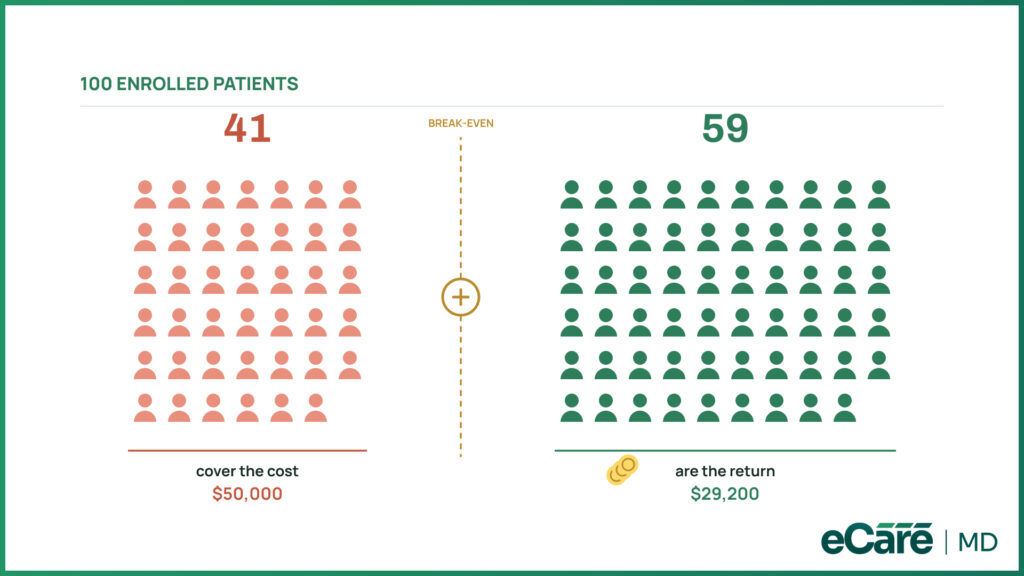
Consider a hypothetical practice with 100 CCM patients. For illustration, assume $66 in monthly reimbursement per patient for CPT 99490. The 2026 Medicare Physician Fee Schedule provides the basis for current reimbursement, but actual payment can vary by locality and payer.
| CCM ROI Component | Hypothetical Amount |
|---|---|
| Patients enrolled | 100 |
| Annual revenue per patient | $792 |
| Annual CCM revenue | $79,200 |
| Total annual program costs | $50,000 |
| Net return | $29,200 |
| ROI | 58.4% |
ROI = ($79,200 − $50,000) ÷ $50,000 × 100 = 58.4%
This example is hypothetical and does not guarantee a specific financial outcome. Actual ROI will depend on reimbursement, enrollment, staffing, technology, and operating costs.
Determine the CCM Break-Even Enrollment
Practices can also calculate how many patients they need to cover their CCM costs:
Break-even enrollment = Fixed Costs ÷ (Revenue per Patient − Variable Cost per Patient)
For example, if annual fixed costs are $20,000, annual revenue per patient is $792, and variable cost per patient is $300:
$20,000 ÷ ($792 − $300) = 40.7
So, the practice would need approximately 41 enrolled patients to reach break-even under these assumptions.
This gives practices a useful starting point: before scaling CCM, know how many patients you need to cover the cost of running it.
What Are the Main Revenue and Savings Opportunities in CCM?
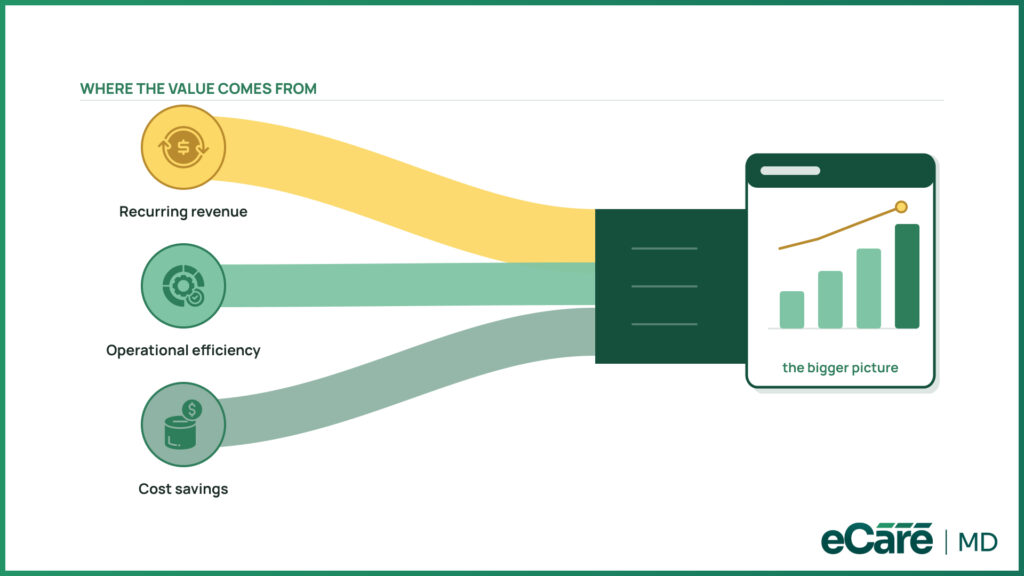
1. Recurring Revenue
When your patients meet the requirements and the services are properly documented and billed, eligible CCM services can provide recurring reimbursement. This can further create a steady revenue stream for your practice, as more eligible patients enroll.
However, reimbursement is only beginning. What your practice spends to earn that revenue matters too.
2. Operational Efficiency
Furthermore, CCM also has an efficiency side. With organized workflows, it becomes easier to reduce the time your staff spends on repetitive tasks, including patient outreach, documentation, follow-ups, and care-plan updates.
When your team gets more done with the same resources, the program can become more cost-effective as enrollment increases.
3. Potential Cost Savings
Proactive care can create another key opportunity for savings. Regular patient follow-ups and care coordination allow your team to spot changes in your patient’s condition earlier and address requirements before they become more serious.
Along with guaranteeing lower healthcare costs, this can also help to reduce avoidable visits, hospitalizations, and other unnecessary utilization.
All three of these areas together can explain how chronic care management improves financial outcomes. CCM brings in recurring revenue, efficient workflows can lower the resources needed to run the program, and proactive care may help reduce avoidable costs. That is where the bigger financial picture starts to come together.
How Can Practices Improve CCM ROI by Controlling Program Costs?
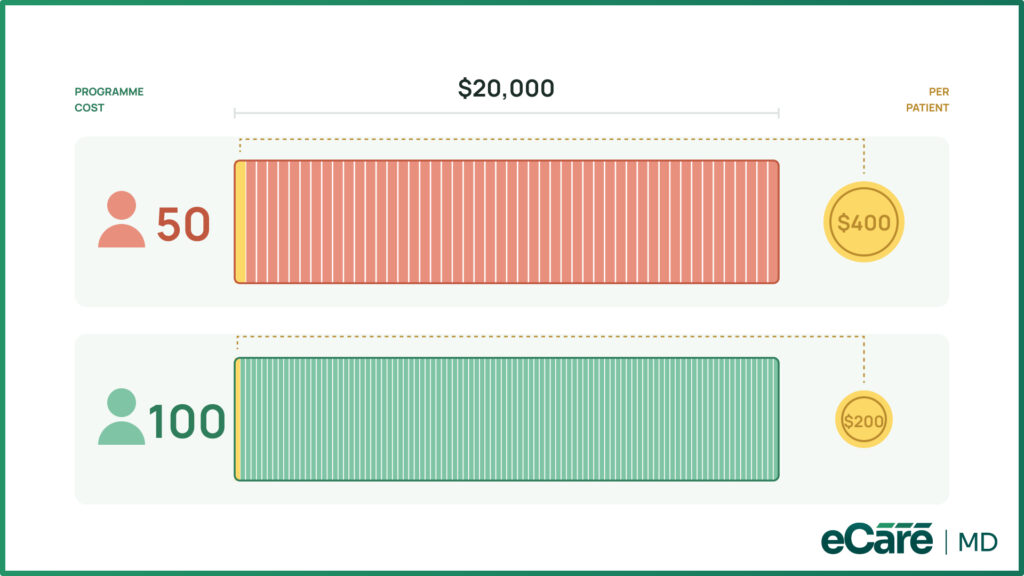
Increasing CCM revenue is only half the battle. If the cost of delivering care continues to rise with every new patient, the program may not become more profitable as it grows. Keeping those costs under control is equally important as improving chronic care management ROI.
Several costs can affect how much your practice spends on each enrolled patient. Staffing is crucial. The total time your staff spends on outreach, documentation, care coordination, and follow-ups can quickly add up. Along with this, technology, implementation, training, and administrative work can add to the cost as well.
That’s why your practice must look beyond the total CCM spending. Cost per enrolled patient gives you a clear picture of how efficiently the program is running. For example, if your practice spends $20,000 on CCM, that number means little without knowing whether it supports 50 patients or 100.
Keeping the cost per patient under control also helps to lower the number of patients needed to reach break-even. This can also improve the ROI of a CCM program, while giving your practice more room to scale.
The simple goal here is: know what CCM costs per patient, find where those costs are rising, and keep them manageable as enrollment grows.
How Can eCareMD Support a More Sustainable CCM ROI?
Once your practice understands where its CCM costs actually come from, the next key step is figuring out ways for managing them more effectively. This is exactly where the right technology can become part of the equation.
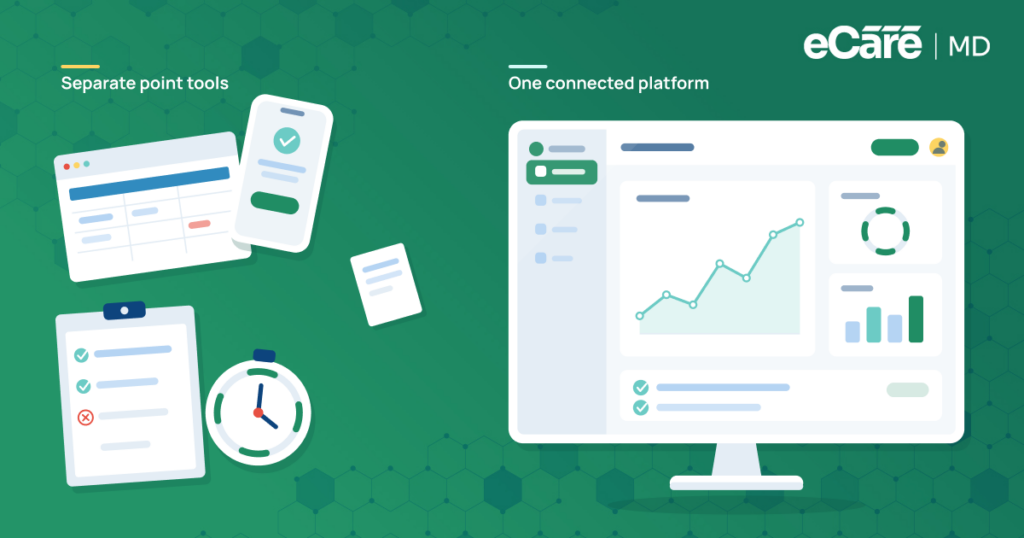
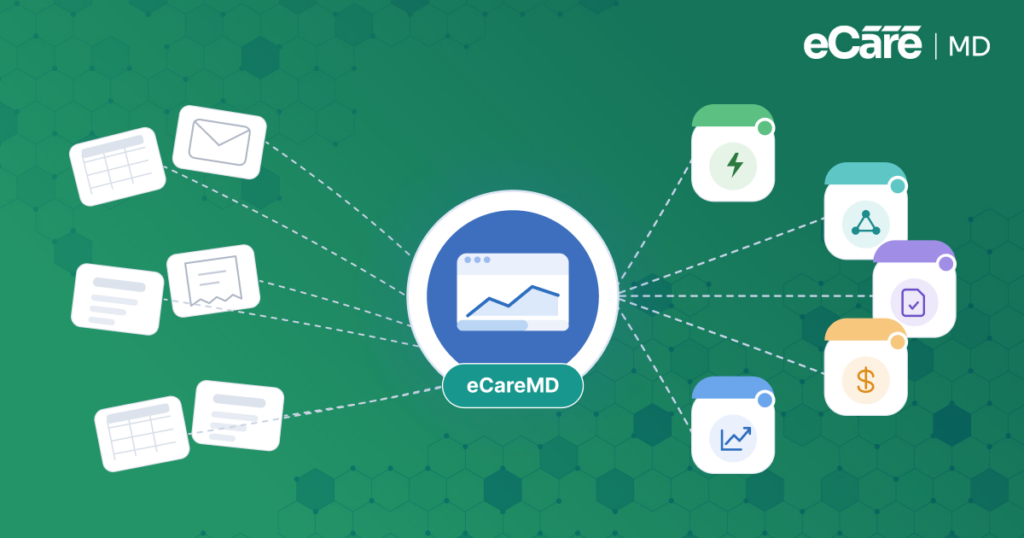
eCareMD, developed by Medarch Inc., brings all key CCM activities into a centralized workflow. Rather than depending on scattered tools and repetitive manual work, it becomes easy for your care team to manage tasks including patient communication, care plans, documentation, and follow-ups from one place.
Along with this, the platform also supports structured activities and time tracking, which further helps your team keep track of the work being completed for each patient. This makes daily CCM operations more continuous while giving your practice better visibility into how your staff time is being used.
As the CCM population grows, connected workflows can also help teams manage more patients without adding unnecessary administrative steps. For practices using a patient care management system, having these activities organized in one workflow can make it easier to keep care coordination on track.
eCareMD also brings AI chronic care management software capabilities into the workflow, helping practices reduce some of the repetitive work involved in managing a growing CCM program.
These improvements do not guarantee a specific financial return. However, reducing unnecessary administrative effort and making better use of staff time can help control the cost of delivering CCM. Over time, that can support chronic care management cost savings and contribute to a more sustainable CCM program return on investment.
Is a Chronic Care Management Program Worth the Investment?
The answer usually lies in the numbers behind the program, and not just the reimbursement it generates. Before scaling CCM, your practice must look at whether expected patient volume and revenue can comfortably cover the costs of delivering care.
Start With These Numbers
| What to Evaluate | Why It Matters |
|---|---|
| Patient volume | Shows the potential pool of eligible CCM patients. |
| Expected enrollment | Helps estimate realistic program revenue. |
| Staffing capacity | Determines how much the practice can manage without driving up labor costs. |
| Reimbursement potential | Estimates the revenue the program could generate. |
| Technology investment | Adds to the cost but may support more efficient workflows. |
| Operating expenses | Captures the ongoing cost of running CCM. |
Then compare the expected enrollment with the break-even enrollment calculated earlier. If the practice needs 50 patients to cover its costs but expects to enroll only 25, the numbers may not support the investment yet. If expected enrollment is well above the break-even point, the program may have a stronger path to a sustainable return.
This is also why chronic care management ROI looks different across practices. Staffing models, patient populations, technology costs, and operating expenses are rarely identical.
The bottom line is simple: CCM is worth the investment when the return continues to outweigh the cost of delivering the program. Gross revenue may look impressive, but the real measure of success is the sustainable net return left after those costs are covered.
Download the Ultimate Guide to Calculate ROI of CCM Program
Download NowConclusion
The ROI of a CCM program comes down to a simple balance: what a practice puts into the program versus what it gets back. Patient enrollment, CCM revenue, staffing, technology, operating costs, and efficiency all influence that equation.
Since every practice operates differently, there is no one-size-fits-all ROI. Using actual financial data and tracking cost per enrolled patient can show whether the program is covering its costs and generating a sustainable return.
And the value of CCM goes beyond the numbers. With the right workflows and a patient care management system, practices can support more coordinated care while building a program that makes financial sense.
The goal is not simply to generate more CCM revenue; it is to make every patient enrolled count toward a sustainable return.
Frequently Asked Question’s
Calculate CCM ROI by comparing the total financial gains from the program with its total operating costs. The formula is ROI (%) = (Program Gains − Program Costs) ÷ Program Costs × 100. Program gains may include CCM reimbursement and measurable savings, while costs can include staffing, technology, implementation, billing, and administrative expenses. Using actual numbers from the practice gives a more reliable result than using reimbursement estimates alone.
A CCM program can be worth the investment when its revenue and potential savings consistently exceed the cost of delivering the service. Practices should first consider their eligible patient population, expected enrollment, staffing capacity, technology costs, and operating expenses. Calculating the break-even enrollment can also show whether the practice is likely to have enough patients to support the program financially.
The main financial benefits include recurring CCM reimbursement, better use of staff time, and potential savings from more proactive care coordination. Structured workflows can reduce repetitive administrative work, while consistent patient follow-ups may help reduce avoidable utilization. The overall benefit depends on how well a practice controls the cost of delivering CCM as enrollment grows.
CCM can improve financial outcomes by creating recurring revenue while helping practices manage chronic care more efficiently. Organized workflows can reduce unnecessary administrative effort and make better use of staff resources. Proactive patient management may also help address care needs earlier, potentially reducing avoidable visits and other costly utilization. These factors can contribute to a stronger net return when managed effectively.
Practices should include every significant cost involved in delivering CCM. This can include staff salaries or allocated staff time, CCM technology, implementation and training, billing, administrative work, patient communication, and ongoing operational expenses. Looking at cost per enrolled patient is particularly useful because total spending can increase simply because enrollment is growing, while the cost per patient may actually be improving.
The break-even enrollment can be calculated using the formula: Break-even enrollment = Fixed Costs ÷ (Revenue per Patient − Variable Cost per Patient). For example, if annual fixed costs are $20,000, annual revenue per patient is $792, and the variable cost per patient is $300, the practice would need approximately 41 patients to cover those costs. This gives practices a practical enrollment target when planning or evaluating a CCM program.
eCareMD can help practices organize CCM activities through centralized workflows, activity tracking, time tracking, patient management, and care coordination tools. By reducing repetitive administrative steps, the platform can help teams use their time more efficiently as the CCM population grows. While technology alone cannot guarantee a specific ROI, better workflow management can support cost control and more sustainable CCM operations.
AI chronic care management software can help reduce repetitive work and support more efficient CCM workflows. By assisting with routine tasks, organizing information, and helping teams manage growing patient populations, AI-enabled tools may reduce the amount of manual effort required from staff. When those efficiency gains translate into lower operating costs or greater capacity, they can contribute to improved CCM ROI.
Yes. A small practice can generate a positive return if it has enough eligible patients, reaches a sustainable enrollment level, and keeps the cost of delivering CCM under control. The practice does not necessarily need a large patient population; it needs an enrollment level that supports its staffing, technology, and operating costs. Calculating the break-even point and tracking cost per patient can help determine whether the program makes financial sense for that practice.













![The Future of Remote Patient Monitoring: CMS Innovations & Emerging Trends [2026]](/wp-content/uploads/2024/07/Blog-36-The-Future-of-Remote-Patient-Monitoring_-Trends-AI-Innovation-CMS-Updates-for-2026-1024x538.png)