Last Updated: September 21, 2026
A nurse calls your CCM patient to review his care plan. The patient knows she needs to monitor his heart rate, take his medications, and watch for changes.
Everything looks good until the nurse asks what he would do if his reading suddenly increases. He hesitates.
Even though the instructions and the information were there, the real catch is knowing what to do with that information. And especially in chronic care, these small gaps can have a more significant impact than expected.
Patients managing chronic conditions make decisions every day and most of the time without a clinician beside them. They are required to understand their care plans, identify changes in their symptoms, follow treatment instructions, and know where to reach out for help.
This is where patient education in CCM becomes essential. When education is clear, practical, and supported by the best chronic care management software, care teams can keep important information connected to the patient’s ongoing care. Health literacy then helps patients understand that information and use it with greater confidence.
In this guide, we’ll walk you through practical patient education strategies for chronic care management, why health literacy in chronic disease management matters, and how to improve health literacy in chronic care so patients can become more confident participants in their ongoing care.
What Is Patient Education in CCM?
Now, your nurse calls the patient again after a few days. Rather than repeating the same instructions, she simply connects the conversation to your patient’s condition and care plan. Further, she clarifies what the heart rate numbers mean, what changes to keep an eye on, and when it is time to get in touch with the care team.
That’s what patient education looks like in a chronic care management program. As compared to a general health brochure or a one-time educational handout, CCM education is all connected to what a patient actually requires to manage their condition. It also gives patients all relevant information they can understand and use as part of their established care plan.
1. Condition-Specific Education
Your diabetes patient may require guidance on blood glucose monitoring, while your heart failure patient may need to understand daily weight changes. That’s where chronic disease patient education starts to become more meaningful, as the information is connected to your patient’s condition, treatment, and everyday care requirements.
2. Actionable and Ongoing Education
Good education is not just limited to explaining what something means. It means helping your patients to understand what to do next. However, it’s a fact that what they need to know today may not be what they need to know a month from now. Even a little change in symptoms, medication, or care plan can bring new questions and new learning requirements.
That’s why CCM education must evolve with the patient. Based on changes in the patient’s condition and care needs, the care team can revisit instructions, strengthen important information, and adjust guidance.
Why Health Literacy Matters in Chronic Care Management
During the next CCM call, the nurse notices something important. The patient can repeat the instructions she was given, but she is still unsure what her blood pressure readings mean. She also hesitates to mention that one of her medications has been making her feel different.
This is where health literacy matters.
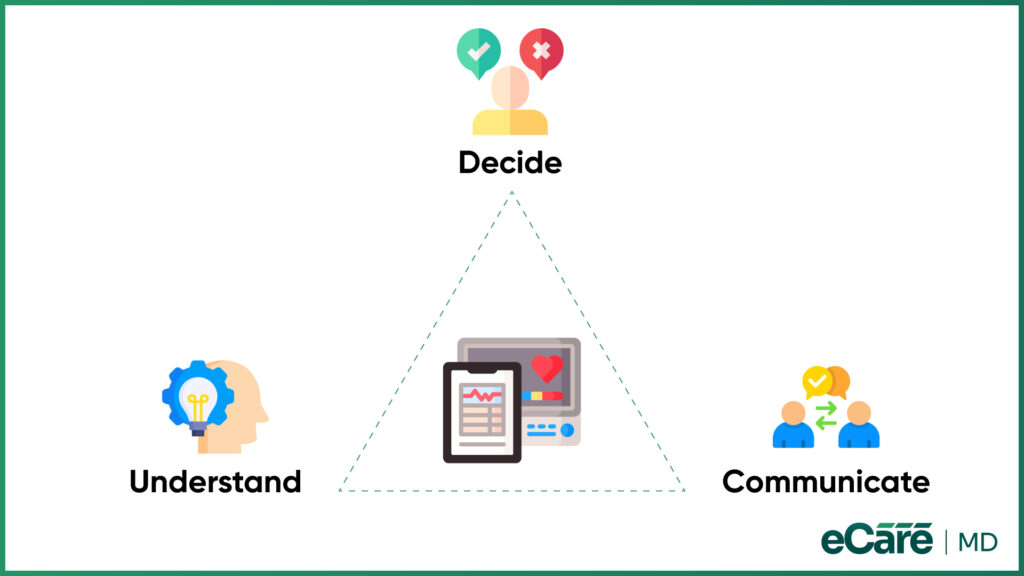
In chronic care, health literacy is not simply about being able to read health information. It is about understanding that information well enough to use it in everyday care. For patients managing ongoing conditions, that can mean interpreting their readings, understanding care instructions, and recognizing when something needs to be discussed with the care team.
1. Understanding Health Information
A patient may receive information about symptoms, medications, or treatment goals, but understanding what that information means in the context of their own condition is what makes it useful. Without that understanding, even a carefully designed care plan can be difficult to follow.
2. Communicating Understanding and Concerns
Health literacy also affects what happens during CCM conversations. When patients understand their care, they are better positioned to explain what they have understood, identify what is unclear, and raise concerns when something does not seem right. That gives the care team a clearer picture of where additional explanation may be needed.
3. Making Informed Health Decisions
Most importantly, understanding health information helps patients make appropriate decisions within their care plan. Whether it is following medication instructions, monitoring symptoms, or knowing when to seek guidance, better understanding can make everyday choices more informed.
That is why chronic care health literacy and health literacy in chronic disease management are so closely tied to effective CCM. Education provides the information; health literacy helps patients make sense of it and use it.
Patient Education Strategies for Chronic Care Management
By the next CCM conversation, the nurse changes her approach. Instead of giving the patient another list of medical instructions, she starts with what the patient needs to manage at home. The explanation is simpler, the information is broken into smaller steps, and the most important points are easy to revisit later.
These small changes can make patient education strategies for chronic care management more useful without adding another layer of complexity to the care process.
1. Use Clear and Understandable Language
Medical terms may be familiar to care teams, but they can make instructions harder for patients to follow. Using plain, familiar language helps patients understand what their care plan means and what they need to do.
2. Tailor Education to Patient Needs
The same explanation will not work equally well for every patient. Education should reflect the patient’s condition, existing knowledge, circumstances, and current care needs. The goal is to make the information relevant rather than simply making it available.
Tailoring education to individual needs can also help patients stay more involved in their ongoing care. For more practical approaches, see our guide to Patient Engagement Strategies with Chronic Care Management Software.
3. Break Complex Information Into Manageable Steps
Chronic care can involve medications, monitoring, lifestyle changes, and multiple treatment instructions. Presenting everything at once can leave patients with more information than they can use. Breaking complex guidance into smaller steps makes it easier to follow within the established care plan.
4. Reinforce Important Information Over Time
One conversation rarely covers everything a patient needs to know. During ongoing CCM interactions, care teams can revisit important information and adjust it as symptoms, treatments, or care needs change. A reminder that was useful last month may need to be explained differently today.
5. Use Accessible Educational Formats
Education does not always have to come through a conversation. Written instructions, digital resources, visuals, and other accessible formats can support different ways of learning. What matters is presenting the right information in a format the patient can understand and use.
Together, these approaches turn patient education from simply delivering information into making that information easier to understand, follow, and carry into everyday care.
How to Improve Health Literacy in Chronic Care
The nurse has changed how she explains the care plan, but there is still one thing she cannot assume: that the patient understood it.
So, before ending the conversation, she asks the patient to explain in her own words what she will do when her blood pressure reading is higher than usual. Her answer reveals a small misunderstanding. Instead of moving on, the nurse clarifies the instruction and checks again.
This simple step gets to the heart of how to improve health literacy in chronic care: do not assume understanding; make sure of it.
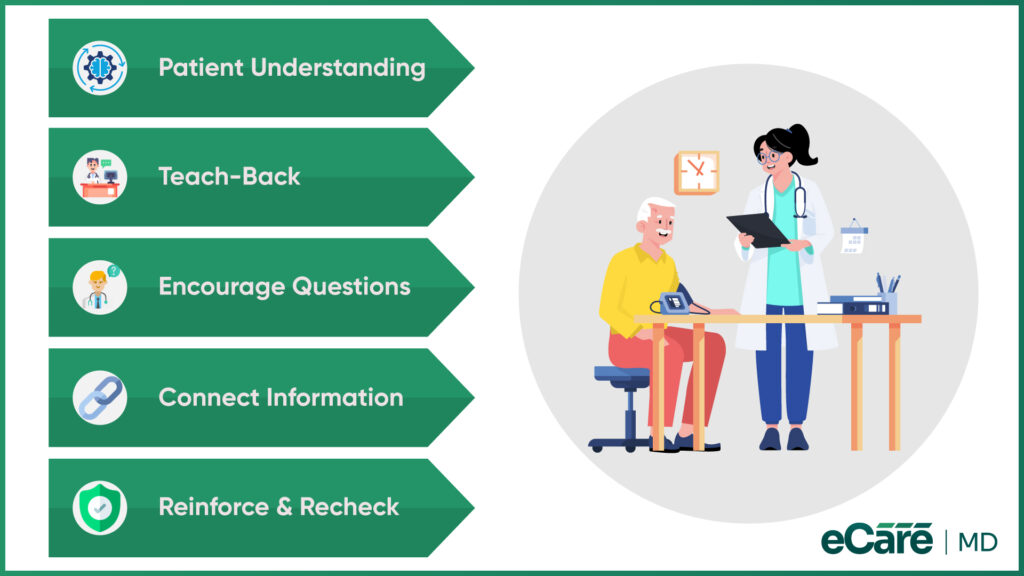
1. Assess Patient Understanding
Care teams can check whether patients understand important information rather than relying on a nod or a quick “yes.” This helps uncover gaps that may otherwise go unnoticed.
2. Use Teach-Back Techniques
Teach-back gives patients an opportunity to explain key information in their own words. If something is unclear, the care team can clarify it and check understanding again.
3. Encourage Questions and Clarification
Patients also need room to say when something does not make sense. A simple opportunity to ask for clarification can bring important gaps in understanding to light.
4. Connect Information With Patient Decisions
Understanding becomes more meaningful when patients can apply it to their care. Connecting health information with appropriate decisions within the established care plan helps patients use what they have learned in real situations.
5. Reinforce and Recheck Understanding
And the process does not end with one successful conversation. As care plans, symptoms, and treatment needs change, care teams can revisit important information and recheck understanding. In chronic care, keeping the conversation going can be just as important as getting it right the first time.
Strengthen Patient Education in CCM Keep education, care plans, and follow-ups connected.
How eCareMD Supports Patient Education and Health Literacy in CCM
The nurse now understands what the patient needs to know and how to make sure she understands it. But keeping that education consistent across every CCM interaction can be another challenge. This is where the best chronic care management software can help turn good education practices into a consistent part of the care workflow.
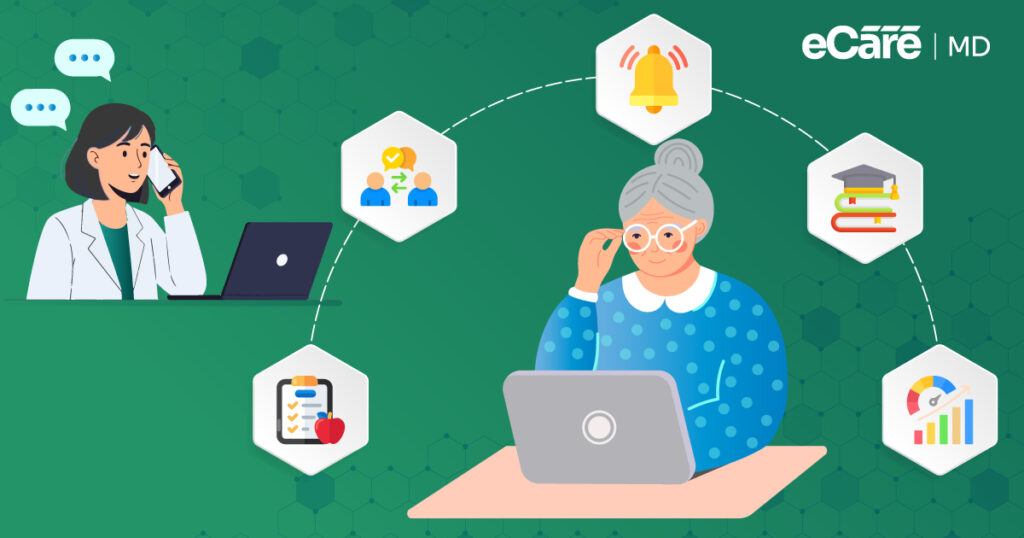
With eCareMD, care teams can provide relevant educational resources and share them with patients as part of their ongoing care. Instead of relying on a one-time handout that may be forgotten, educational information can remain connected to the patient’s care journey. This fits naturally within broader care management solutions, where education can become part of regular patient engagement rather than an isolated task.
The same approach can be tailored to individual needs. When a patient’s condition, treatment, or care goals differ, the education provided should not follow a one-size-fits-all approach. eCareMD supports condition-specific care plans and individualized goals and interventions, helping care teams keep educational support relevant to each patient.
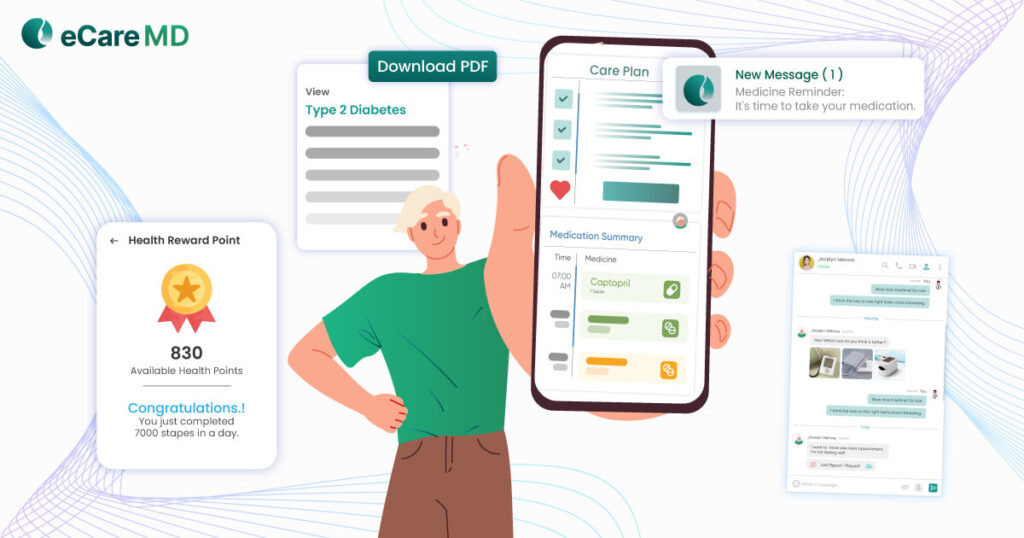
And the conversation does not have to end when the CCM call does. Through ongoing communication, reminders, and access to care-plan information, eCareMD can help teams reinforce important guidance and follow up as patient needs change. Care teams can also access relevant patient information within the workflow, giving them greater context when deciding what education or clarification a patient may need next.
In this way, technology does not replace the human side of patient education. It helps make sure the right information, context, and follow-up are there when the care team needs them, so patient education becomes part of ongoing CCM rather than a one-time conversation.
Conclusion
Effective patient education in CCM goes beyond handing patients information and hoping they understand it. It means providing clear, relevant, and accessible guidance that patients can use in their everyday care. As conditions, treatments, and care plans change, education needs to keep pace.
Health literacy is what helps patients turn that information into understanding and action. When patients can make sense of their care, recognize concerns, and make appropriate decisions within their care plan, they become more confident participants in chronic care.
Technology can help care teams keep this process consistent by connecting patient education, information, communication, and follow-up. With the right care management solutions, education becomes less of a one-time task and more of an ongoing part of meaningful CCM.
Frequently Asked Question’s
Patient education in CCM helps patients understand their chronic conditions, care plans, medications, and daily responsibilities. Unlike one-time health information, it is ongoing and tailored to the patient’s condition and needs, helping them understand what to do, recognize changes, and participate appropriately in their care.
Health literacy helps patients understand and use health information throughout ongoing care. In CCM, it supports their ability to follow care instructions, recognize important symptoms, ask for clarification, and make appropriate decisions within their care plans. Without sufficient understanding, even well-designed education may not translate into action.
Effective strategies include using clear language, tailoring education to patient needs, breaking complex information into manageable steps, reinforcing important guidance over time, and using accessible formats. These approaches make health information easier to understand and apply while keeping education relevant as patients’ conditions and care plans evolve.
CCM programs can improve health literacy by checking patient understanding, using teach-back techniques, encouraging questions, and connecting health information with appropriate care decisions. Care teams should also reinforce important information and revisit understanding during ongoing interactions, particularly when a patient’s condition, treatment, or care plan changes.
Care teams can simplify complex health information by using plain language, avoiding unnecessary medical terminology, and breaking information into smaller steps. Connecting instructions to the patient’s condition and daily routine can also make information more meaningful, easier to remember, and more practical to use.
Technology can help care teams provide relevant educational resources, organize patient information, support ongoing communication, and reinforce guidance throughout CCM. By keeping education connected to care plans and patient information, technology can help teams deliver more consistent and timely educational support as patient needs change.
eCareMD supports patient education by helping care teams connect educational resources with patient information and ongoing care workflows. Condition-specific care plans, patient communication, reminders, and centralized information can help teams provide relevant guidance and reinforce education throughout the CCM journey rather than relying on one-time materials.
Practices can evaluate understanding by asking patients to explain important instructions in their own words, using teach-back techniques, and identifying areas where clarification is needed. Care teams can then revisit those areas during future CCM interactions to confirm understanding and adjust education as patient needs change.



![The Future of Remote Patient Monitoring: CMS Innovations & Emerging Trends [2026]](/wp-content/uploads/2024/07/Blog-36-The-Future-of-Remote-Patient-Monitoring_-Trends-AI-Innovation-CMS-Updates-for-2026-1024x538.png)