Last Updated: September 24, 2026
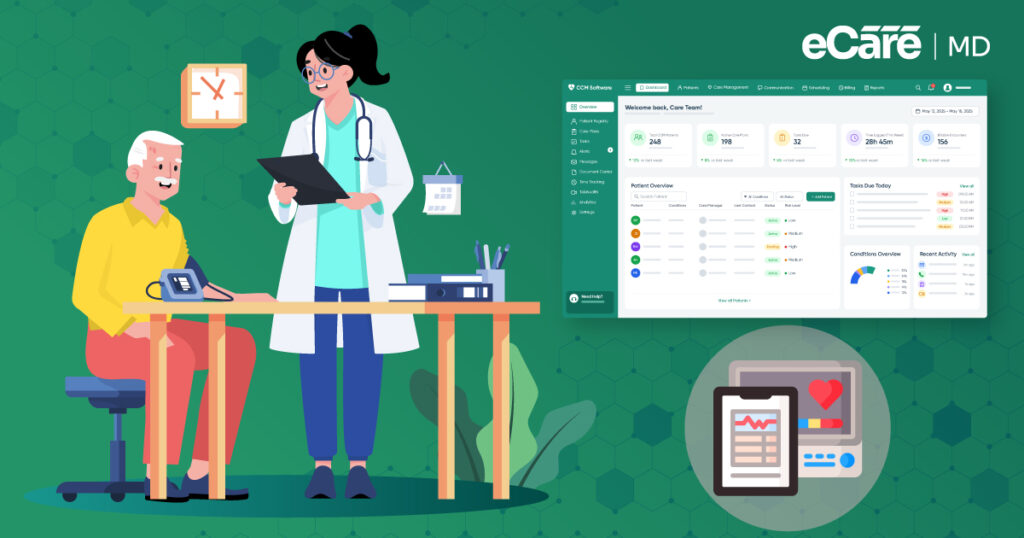
Almost 6 in 10 American adults, and 4 in 10 live with more than one of these conditions. As these numbers continue to increase, it becomes difficult for your care team to manage patients, keep up with their follow-ups, medication changes, symptoms, and new health readings.
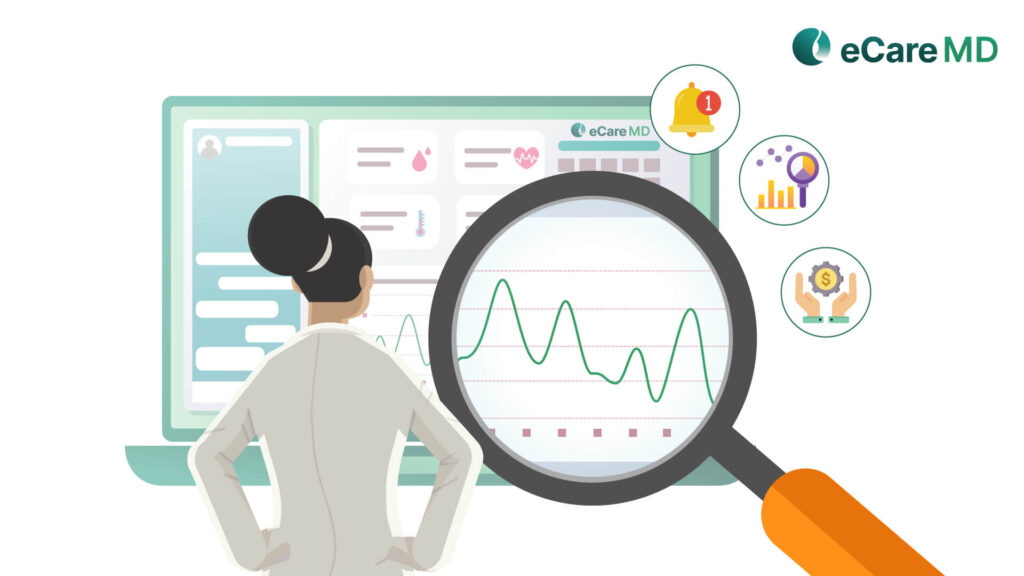
Imagine a care coordinator starts their Monday morning with a long patient list. One patient requires a follow-up after a recent hospital visit, while another has blood pressure readings that are slowly trending upward. By the time the care team finishes analyzing the information, much of their day is already gone.
Before, this kind of work has depended entirely on scheduled touchpoints, manual follow-ups, and information gathered at various points in your patient’s care journey. But this approach becomes harder to sustain, as chronic disease patients grow.
Care teams need smarter ways to stay connected to patients in between visits, make sense of growing streams of health data, and act before any small changes become bigger problems. This shift is reshaping the future of chronic care management. But how?
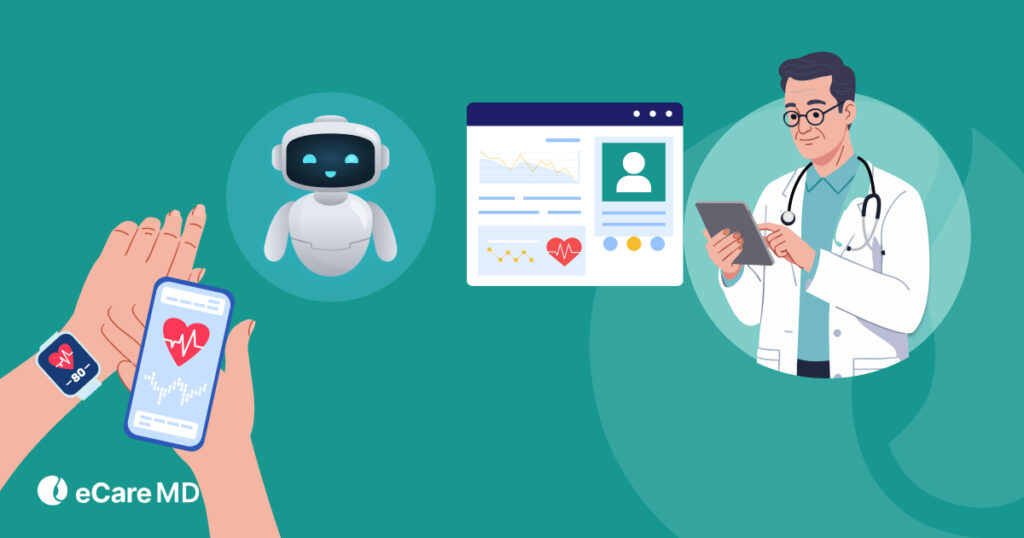
Let’s dive into the blog to explore the chronic care management trends and emerging technologies in chronic care management that are moving CCM toward more continuous, connected, and efficient care, and what practices can do to prepare with the right care management solution.
Driving Forces Behind Future Technology in Chronic Disease Management
Your care teams are expected to do more without adding any extra workload to their already limited time and resources, as chronic disease populations grow. Thus, scaling CCM needs technology that can support more patients without adding the burden of manual follow-ups, documentation, and coordination.
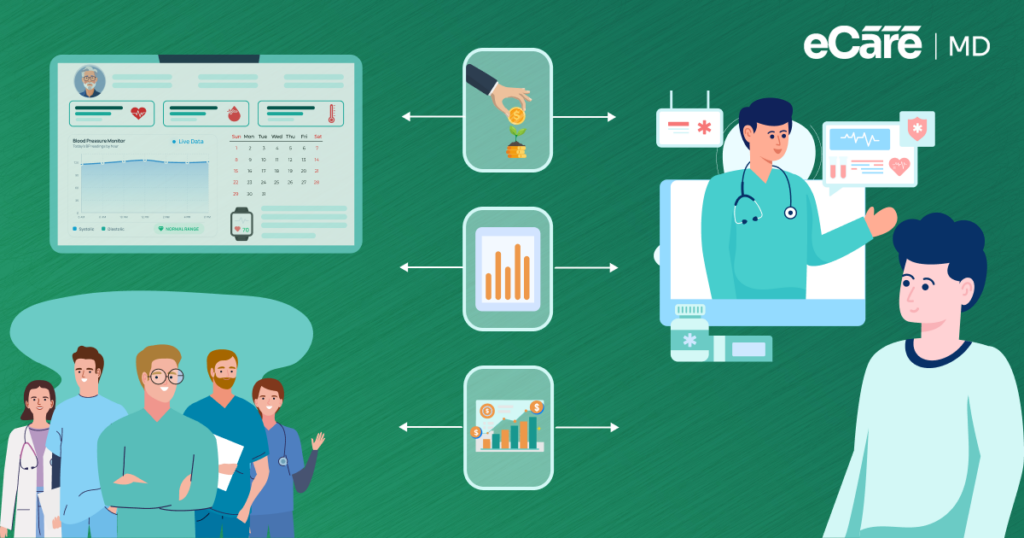
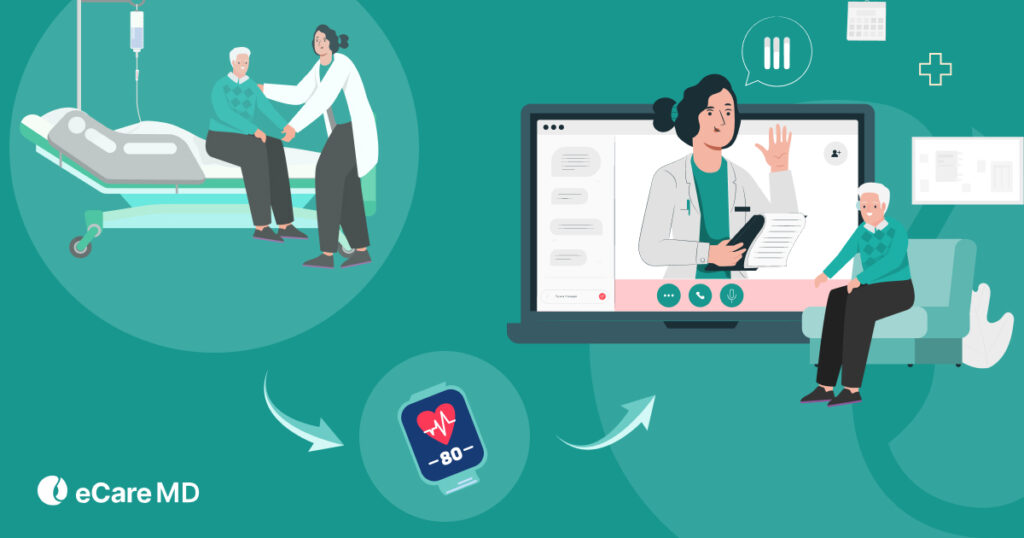
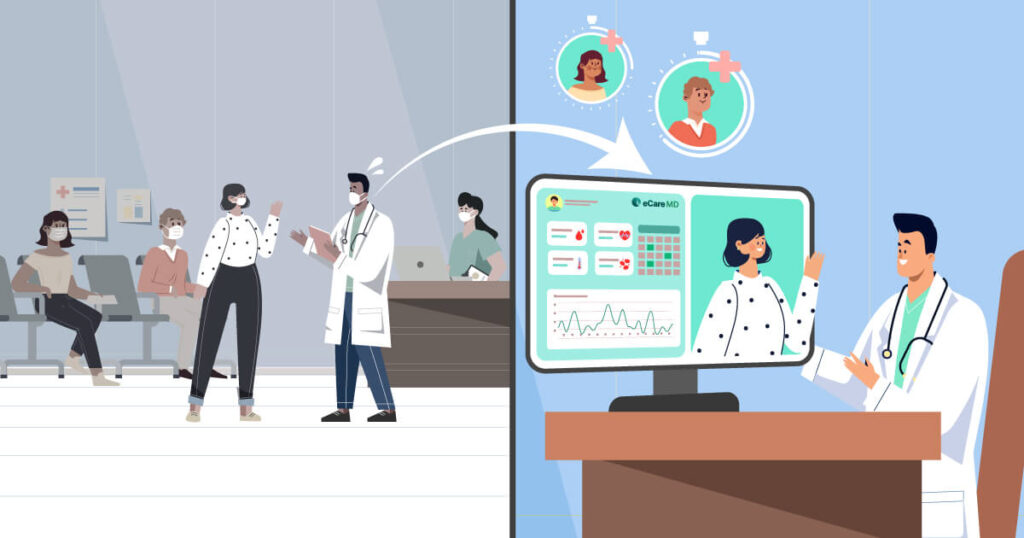
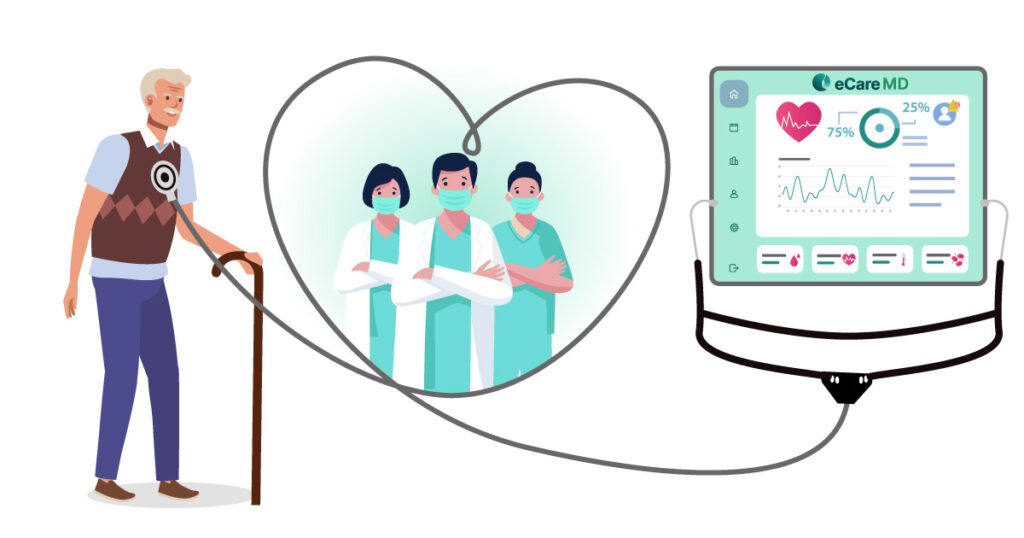
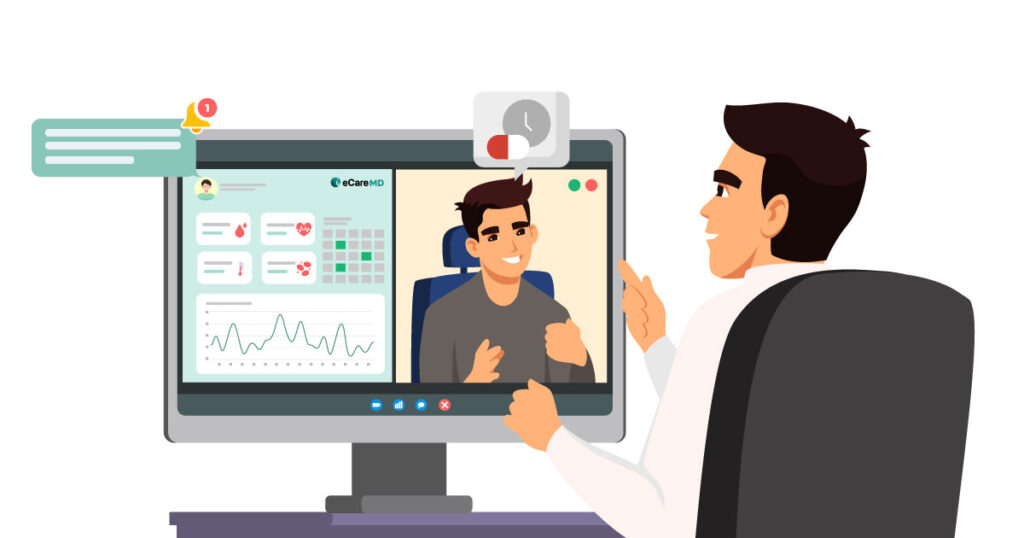
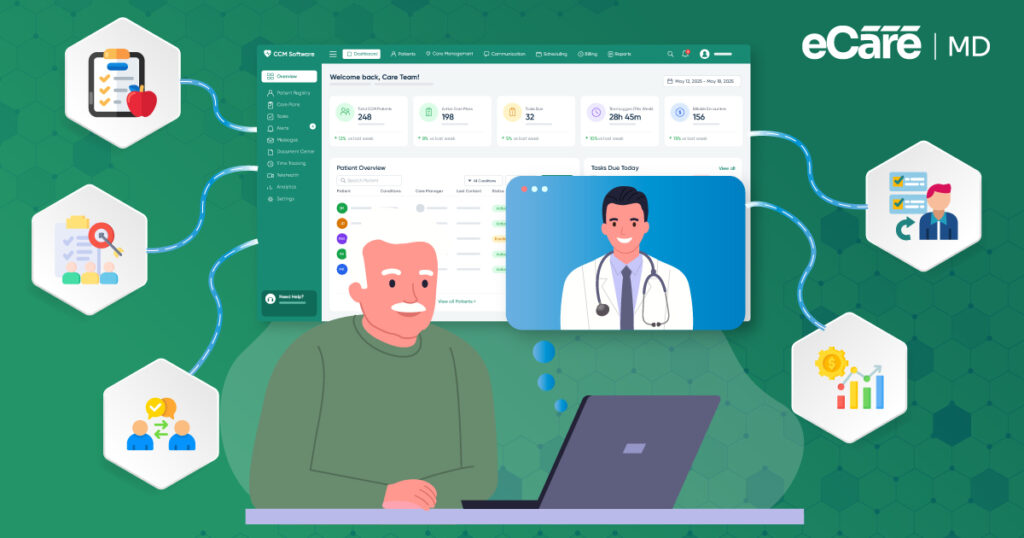
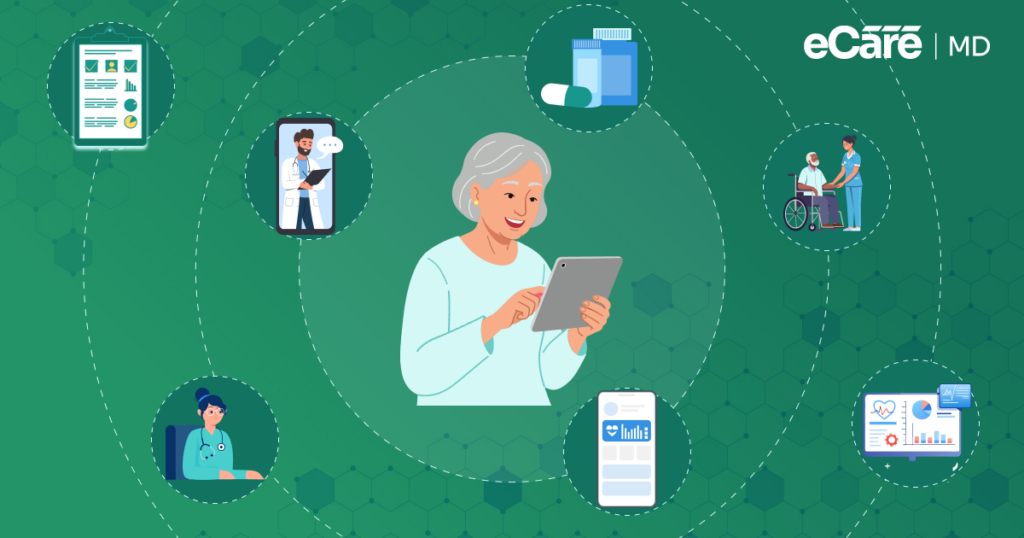
Additionally, care is also becoming more connected. Patients are now expecting convenient digital interactions; on the other hand, care teams require more visibility into what actually happens between appointments. This moves CCM beyond episodic check-ins toward consistent engagement, monitoring, and timely intervention.
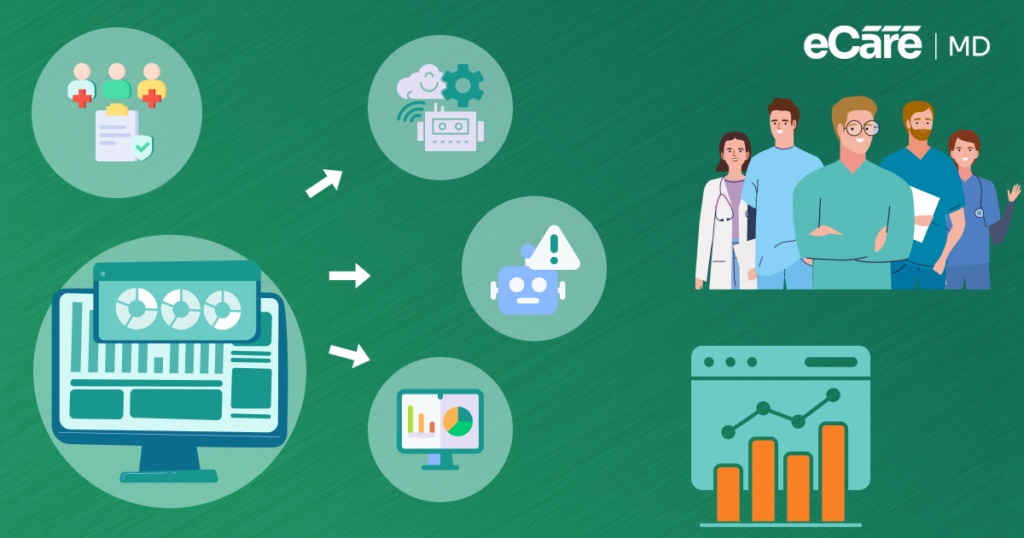
From clinical records and patient-reported information to readings from connected devices, there is a lot more data to manage than ever before. So, the core challenge here is to turn that growing volume into useful insights instead of another stack of information for the care team to go through.
Together, all these pressures are reshaping the future of technology in chronic disease management and the chronic care management trends that will define what comes next.
Emerging Technologies & Key Trends Reshaping CCM
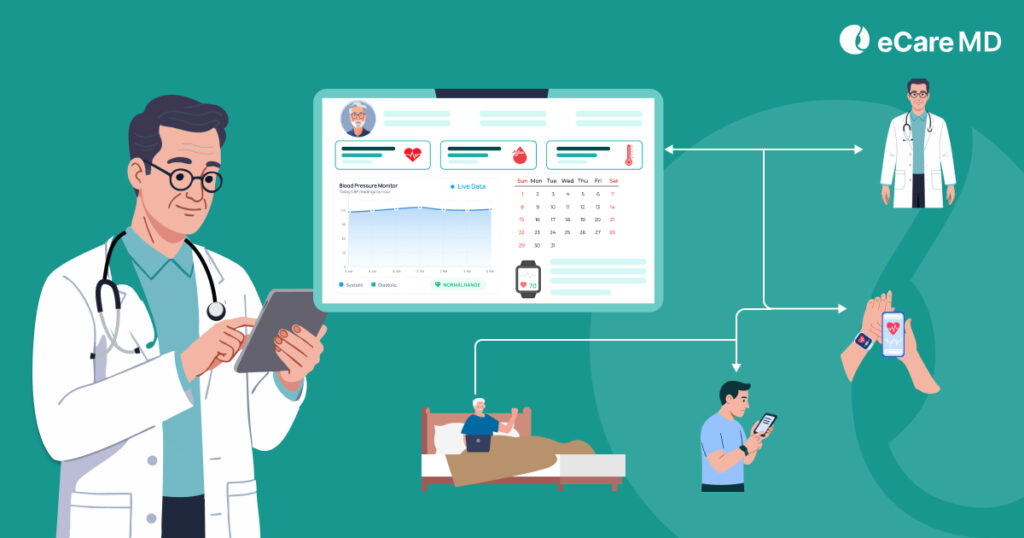
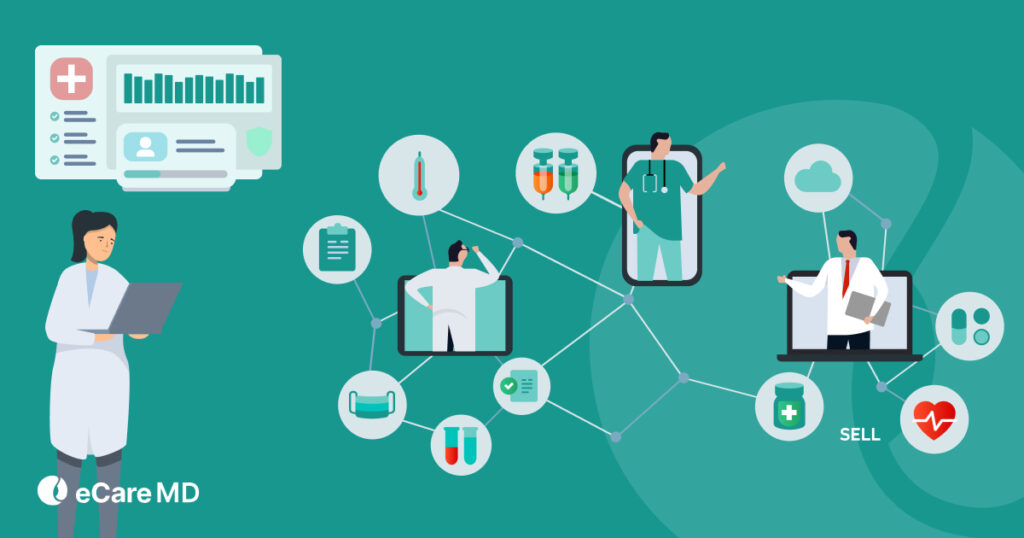
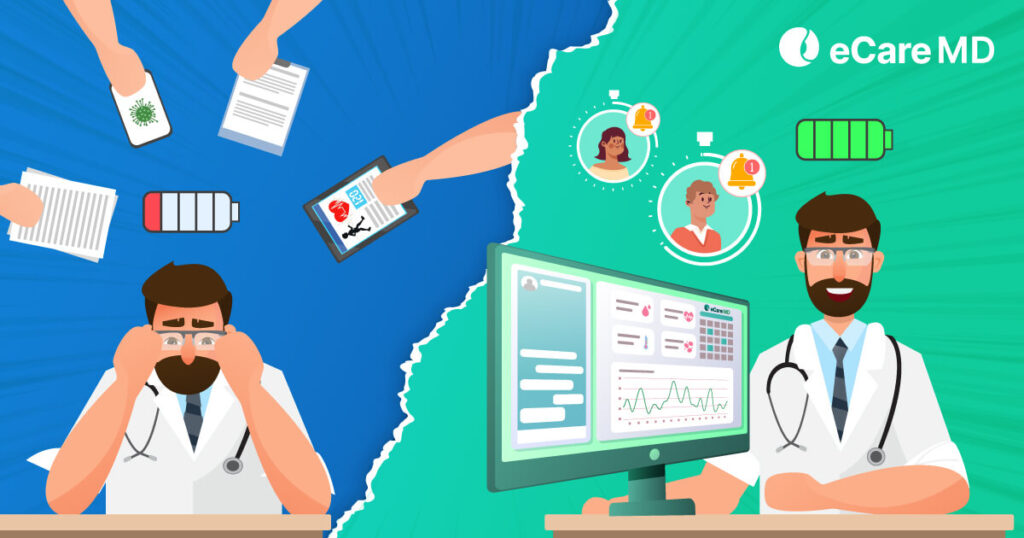
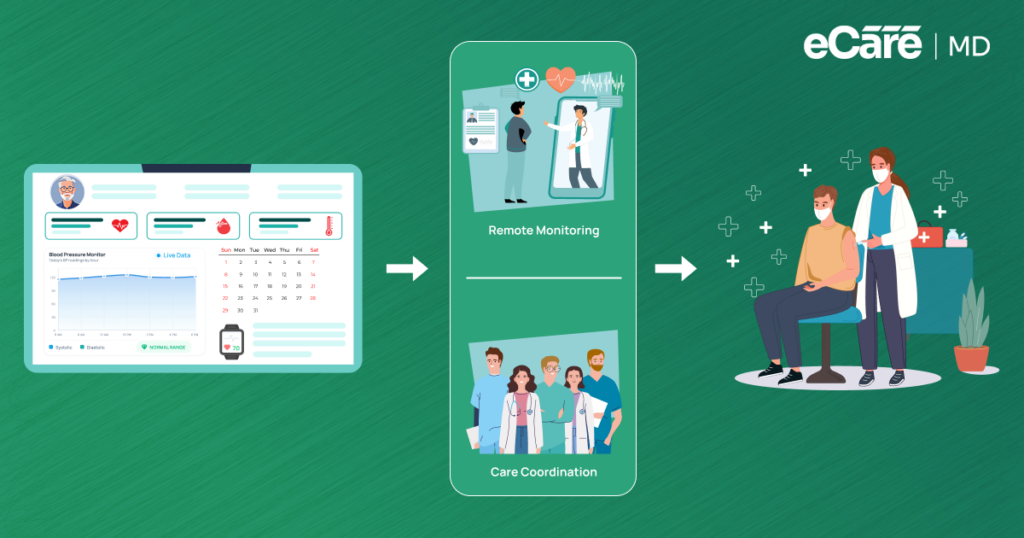
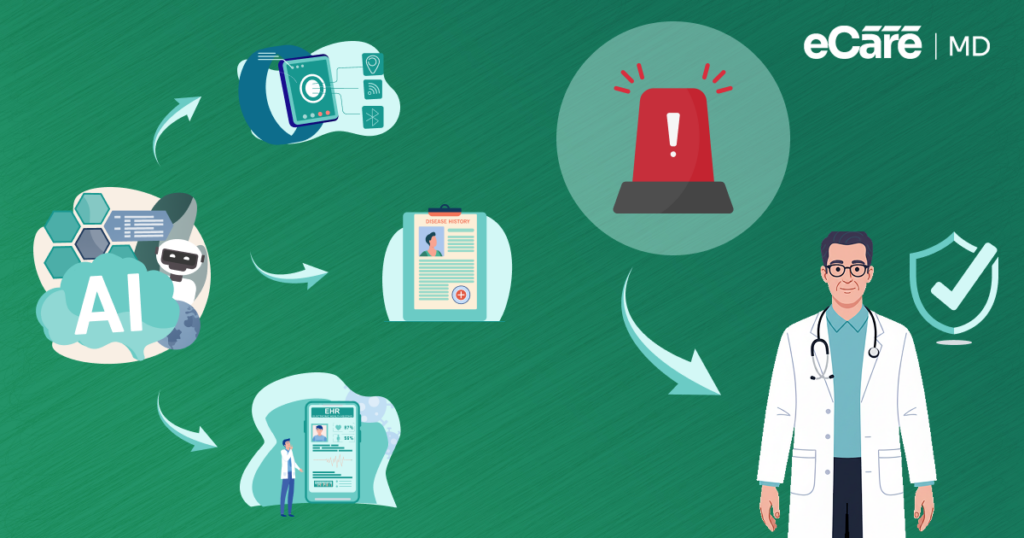
When we look back at the care coordinator’s workload, the patient list is still long, but the way the team manages it is changing. Rather than waiting for the next appointment to uncover every change, new technologies assist your team in seeing what is actually happening in between visits, while deciding where attention is required the most.
| Emerging technology or trend | How it can reshape CCM |
|---|---|
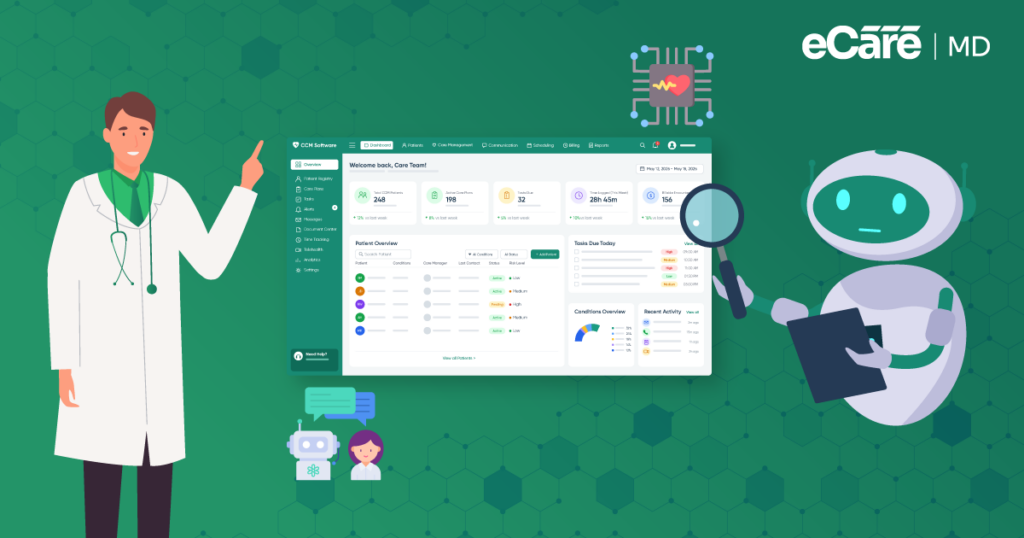
| AI & Predictive Analytics | Identify patterns and potential risks earlier, helping teams move toward more proactive care.[cite: 8] |
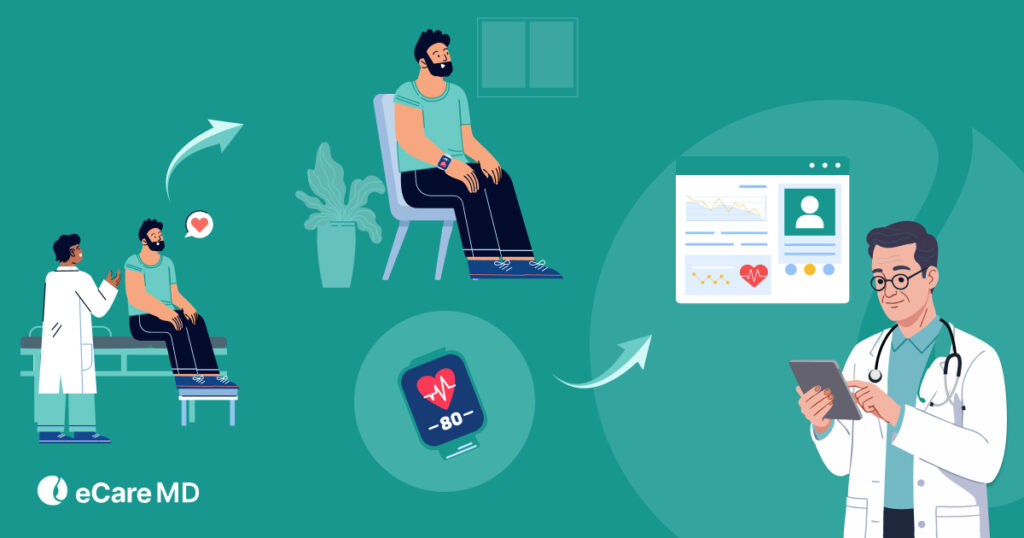
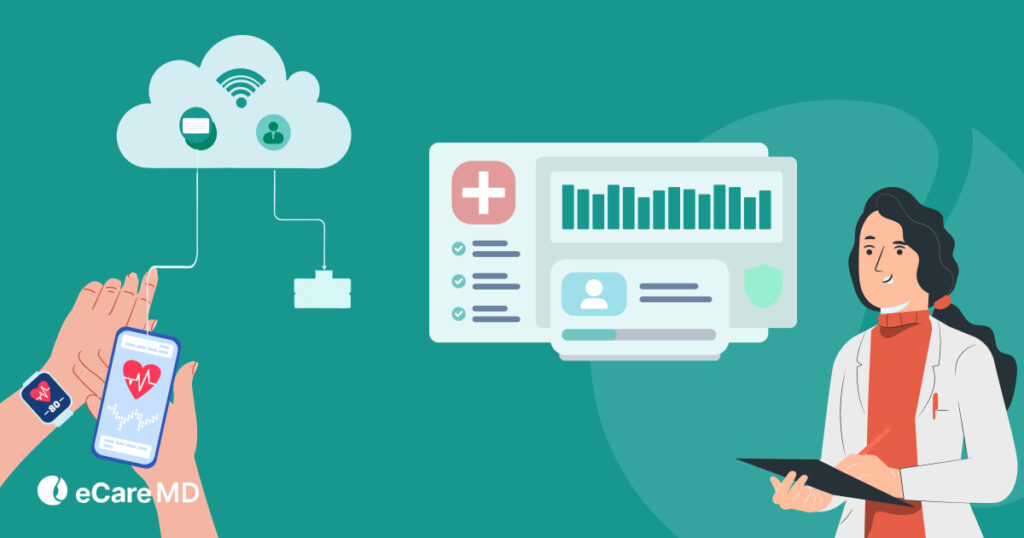
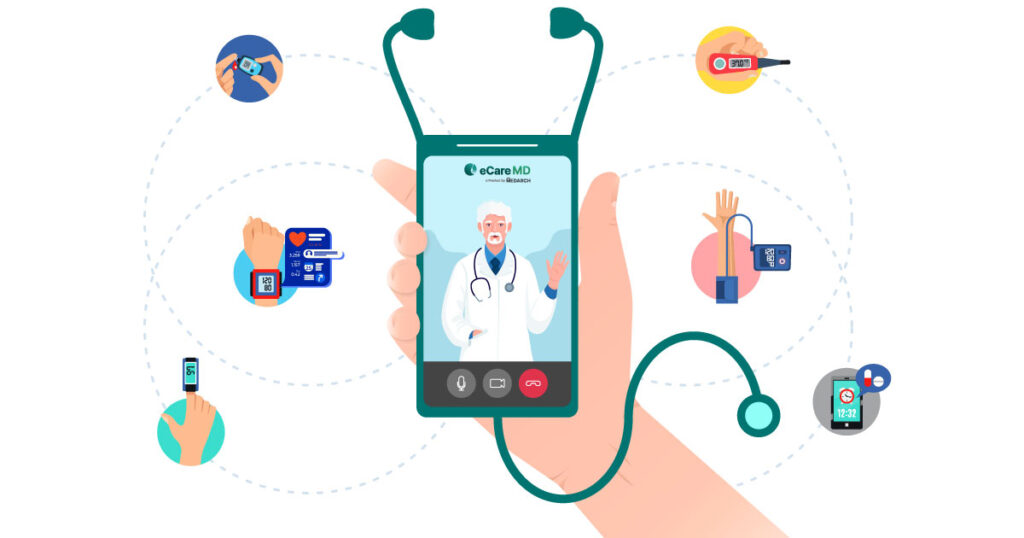
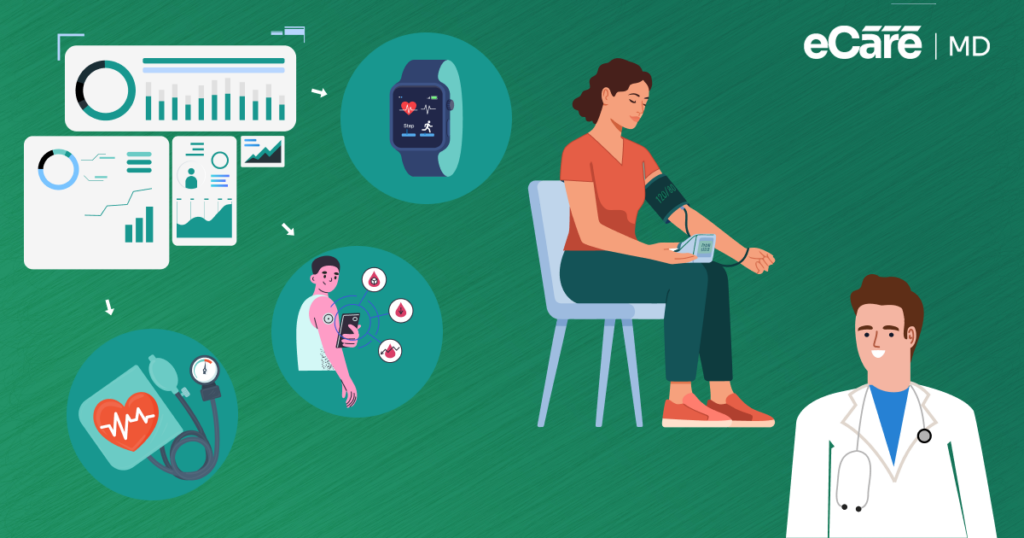
| RPM, Biosensors & Wearables | Provide continuous patient-generated health data between traditional encounters.[cite: 8] |
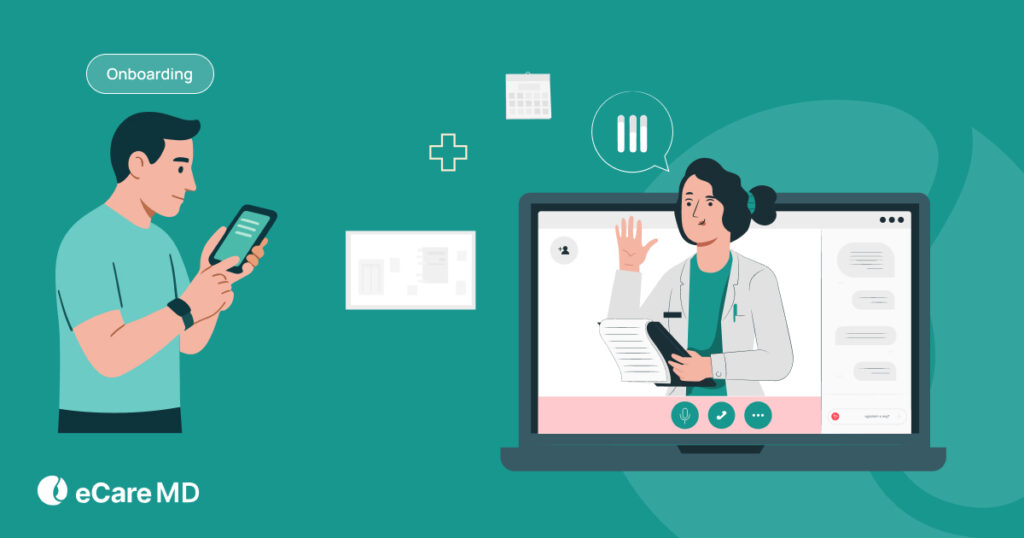
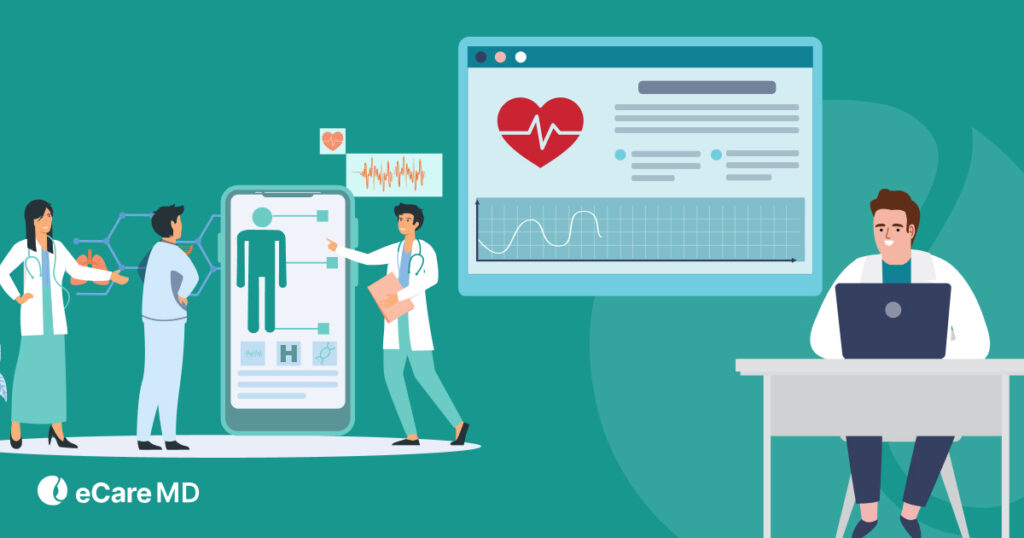
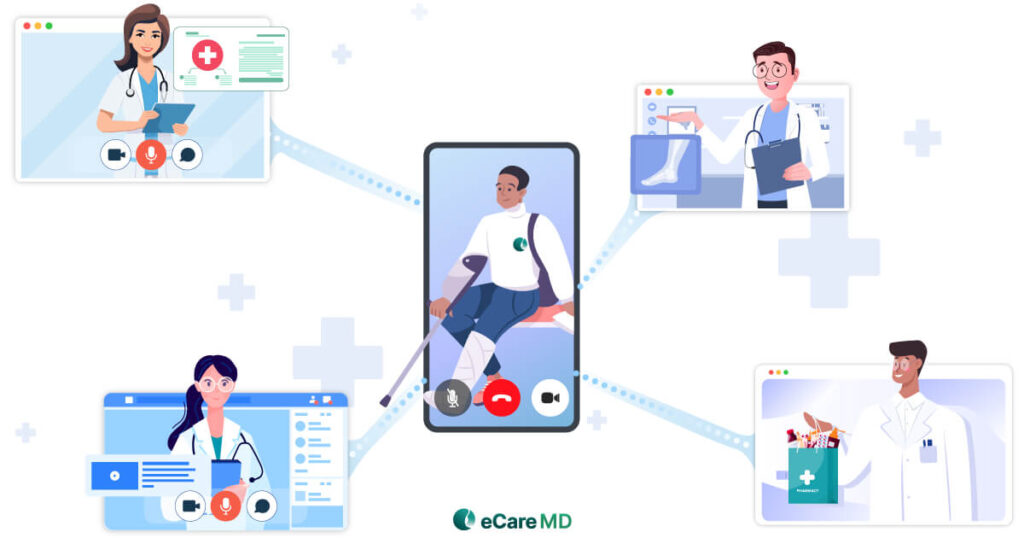
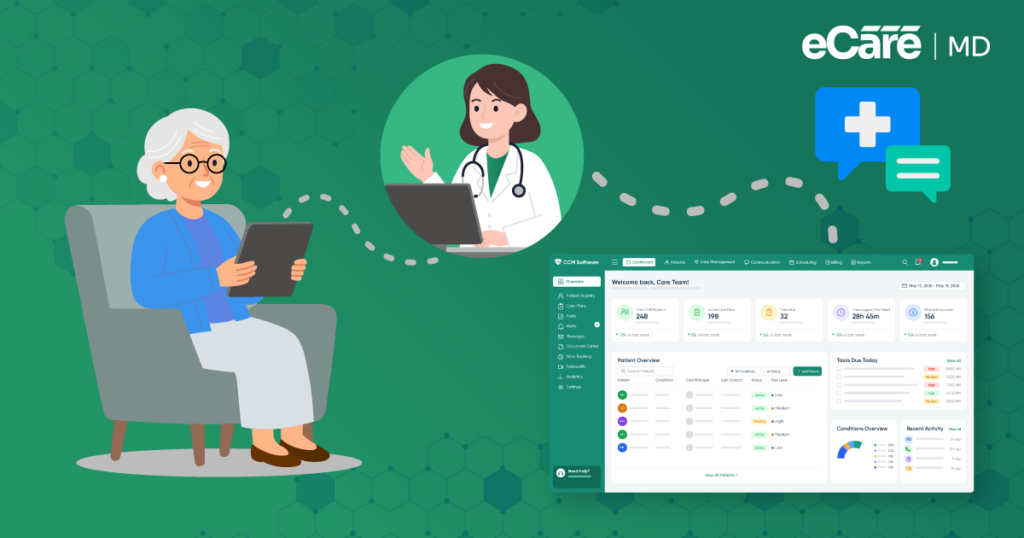
| Integrated Virtual Care | Keep patients connected through convenient digital interactions beyond the clinic.[cite: 8] |
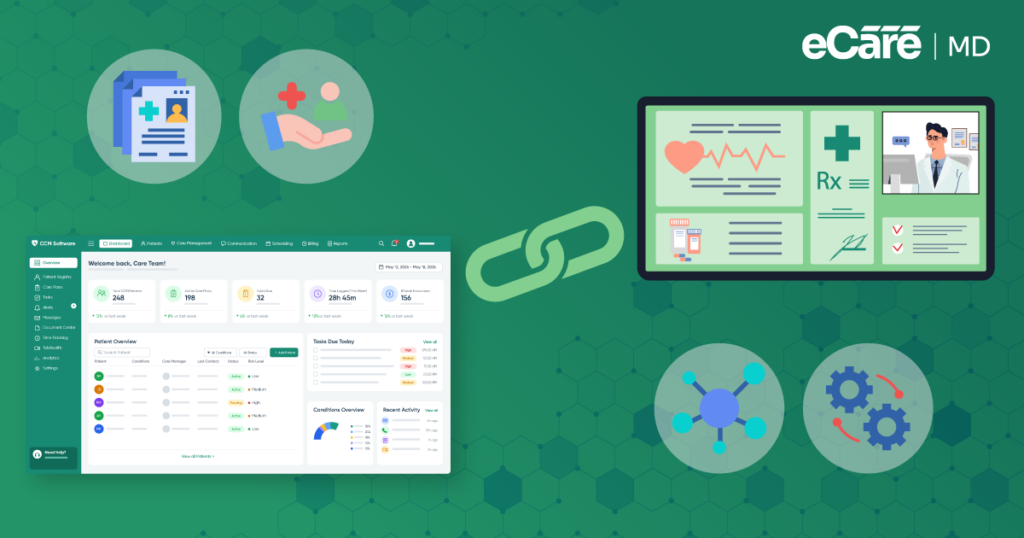
| Next-Generation Interoperability | Allow EHRs, CCM platforms, devices, and other systems to exchange information more seamlessly.[cite: 8] |
| Intelligent Workflow Automation | Reduce repetitive administrative work while keeping clinical decisions in human hands.[cite: 8] |
All these technology trends in chronic care management are not just adding more tools to your care team’s workload. If done well, they can also help information move faster, meaningful changes surface sooner, and teams spend more time on patient care. Together, they all represent some of the major future trends in chronic care management.
Operational Implications for CCM Practices
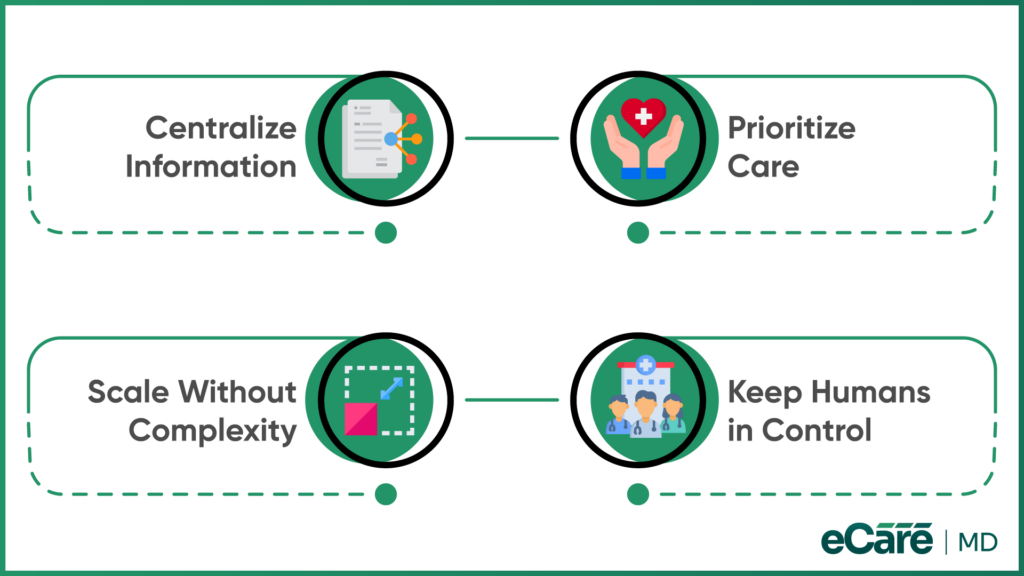
Now, the care coordinator has more information at hand than ever, but it doesn’t mean better care. If every new reading, alert, and digital interaction added new tasks to your list, it shows that technology has only moved the bottleneck somewhere else.
The core problem is how CCM workflows are designed. Your practice needs flexible workflows that can absorb new patient data and all digital interactions without overwhelming your care team.
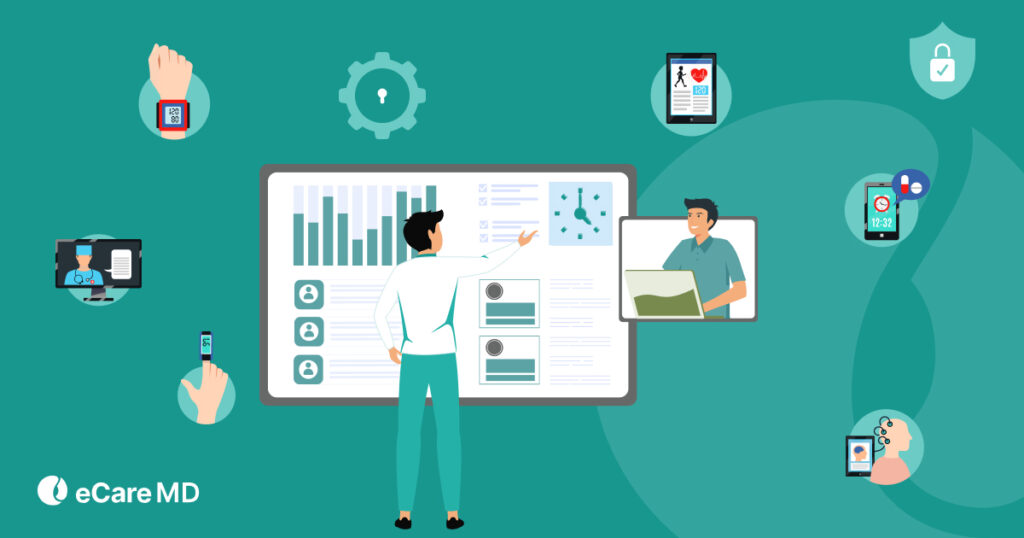
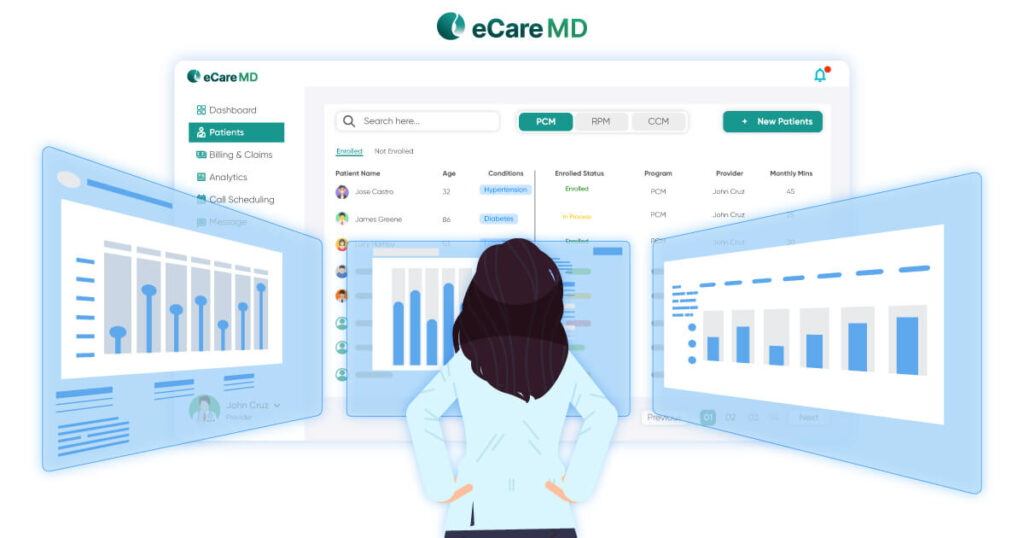
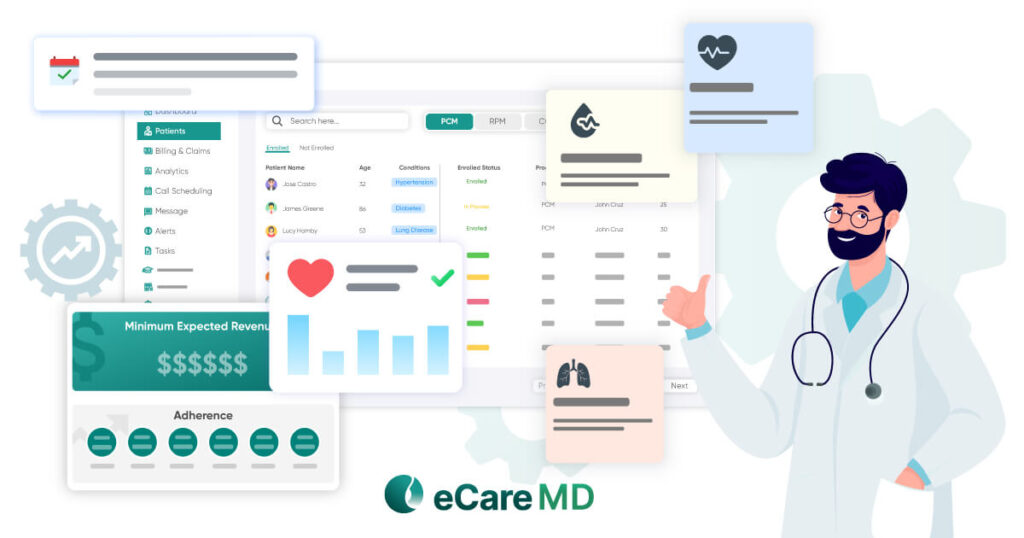
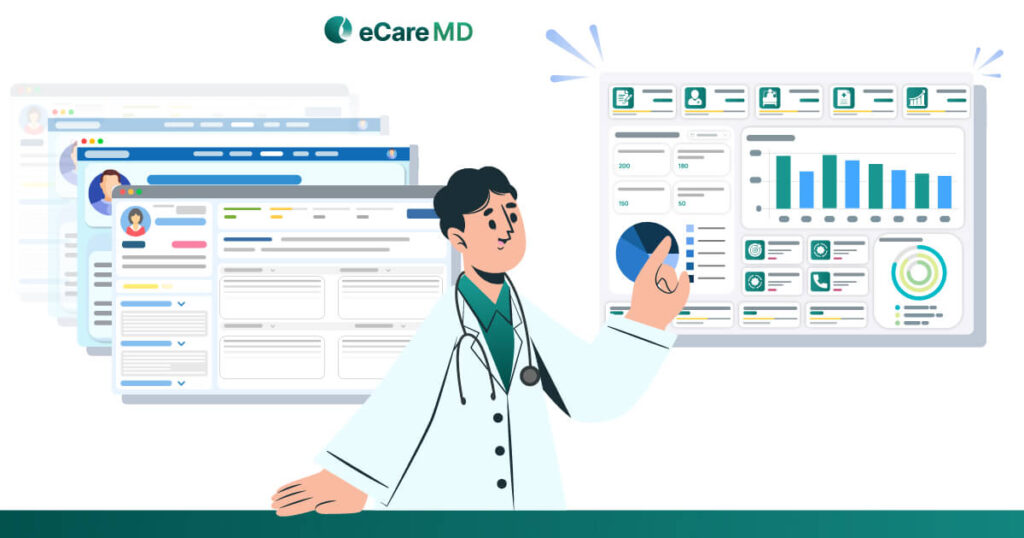
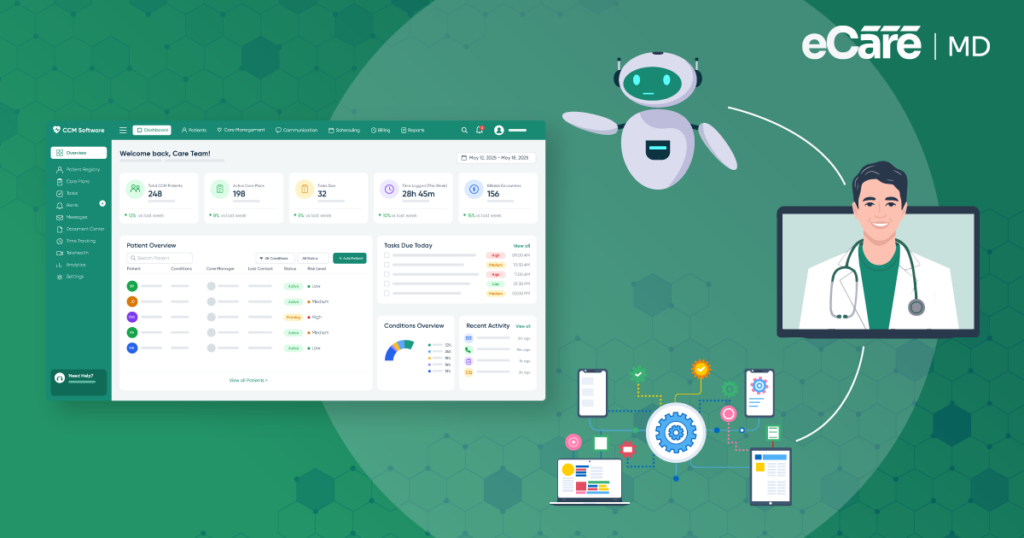
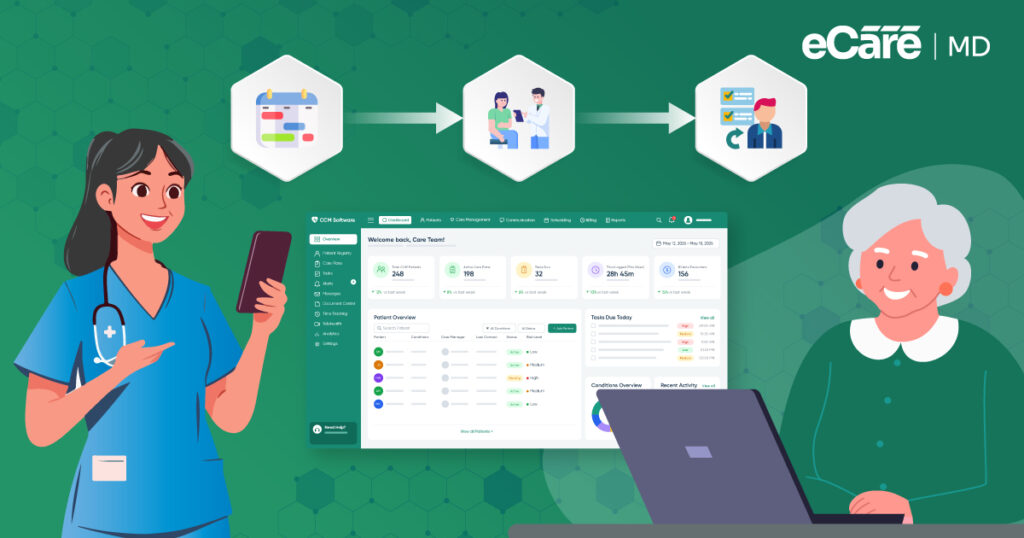
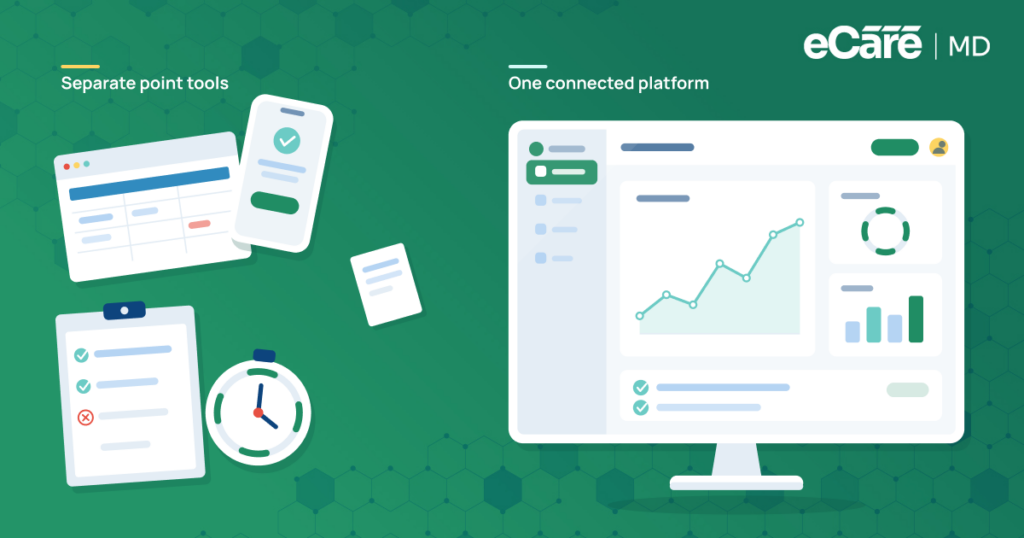
Rather than asking your staff to chase information across multiple systems, the workflow must bring all relevant details together and help them focus on what requires attention first. This is where a scalable care management solution becomes important.
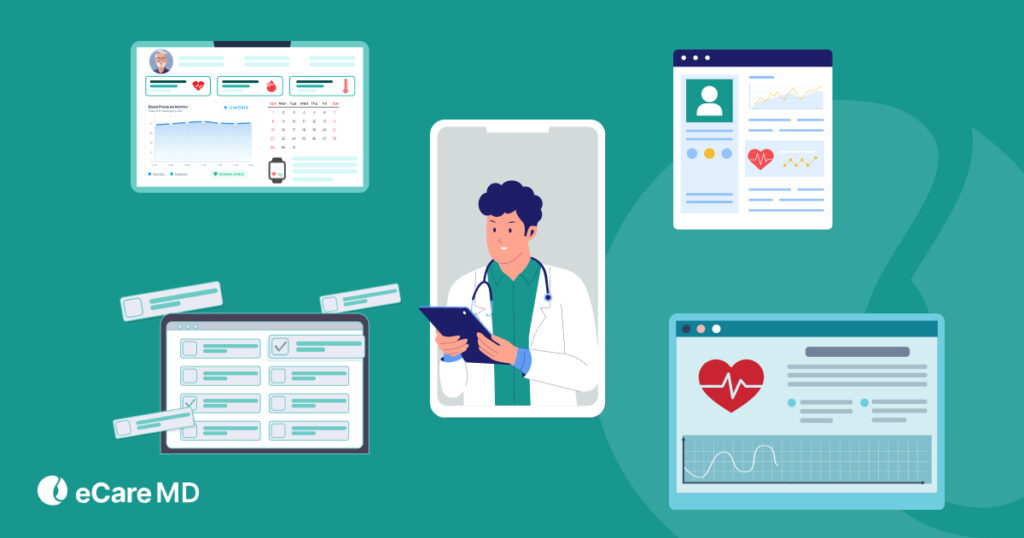
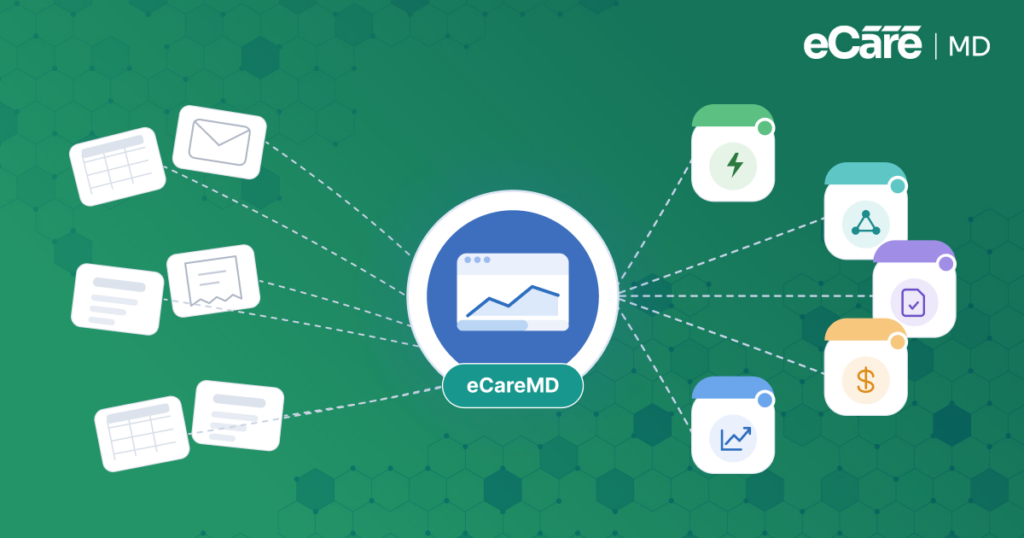
As patient volumes and digital inputs grow, a central foundation can help coordinate workflows, organize information, and support new ways of delivering CCM without rebuilding the process every time technology changes.
Still, there is one line that technology should not cross. Automation can reduce repetitive work and surface important information, but clinical judgment and patient relationships remain firmly in human hands. The goal is not to put CCM on autopilot; it is to give care teams a clearer road map for where their time and expertise matter most.
Scale Your CCM Program Build adaptable workflows as your program grows.
Preparing Your Practice for the Future with eCareMD
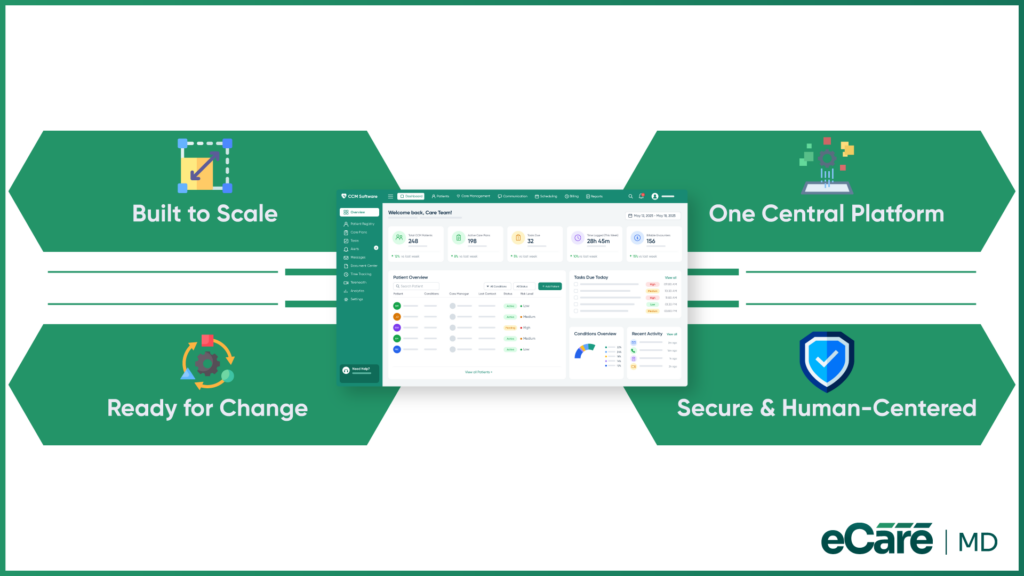
For a growing CCM practice, preparing for the future does not mean adopting every new technology that comes along. It means having a strong operational foundation that can adapt as patient volumes, workflows, and care models change.
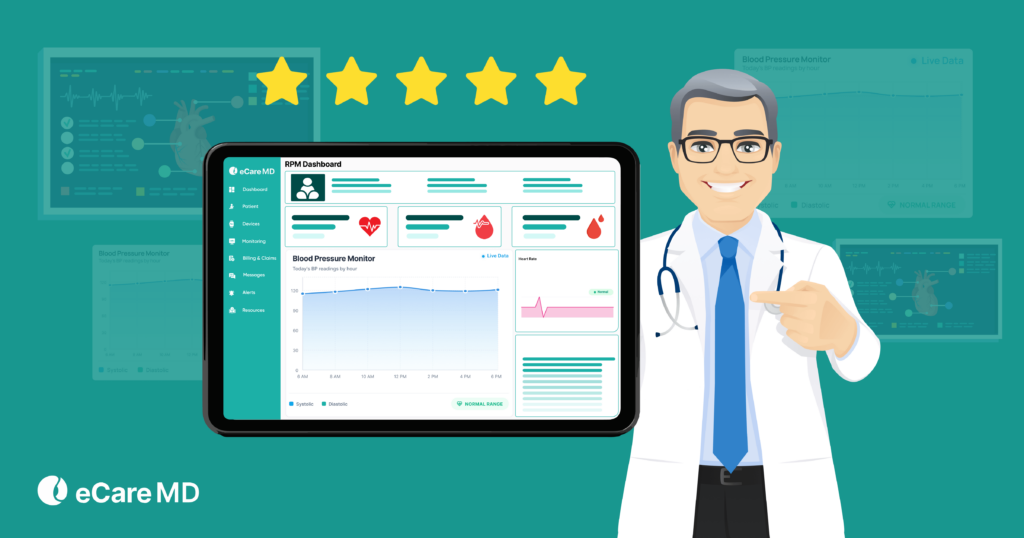
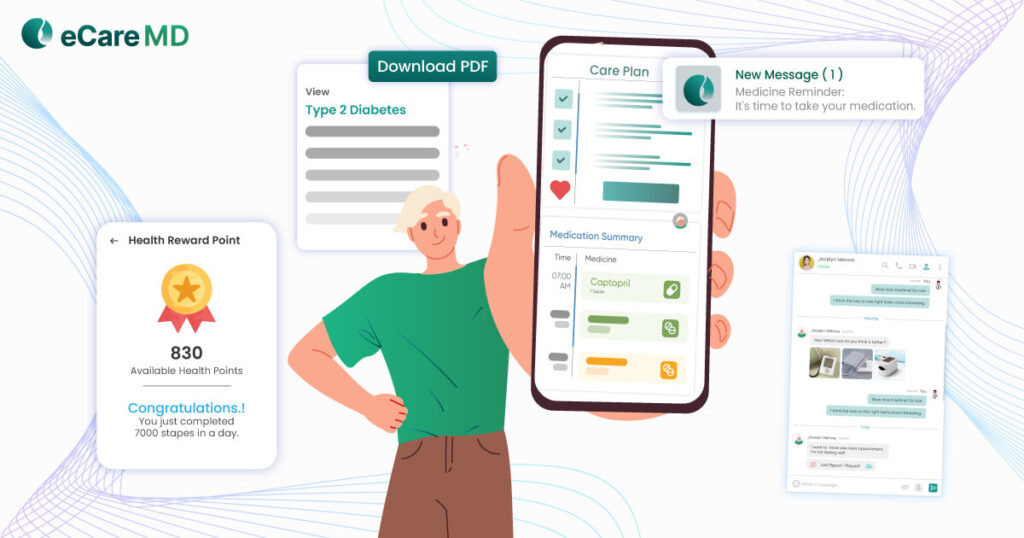
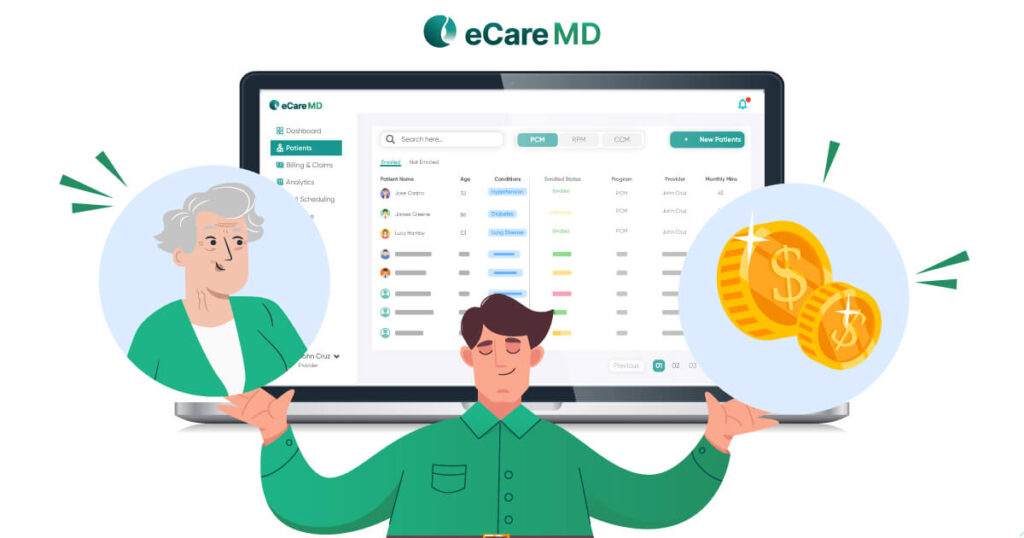
That is where eCareMD can fit into the picture. As CCM programs grow, practices can use the platform to manage larger patient panels and care teams while keeping patient information, care plans, communications, and care activities organized in one environment.
Instead of adding another disconnected tool to the mix, teams have a central place to manage their day-to-day CCM work. This adaptable approach also matters as digital care continues to evolve.
Flexible chronic disease management software can give practices room to incorporate new workflows and technologies over time without constantly rebuilding their operations. At the same time, security, privacy, compliance, and human oversight need to remain part of the foundation, not an afterthought.
The goal is simple: build a CCM operation that can grow today and adapt tomorrow. With an adaptable platform supporting the core workflow, practices can be better prepared to take advantage of new technologies and care-delivery models as they become part of the future of CCM.
Conclusion
The future of chronic care management is moving toward care that is more connected, predictive, continuous, and personalized. Connected patient data, remote care, intelligent automation, and predictive technologies can help practices identify changes sooner and manage growing patient populations more efficiently.
But being future-ready does not mean adopting every new technology that enters the market. Practices need a scalable, flexible, and secure foundation that can adapt as new tools and care models mature. eCareMD can support that foundation by helping teams keep evolving CCM workflows organized as their programs grow.
Ultimately, the best chronic disease management software should strengthen the care team’s ability to do what technology cannot: apply clinical judgment, build patient relationships, and deliver compassionate care. The future of CCM may be increasingly digital, but it should never become less human.
Frequently Asked Question’s
AI and predictive analytics, remote patient monitoring, connected devices, interoperability, and intelligent workflow automation are likely to have a major impact. Together, these technologies can help practices monitor patients more continuously, identify potential risks earlier, connect information across systems, and reduce repetitive administrative work.
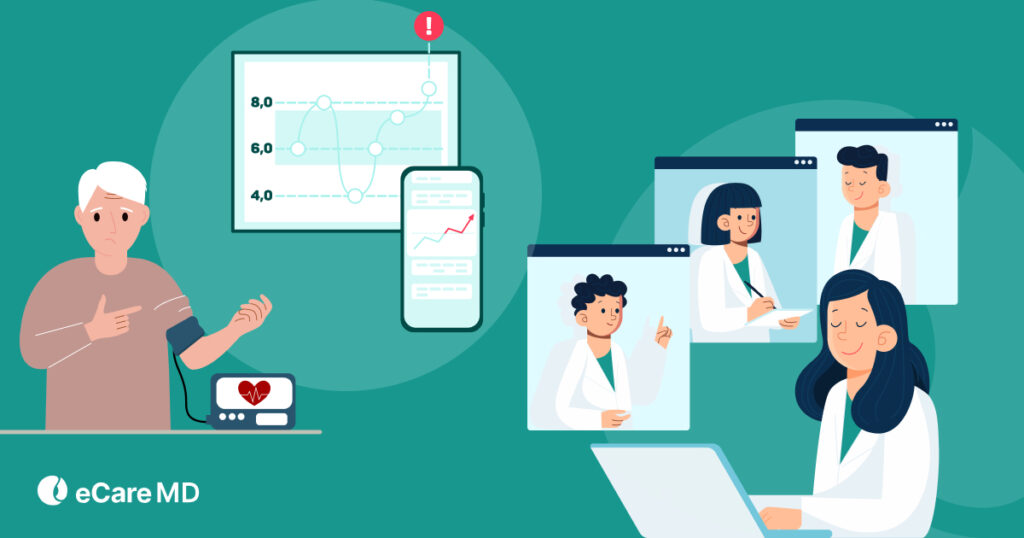
Patient-generated health data can give care teams a more continuous view of a patient’s health between appointments. Instead of relying only on information collected during office visits, teams can use readings, symptom updates, and other patient data to identify meaningful changes and determine when follow-up may be needed.
Predictive analytics and AI can analyze patient information to identify patterns that may indicate rising risk. This can help care teams prioritize patients who may need attention sooner, allowing them to act before a potential issue develops into a larger problem. Clinical judgment still remains essential when interpreting these insights.
Practices can start by building flexible workflows and using systems that can scale with patient volume. A connected infrastructure should make it easier to organize patient information, coordinate care activities, exchange data, and adopt new technologies without creating additional administrative complexity.
Future-ready software should support scalable patient and care-team management, centralized workflows, secure data handling, care-plan coordination, communication, and integration with evolving digital care models. Most importantly, it should be flexible enough to adapt as technology and CCM workflows continue to change.




![The Future of Remote Patient Monitoring: CMS Innovations & Emerging Trends [2026]](/wp-content/uploads/2024/07/Blog-36-The-Future-of-Remote-Patient-Monitoring_-Trends-AI-Innovation-CMS-Updates-for-2026-1024x538.png)