Last Updated: August 25, 2026
At first glance, A CCM software plan looks affordable. Even though a monthly subscription fits comfortably within your practice’s budget, that number fails to tell the full story.
Once implementation, EHR integration, staff training, ongoing support, and other fees start to enter the picture, the actual CCM software might look quite different. The major reason behind this is that there is no one-size-fits-all chronic care management software price.
If you have a small practice managing a few dozen patients, you may have very different requirements from a larger organization coordinating care for hundreds of patients. Factors like vendor, number of users, features, integrations, and level of support can influence the final price.
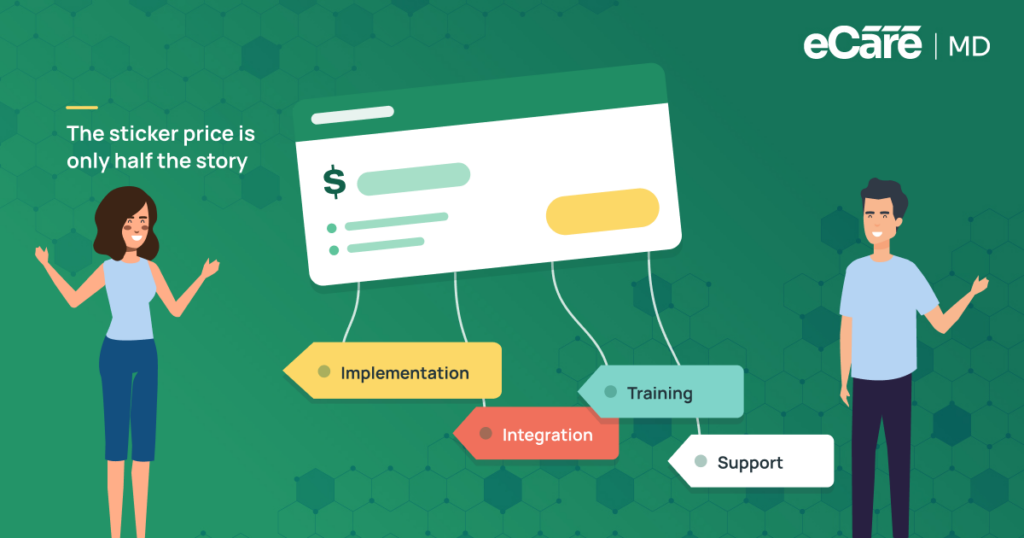
Picture it like you are buying a car. The sticker price grabs your attention, but taxes, insurance, maintenance, and other expenses determine what you actually spend. CCM software also works similarly. Subscription fees are only half of the story; CCM platform implementation costs, integration expenses, and support can also add to the total.
So, what should your practice actually budget for?
Let this blog be your comprehensive guide to breaking down the major components of CCM software pricing, the factors that affect them, and how to compare the chronic care management software pricing of different vendors. It also looks beyond the monthly fee to help practices understand the total cost of choosing a care management application.
How Much Does CCM Software Cost?
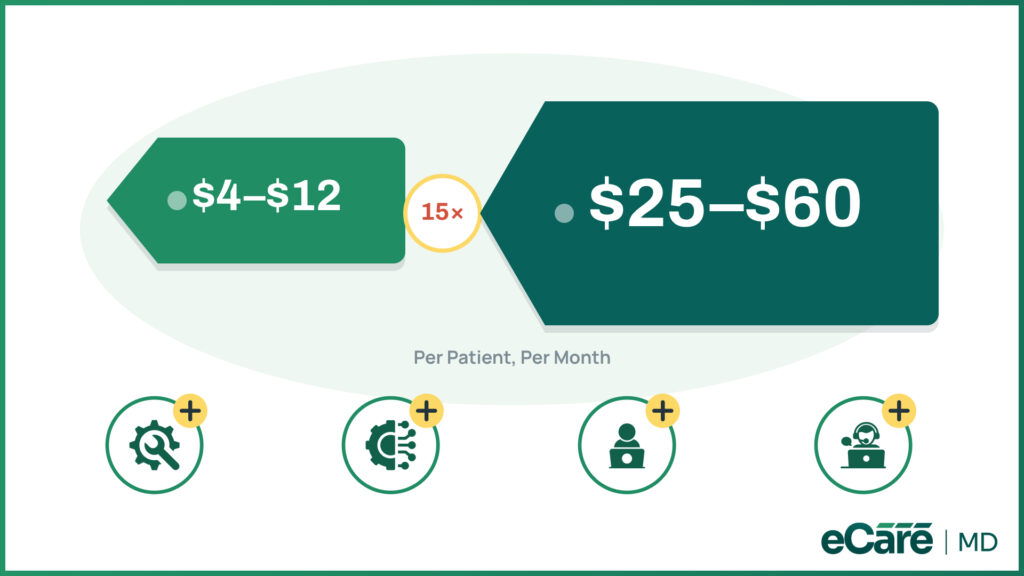
As discussed above, CCM software never comes with a one-size-fits-all price tag. Public vendor pricing shows that some platforms charge around $4-$12 per active patient per month, while others list rates of $25-$60 per enrolled patient per month. Furthermore, some may also charge a separate setup or implementation fee.
The major difference comes down to how your vendors structure their plans. Some charge by patient, while others charge based on users, platform access, or CCM revenue.
| Pricing Model | How It Is Charged | Typical Public Pricing | Best Fit |
|---|---|---|---|
| Per Enrolled Patient | Active CCM patients | ~$4–$60/patient/month | Variable patient volume |
| Per Provider/User | Licensed users | Vendor-dependent | Smaller care teams |
| Flat Platform Fee | Fixed monthly/annual fee | Usually custom | Predictable program |
| Percentage of Collections | Share of CCM revenue | Contract-dependent | Revenue-linked programs |
| Implementation Fee | One-time setup | Vendor-dependent | Migration/integration needs |
Moreover, there is also an important catch: the subscription is not always the full bill. Setup, EHR integration, training, migration, and ongoing support can add to the final CCM software cost. That’s why your practice should look beyond the advertised monthly price and consider the total cost before selecting a platform.
What Factors Affect CCM Software Pricing?
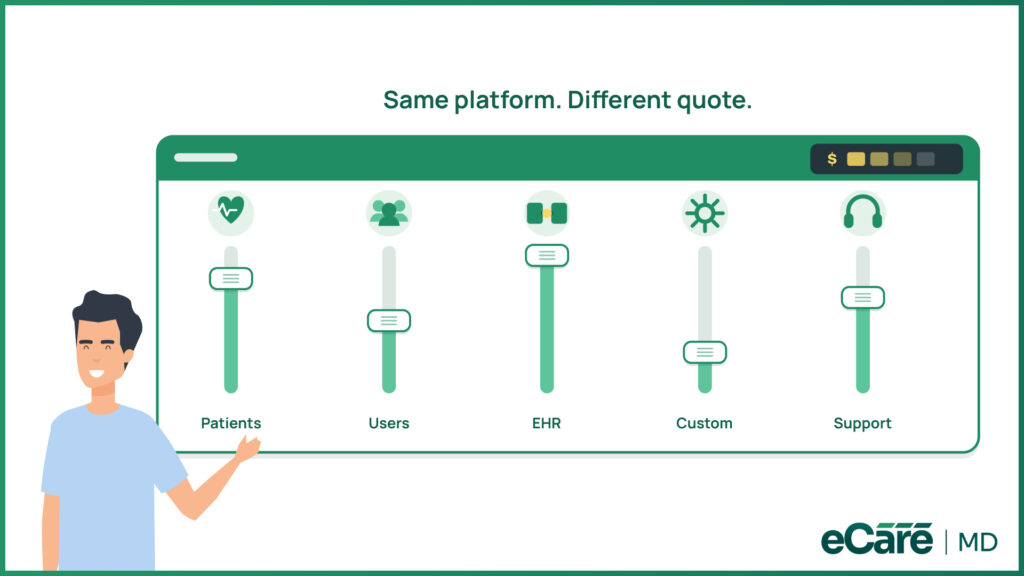
Have you ever wondered: Why do two practices that look at the same CCM platform receive different quotes?
The final chronic care management software cost usually relies on how many patients and users the practice has, what systems need to connect, how much customization is needed, and what level of support the vendor provides.
1. Patient and Program Volume
One of the major factors is patient volume. With per-patient pricing, costs generally increase as enrollment grows. Even with tiered or flat pricing, a larger CCM program may require a higher plan. It is worth considering future growth too, rather than choosing a plan based only on today’s patient count.
2. Users and Care Team Size
A CCM program may involve providers, care managers, nurses, and administrative staff. If the vendor charges per user, adding team members can increase the monthly bill. Check whether the plan includes unlimited users or charges separately for each additional seat.
3. EHR and Integration Requirements
The EHR already used by a practice can also affect costs. Connecting CCM software with an EHR, billing system, or other tools may require additional setup and ongoing maintenance. Practices using Epic should evaluate their specific integration requirements before comparing quotes.
4. Workflow and Customization
A practice using standard CCM workflows may need little configuration. But customized care plans, reports, dashboards, or additional modules can require more setup or development, increasing the overall CCM software cost.
5. Support and Service Level
Finally, look beyond the software itself. Implementation, training, technical support, maintenance, and dedicated account management may be included in some plans and charged separately in others.
What Are CCM Platform Implementation Costs?
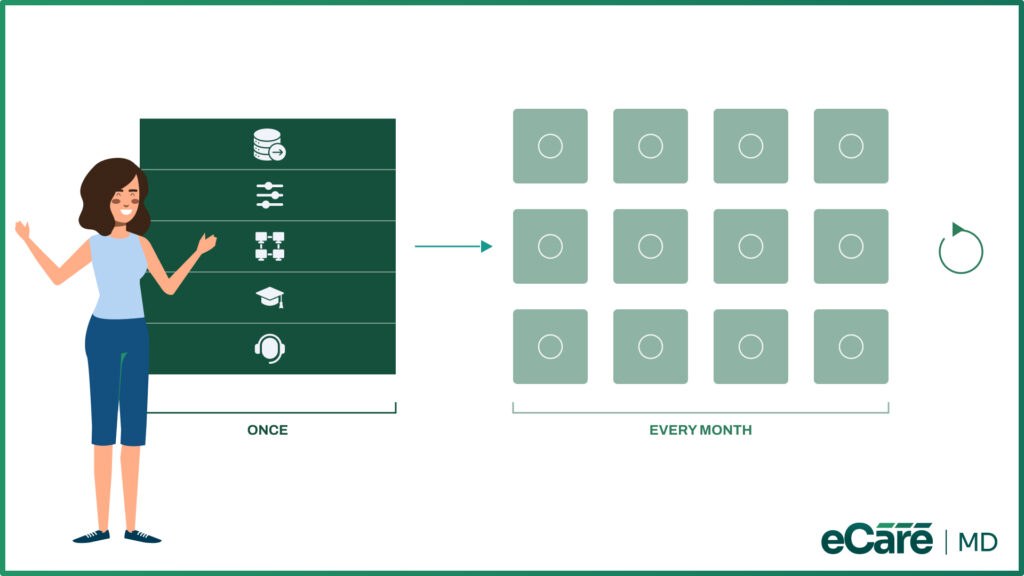
Getting CCM software up and running involves costs beyond the monthly subscription. These are known as CCM platform implementation costs, which are usually paid once during the initial setup.
Implementation may include:
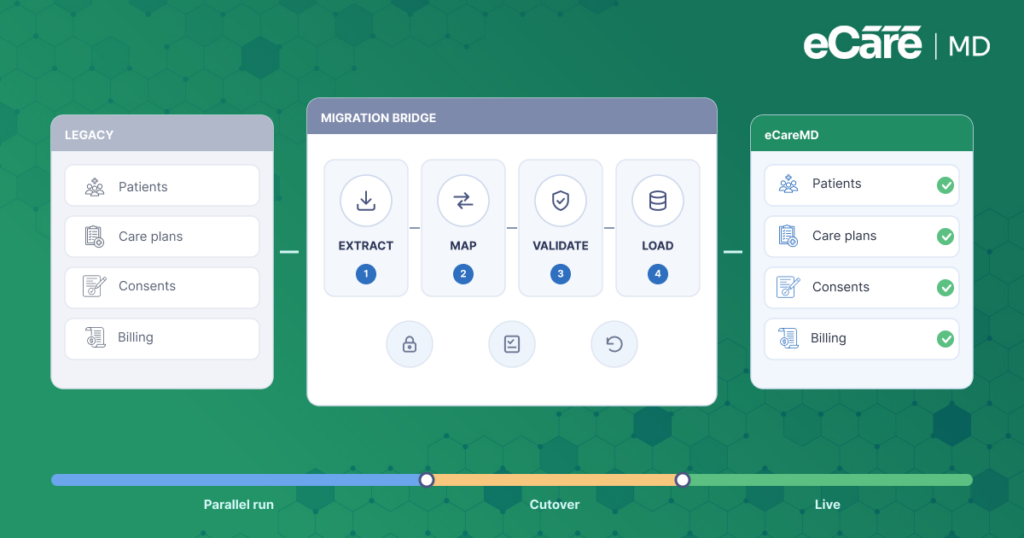
- Data migration: Moving patient or program data from an existing system into the new platform.
- System configuration: Setting up workflows, care plans, user roles, templates, and other settings based on the practice’s needs.
- EHR integration: Connecting the CCM platform with the practice’s EHR and other required systems.
- Staff training: Helping providers, care managers, and administrative staff learn how to use the new platform.
- Deployment support: Providing assistance during launch to resolve setup issues and ensure workflows are working as expected.
All these expenses are totally different from recurring software costs. The subscription, user fees, or per-patient charges continue across the contract; on the other hand, data migration, initial configuration, and implementation are usually one-time expenses.
However, not every cost disappears after launch. Depending on the vendor, ongoing technical support, maintenance, integration updates, or premium account management may continue as recurring charges.
Here, it is fair enough to say that what looks affordable at first can tell only half of the story. Before signing, you should ask your vendor for a clear breakdown of one-time implementation costs versus recurring charges so there will be no surprises down the road.
What Should You Ask a CCM Software Vendor Before Buying?
A pricing proposal looks straightforward until the extra charges start to come into the picture. That’s why before signing a CCM software contract, you should ask a few practical questions to understand what you are actually paying for.
- How is the software priced? Is the fee based on enrolled patients, providers, users, a flat platform fee, or another model?
- What does the initial price include? Confirm whether implementation, data migration, EHR integration, training, and deployment support are included or billed separately.
- How will the cost change as we grow? Ask what happens when patient enrollment increases, new users are added, or another integration is needed.
- Are there any additional or recurring fees? Clarify charges for premium features, technical support, maintenance, integrations, or account management.
- What are the contract terms? Review the renewal period, cancellation policy, minimum commitments, price increases, and data-export terms before signing.
By getting all these answers upfront, it becomes easy to compare vendors on more than just the advertised CCM software cost. It can also help to prevent an unpleasant surprise when the first renewal or expansion comes around.
Is eCareMD the Right CCM Platform for Your Practice?
Once you understand what CCM software costs, the next step is finding a platform that fits your practice, not simply choosing the lowest-priced option.
eCareMD, developed by Medarch Inc., is one CCM platform practices can consider when evaluating their software investment. Its care management application is designed to support key CCM workflows and help care teams manage their programs from a centralized platform.
But whether it is the right fit depends on what your practice actually needs. Consider your current patient volume, care-team size, existing workflows, and the systems that need to connect with the platform. If your practice uses Epic, for example, it is important to evaluate the integration requirements and confirm that the platform can support your specific workflow.
Implementation should also be part of the conversation. Ask what is included in the initial setup, data migration, integrations, training, and ongoing support, not just what appears on the monthly price tag.
Rather than relying on a generic estimate, practices should request a customized pricing assessment based on their patient population, users, workflows, and integration needs. This gives a clearer picture of what the platform may actually cost and whether it makes sense for the practice in the long run.
Download the Checklist for Top 10 Must-Have Features in CCM Software
Download NowConclusion
The real CCM software cost goes beyond the monthly subscription. Implementation, integrations, support, training, and future growth can all affect what a practice ultimately spends.
Instead of comparing only the advertised price, look at the total cost and what each vendor includes. This is especially important for practices evaluating CCM software compatible with Epic EHR, where integration requirements may influence the overall investment.
The best next step is to request a customized CCM software pricing assessment based on your patient volume, care team, workflows, and integration needs. A clearer cost picture makes it easier to choose a platform that fits both your CCM program and your budget.
Frequently Asked Question’s
Chronic care management software can cost anywhere from a few dollars to $60 or more per enrolled patient each month, depending on the vendor and pricing model. Some platforms charge per patient, while others use per-user, flat-fee, or revenue-based pricing. Practices should also account for implementation, integration, training, and support when calculating the total cost.
Several factors can affect CCM software pricing, including patient volume, number of providers and care-team members, required EHR integrations, workflow customization, features, support, and contract terms. A practice with a larger patient population or more complex integration needs may pay more than a smaller practice with standard workflows and fewer users.
There is no single typical price because CCM vendors use different pricing models. Publicly listed examples range from about $4–$12 per active patient per month to $25–$60 per enrolled patient per month. Some vendors also charge setup or implementation fees. These figures should be treated as pricing examples rather than a fixed industry average.
CCM platform implementation costs are the expenses involved in getting the software ready for use. They may include data migration, system configuration, EHR integration, workflow setup, staff training, and deployment support. These are generally one-time costs, although ongoing integration maintenance, technical support, or premium services may continue to generate recurring charges.
Start by looking beyond the advertised monthly price. Compare the subscription or per-patient fee along with implementation, EHR integration, training, support, additional users, and contract terms. It is also important to consider how costs will change as the CCM program grows. Comparing the total expected cost gives a more realistic view of each platform.
EHR integration can increase CCM software costs, depending on the systems involved and the level of connectivity required. Basic integrations may be included in a vendor’s plan, while more complex integrations can require additional configuration or development. Practices should ask whether integration setup, maintenance, and future updates are included or billed separately.
Yes. Patient volume can directly affect pricing when a vendor charges per enrolled patient. Even with flat-fee or tiered plans, growing enrollment may move a practice into a higher pricing tier. Before choosing a platform, ask how the cost changes at different patient volumes and whether the vendor offers volume-based pricing as the program expands.
Practices should ask about more than the base subscription. Important costs include implementation, data migration, EHR integration, additional users, training, technical support, maintenance, premium features, and account management. It is also worth reviewing renewal terms, potential price increases, cancellation fees, and data-export charges to avoid unexpected expenses later.
Not always. Some CCM vendors include basic implementation and staff training in their initial pricing, while others charge these services separately. The same applies to data migration and EHR integration. Before signing a contract, ask the vendor for a clear breakdown of one-time implementation expenses and recurring services so the total investment is easy to understand.




















![The Future of Remote Patient Monitoring: CMS Innovations & Emerging Trends [2026]](/wp-content/uploads/2024/07/Blog-36-The-Future-of-Remote-Patient-Monitoring_-Trends-AI-Innovation-CMS-Updates-for-2026-1024x538.png)