Last Updated: August 27, 2026
A practice brings $25000 from its CCM program this month. The number looks good. But what if half of the patients are rarely engaged, staff spends hours on chasing follow-ups, while clinical outcomes are barely changing?
Suddenly, that $25000 does not tell the whole story.
A successful CCM program needs more than healthy reimbursements. Your practice should know whether its workflows are efficient, your patients are staying engaged, the program is financially sustainable, and care is actually improving. This is where CCM program KPIs jump in.
Looking at these numbers together can reveal what a billing report misses. A drop in patient participation may point to an engagement issue, while rising staff time could signal an inefficient workflow. Simply put, the right metrics don’t just show what is happening; they help practices understand why it is happening.
By tracking the right chronic care management metrics and chronic care management performance indicators, practices can see what’s working, spot gaps early, and make smarter decisions about their CCM program. And with the right CCM software for healthcare providers, collecting and acting on these numbers becomes far easier.
In this guide, we’ll look at the four key areas that reveal the real health of a CCM program: operational efficiency, patient engagement, financial performance, and clinical outcomes.
What Are the Key KPIs for a Chronic Care Management Program?
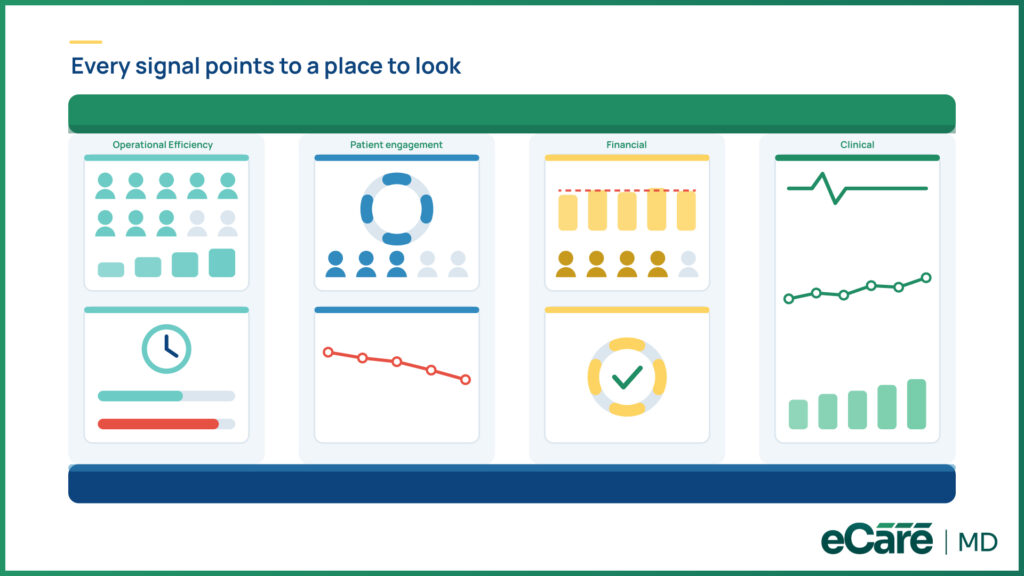
The real picture starts to come into focus when practices look at CCM performance from more than one angle. A program may have strong enrollment but struggle with retention, or meet billing requirements while care coordinators are stretched too thin.
That is why the most useful CCM program metrics fall into four connected pillars: operational efficiency, patient engagement, financial performance, and clinical outcomes.
Each pillar answers a different question. Are your teams working efficiently? Are patients staying involved? Is the program financially healthy? And is it making a meaningful difference in patient care? Looking at these areas together gives practices a much clearer view of where the program stands.
| Pillar | KPI | What It Measures | Strategic Value | Watch For |
|---|---|---|---|---|
| Operational | Care Coordination | Active caseload per care coordinator | Identifies staffing and capacity issues | A rising caseload with performance may indicate capacity constraints |
| Operational | Documentation Timeliness | Time between care activity and EHR entry | Supports timely documentation and workflow visibility | Documenting lag can lead to billing period |
| Patient Engagement | Enrollment Rate | Percentage of successfully enrolled | Evaluates outreach effectiveness | Enrollment falling flat while eligible patient population grows |
| Patient Engagement | Monthly Retention Rate | Percentage of enrolled patients remaining active | Identifies retention churn trends | A month-over-month decline concentrated in a specific patient cohort |
| Financial | 20-Minute Threshold Rate | Percentage of active patients meeting applicable monthly threshold | Measures billing performance | Consistently clustering just above applicable threshold |
| Financial | Claim First-Pass Acceptance | Percentage of submitted CCM claims accepted without denial | Highlights billing and documentation issues | Repeated denials associated with the same reason |
| Clinical | Clinical Outcome Indicators | Relevant changes in patient health and care outcomes | Indicates whether program impact | Persistent negative trends requiring clinical review |
These chronic care management performance indicators work best as a group, not in isolation. For example, a high enrollment rate may look promising, but if retention is falling and care coordinators are overloaded, the program may have an underlying capacity problem. Likewise, strong claim acceptance does not necessarily mean patients are achieving better health outcomes.
The goal is not to chase every number that moves. It is to connect the dots between these CCM program success metrics and understand what they say about the program as a whole. Detailed clinical measurement methods require a deeper look at patient-level outcomes and analytics, but the framework above gives practices a starting point for monitoring overall CCM performance.
How Can Practices Turn CCM Metrics Into Action?
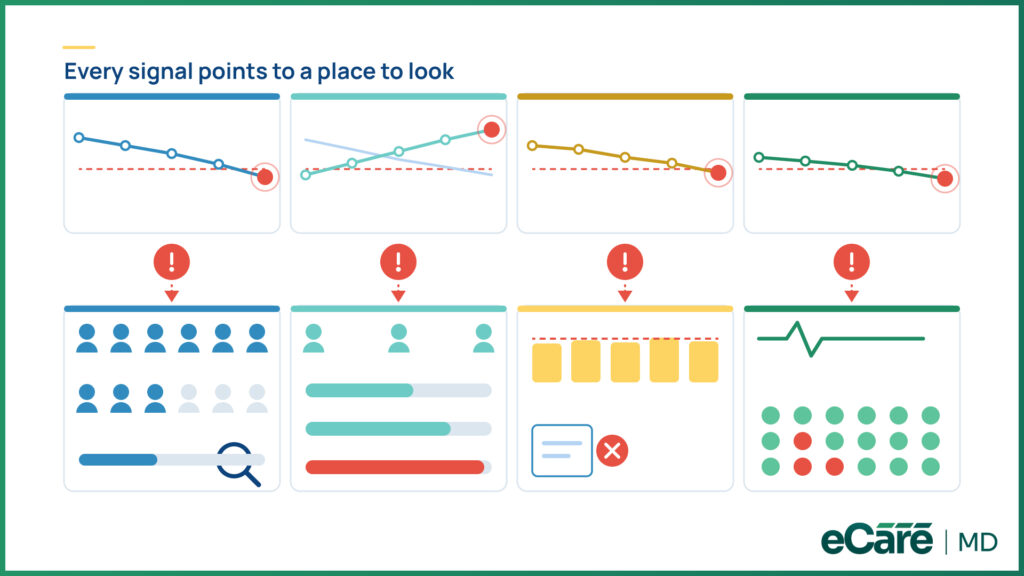
Tracking CCM program KPIs is only half the job. The real value comes from knowing what the numbers are trying to tell you and responding before a small gap turns into a bigger problem. A declining metric is not always the problem itself. Often, it is a signal that something further down the line needs attention.
1. When Enrollment or Retention Starts to Decline
A drop in enrollment conversion or monthly retention can point to gaps in patient outreach or engagement. Perhaps eligible patients are not moving forward with enrollment, or existing patients are losing interest in the program over time.
Instead of treating the decline as just another number on a dashboard, practices should look at where the change is happening. Is enrollment slowing across the entire patient population or within a specific group? Is retention dropping after a particular point in the patient journey? These patterns can help teams identify where engagement may be falling through the cracks.
2. When the Care Team Is Reaching Capacity
Growing patient numbers are generally a good sign, but only if the care team can keep up. Rising coordinator caseloads combined with slower documentation can indicate that workloads or workflows are becoming a bottleneck.
This is where CCM program metrics can help practices keep a finger on the pulse of day-to-day operations. Reviewing care coordinator utilization alongside documentation timeliness can show whether staffing capacity is keeping pace with the active CCM population or whether the team is beginning to stretch too thin.
3. When Financial Performance Falls Behind
A low percentage of patients meeting the applicable monthly care-time requirement or a decline in claim first-pass acceptance can signal potential workflow or documentation gaps. These numbers do not automatically explain the cause, but they can show where a closer review is needed.
For example, patients consistently falling short of the applicable threshold may point to gaps in time tracking or care delivery workflows. Similarly, repeated claim denials for the same reason may indicate a documentation or billing issue that needs attention. The goal here is to identify the signal early, while detailed reimbursement strategies can be addressed separately.
4. When Clinical Trends Start Moving in the Wrong Direction
Clinical outcome indicators provide another layer of insight. A negative trend may highlight individual patients or patient groups that require closer clinical review.
The key is to look for meaningful patterns rather than reacting to every small change. If a particular cohort continues to show poor outcomes, the data can help care teams decide where to focus their attention. A deeper analysis of clinical outcomes belongs within a dedicated clinical analytics process, but these chronic care management metrics can serve as an early warning system.
Ultimately, the purpose of measurement is not to create more reports. It is to turn chronic care management performance indicators into informed decisions. When practices connect a KPI signal with the right area of review, whether it is engagement, capacity, financial performance, or clinical trends, the data becomes far more than a number on a dashboard.
How Often Should Practices Review CCM Program KPIs?
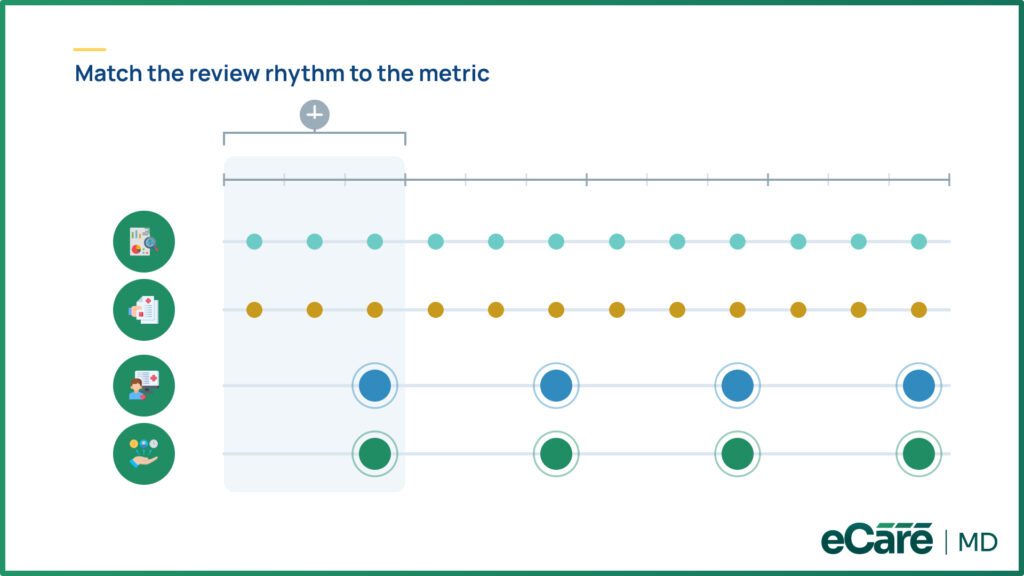
There is little value in checking CCM program KPIs too often if the numbers have not had enough time to reveal a meaningful pattern. At the same time, waiting too long can allow small problems to go unnoticed. The key is to create a review rhythm that matches the type of metric being measured.
Before setting improvement targets, practices should first establish a baseline. A 30- to 90-day period can provide a clearer picture of normal program performance and help distinguish a genuine trend from a short-term fluctuation. Without that baseline, it is easy to chase numbers that may simply be temporary changes.
Operational and financial metrics usually need closer attention. Reviewing factors such as care coordinator utilization, documentation timeliness, threshold achievement, and claim first-pass acceptance on a monthly basis can help practices spot workflow or billing-related issues before they start piling up.
Patient engagement and clinical trends, however, may take longer to show meaningful changes. Enrollment patterns, retention, and clinical outcomes should be evaluated over a longer period where appropriate, with results compared against historical performance and established program targets.
The goal is not to hold a meeting every time a number moves. Recurring reviews should help teams identify meaningful changes, understand how performance is shifting over time, and decide where program priorities need to change. In short, consistency matters more than constantly watching the dashboard.
How Does eCareMD Help Practices Monitor CCM Program KPIs?
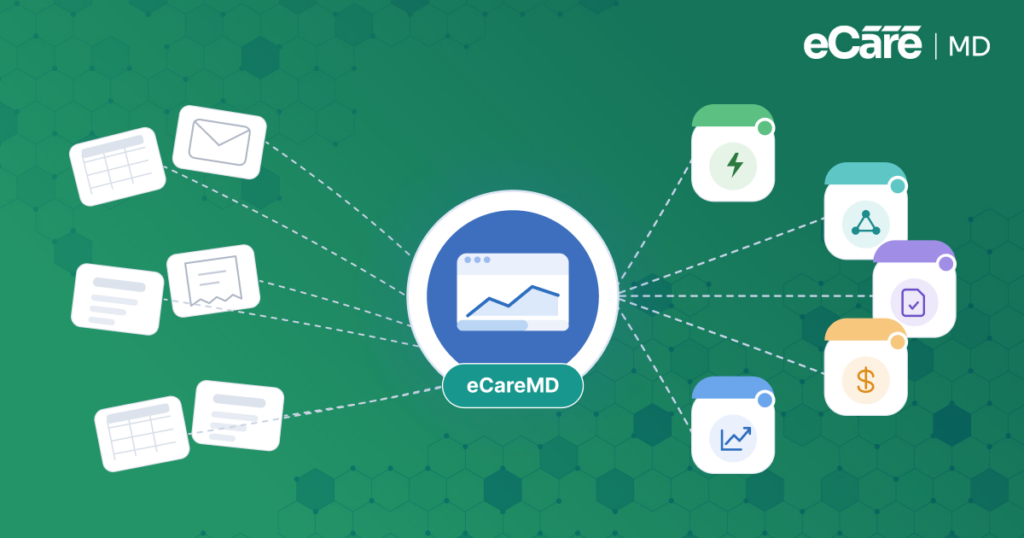
Tracking CCM program KPIs becomes difficult when the data behind them is scattered across spreadsheets, EHRs, billing systems, and manual reports. Even when practices know what they need to measure, pulling everything together can become a task in itself.
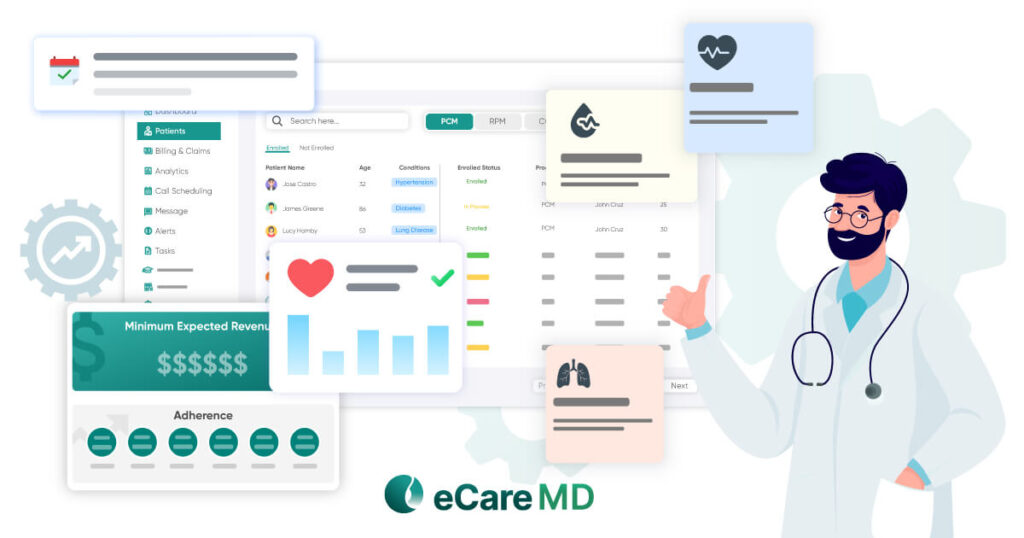
eCareMD, developed by Medarch Inc., brings enrollment, care activities, time tracking, documentation, billing, and patient data into one connected workflow. This gives practices a more centralized view of operational, patient engagement, financial, and clinical performance without constantly chasing numbers across different systems.
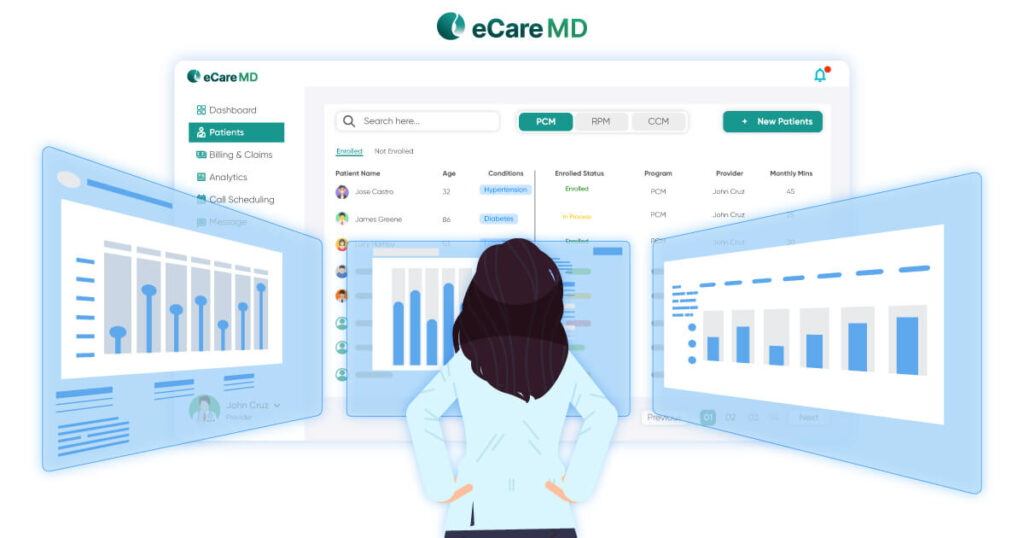
Managers can review workload and documentation trends across care coordinators while monitoring enrollment, retention, and patient engagement patterns. With centralized dashboards and reporting, ccm software for healthcare providers can also reduce the dependence on manually compiled spreadsheets and recurring data pulls.
The result is more consistent visibility into CCM program metrics. Instead of spending time gathering data, practices can focus on what the numbers are telling them and where action may be needed.
5 Tips & Tricks to Increase Patient Engagement with CCM Software
Download NowConclusion
A successful CCM program is about more than enrollment numbers or monthly reimbursements. The full picture comes from looking at four connected areas: operational efficiency, patient engagement, financial performance, and clinical outcomes.
These CCM program success metrics are most valuable when they lead to action. Consistent data collection, centralized visibility, and regular KPI reviews can help practices spot meaningful changes and make better decisions before small gaps become bigger problems.
This is where chronic care management technology can make a real difference. By bringing key program data into one place, platforms like eCareMD can give practices a clearer, more consistent view of CCM performance. Instead of chasing numbers across spreadsheets and disconnected systems, teams can focus on what those numbers are telling them and what to do next.
The Ultimate Guide to Measuring ROI in Chronic Care Management Software
Frequently Asked Question’s
The key KPIs for a chronic care management program generally fall into four areas: operational efficiency, patient engagement, financial performance, and clinical outcomes. Common metrics include care coordinator utilization, documentation timeliness, enrollment conversion, patient retention, care-time threshold achievement, claim first-pass acceptance, and relevant clinical outcome indicators.
A CCM program should be measured using more than revenue or billing totals. Practices should evaluate how efficiently the care team operates, whether patients remain engaged, how consistently the program performs financially, and whether clinical trends show meaningful progress. Looking at these metrics together provides a clearer view of overall program performance.
Practices should track metrics related to care-team workload, documentation, patient enrollment and retention, financial performance, and clinical outcomes. The most useful approach is to review these metrics together, as changes in one area can often explain performance gaps in another.
Care coordinator utilization can be measured by reviewing the number of active CCM patients assigned to each coordinator alongside care activity and documentation trends. If caseloads continue to increase while documentation delays or other performance issues appear, it may indicate that staffing capacity is not keeping pace with the patient population.
Useful financial metrics include the percentage of active patients meeting applicable monthly care-time requirements and claim first-pass acceptance rates. A decline in either metric can signal potential issues with care workflows, time tracking, documentation, or billing processes that may require further review.
Practices can track enrollment conversion to understand how effectively eligible patients are moving into the CCM program and monitor monthly retention to see how many enrolled patients remain active. Reviewing these trends over time can help identify engagement gaps or patient groups with higher dropout rates.
Operational and financial KPIs are generally useful to review monthly, while patient engagement and clinical trends may require a longer period to show meaningful patterns. Establishing a 30- to 90-day baseline can also help practices compare current performance against historical results and program targets.
CCM software can centralize data related to enrollment, care activities, time tracking, documentation, billing, and patient performance. This reduces the need to manually pull information from multiple spreadsheets or systems and gives managers more consistent visibility into key program metrics.
CCM program metrics can reveal patterns in coordinator workload, care activity, and documentation timeliness. By reviewing these trends regularly, practices can identify potential capacity issues or workflow bottlenecks and make more informed decisions about staffing and program priorities.





























![The Future of Remote Patient Monitoring: CMS Innovations & Emerging Trends [2026]](/wp-content/uploads/2024/07/Blog-36-The-Future-of-Remote-Patient-Monitoring_-Trends-AI-Innovation-CMS-Updates-for-2026-1024x538.png)