



























eClinicalWorks logo
Practice Fusion logo
athenahealth logo
AdvancedMD logo
Cerner logo
NextGen logo
Epic logo
DrChrono logo
Tebra logo
Office Ally logo
Charm Health logo
Elation Health logo
Criterions logo
Veradigm logo
Allscripts logo
Open EMR logo
Nextech logo
CareCloud logo
Cerbo logo
ModMed logo
Meditech logo
Office Practicum logo
Praxis EHR logo
MedHost logo
McKesson logo
Greenway Health logo
EyeMD logo
eClinicalWorks logo
Practice Fusion logo
athenahealth logo
AdvancedMD logo
Cerner logo
NextGen logo
Epic logo
DrChrono logo
Tebra logo
Office Ally logo
Charm Health logo
Elation Health logo
Criterions logo
Veradigm logo
Allscripts logo
Open EMR logo
Nextech logo
CareCloud logo
Cerbo logo
ModMed logo
Meditech logo
Office Practicum logo
Praxis EHR logo
MedHost logo
McKesson logo
Greenway Health logo
EyeMD logo

The eCareMD CCM Advantage

One CCM Platform for Every Step of Chronic Care Management

eCareMD simplifies patient enrollment, enables personalized care planning, and automates manual workflows—helping your team deliver faster, more coordinated care.

Quick Answer

What is Chronic Care Management Software?

Chronic care management software helps practices run Medicare’s CCM program end-to-end, enrollment, care plans, monthly time tracking, and CMS billing. eCareMD, developed by Medarch Inc., adds AI that flags high-risk patients and surfaces care gaps, so care teams spend less time on admin and more on care.

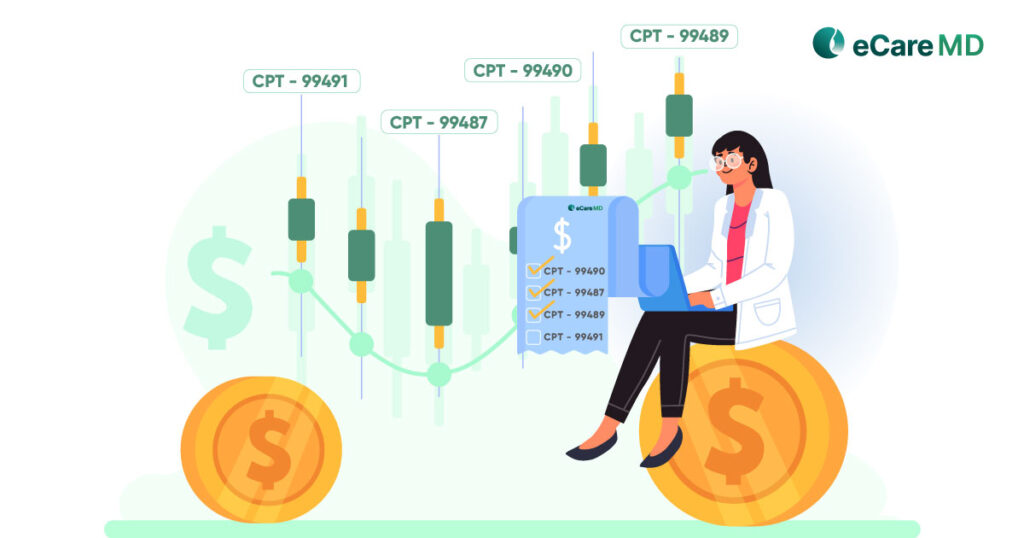
CPT 99490 99439 99491 99487 99489

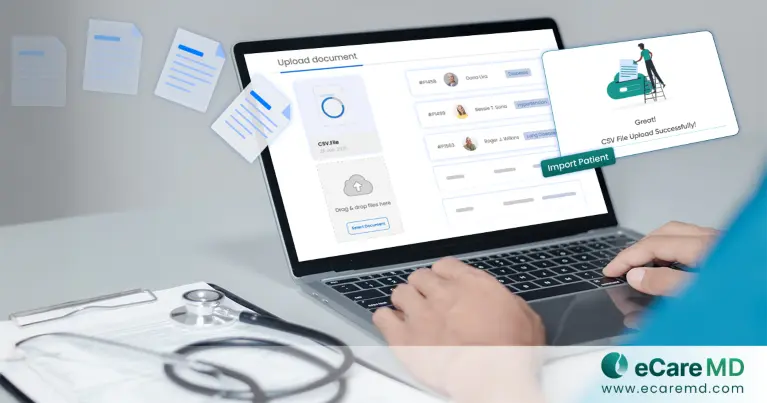
Enroll Patients Faster

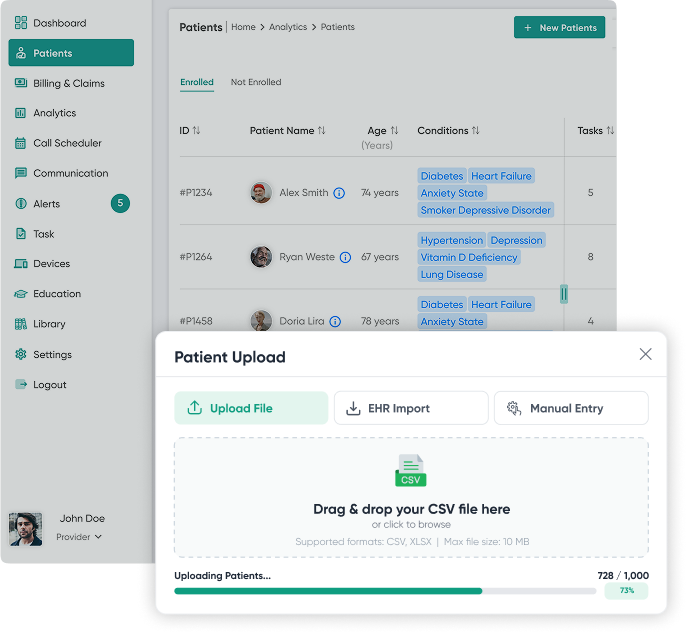
  • Automatically verify Medicare eligibility for CCM enrollment.
  • Integrate seamlessly with EHRs using HL7 and FHIR.
  • Collect secure digital patient consent in minutes in the CCM Platform.
Enroll Patients Faster

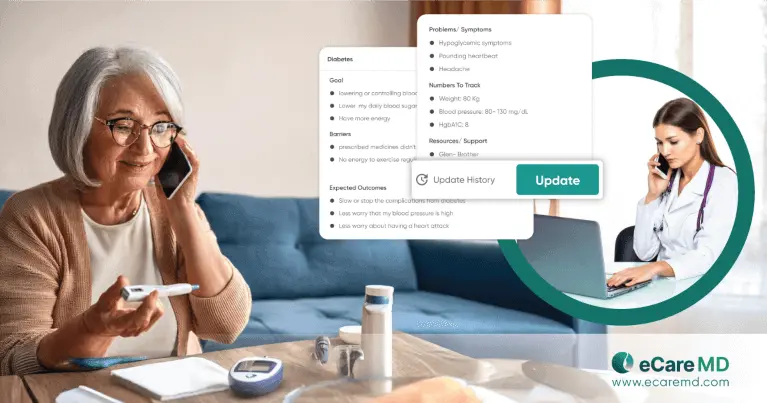
Personalized Care Planning

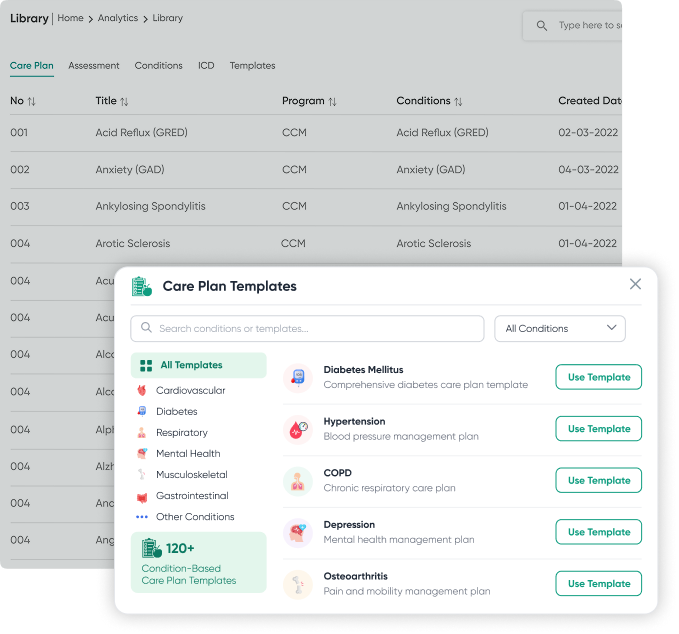
  • Access 20+ condition-specific care plan templates instantly in the care management solution.
  • Identify care gaps with intelligent clinical prompts.
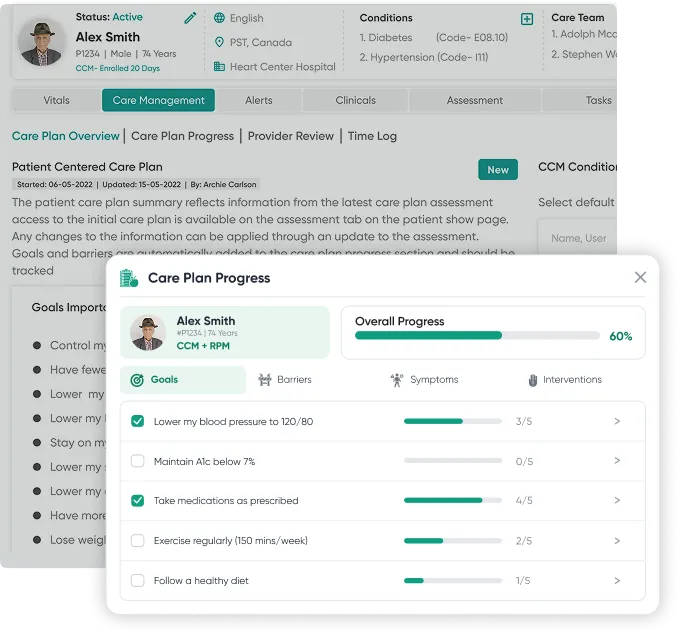
  • Assign and track care team tasks effortlessly.
Personalized Care Planning

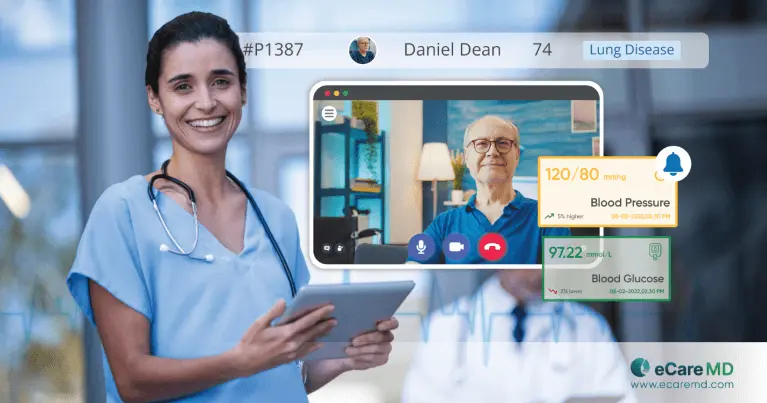
Automated Time Tracking & Billing

  • Care management solutions automatically capture required monthly CCM service time.
  • Assign accurate CMS CPT codes for every encounter.
  • Generate audit-ready documentation for compliant Medicare billing.
Automated Time Tracking & Billing

How CCM Software Works

How eCareMD Simplifies Chronic Care Management

From enrolling eligible Medicare patients to submitting CMS-compliant claims, eCareMD streamlines your entire CCM workflow in just three simple steps—helping your team spend less time on administration and more time delivering quality patient care.

The Solution

Chronic Care Management Tools that Streamline Your CCM Program

eCareMD's chronic care management software brings together six capabilities: patient enrollment, care plan builder, two-way patient communication, care-team coordination, time tracking, and CCM billing so your practice runs its full CCM program in one CMS-compliant system.

1

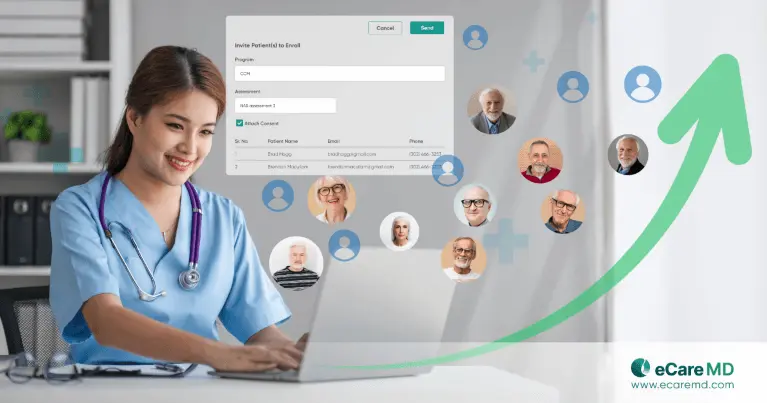
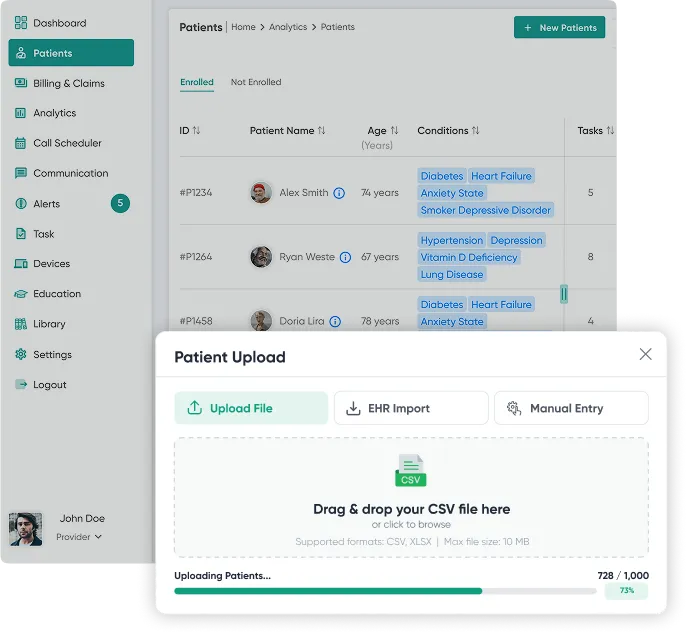
Bulk Enrollment Made Simple Secure Bulk Consent Through Text or Email Feature Image

Automated Eligibility Checks Feature Image

Secure Digital Consent Feature Image

2

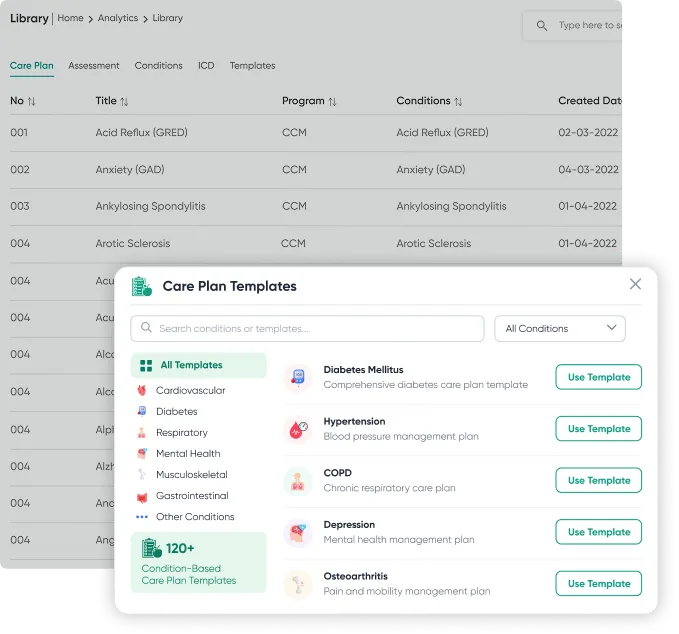
Condition-Based Care Plan Templates Feature Image

Configure Care Plan With a Few Clicks Feature Image

Share Care Plan with Patients via Text and Email Feature Image

3

Align your CCM Software's workflow with your clinical workflow for effective care delivery.

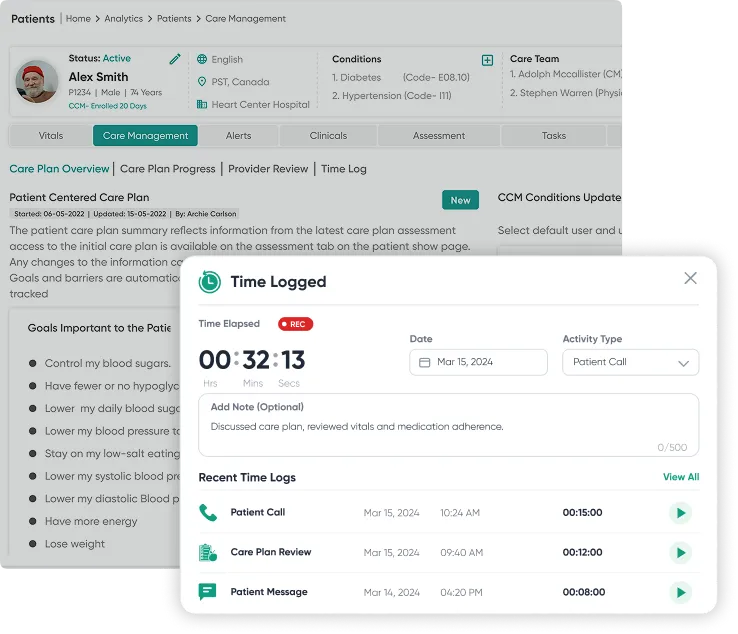
Track Program in-line with Care Plan Feature Image

Escalate and Act on Critical Issues Feature Image

Create and Complete Scheduled Tasks Feature Image

4

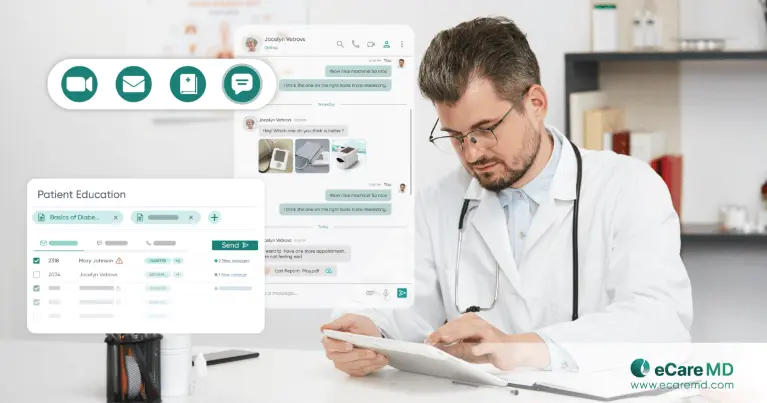
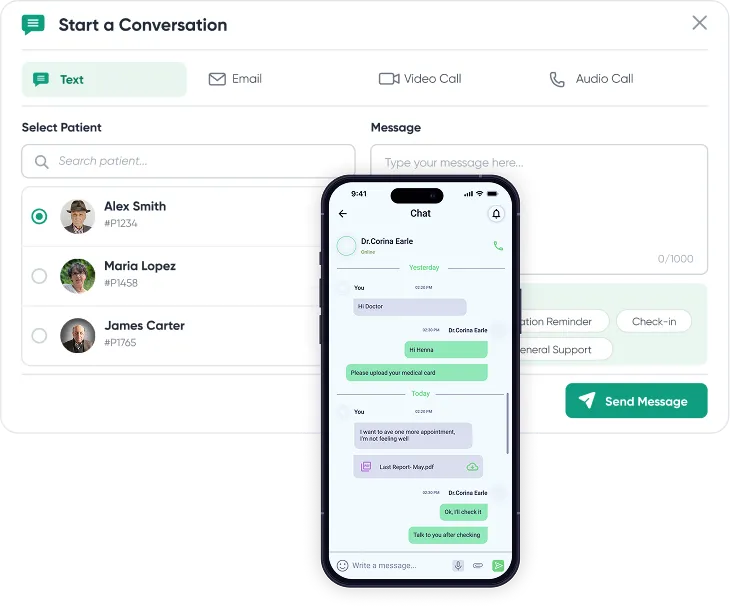
Inbuilt Two-Way SMS and Calling System Feature Image

Custom Call Scheduling, Reminders and Alerts Feature Image

Tailored Patient Education Materials Feature Image

5

Automated Time Tracking for Every Task Feature Image

Automated Patient Eligibility Check for CCM Feature Image

Exportable Monthly Billing Reports Feature Image

Trusted by 125+ Practices

What Our Clients Say About eCareMD

Who It's For

Who Uses eCareMD for Chronic Care Management?

eCareMD is CCM software for mid-size practices, independent primary care practices, multi-specialty groups, FQHCs, ACOs, and health systems, supporting the care coordinators, billers, and clinicians who run chronic care management programs every day.

By Specialty

By Specialty

Built for the clinicians who own chronic disease follow-up.

Primary Care Internal Medicine Cardiology Endocrinology Nephrology Geriatrics
By Practice Type

By Practice Type

Scales from a single site to a multi-location network.

Independent primary care Multi-specialty groups FQHCs ACOs Health systems Mid-size practices
By Care Role

By Care Role

The teams who run your chronic care management program day to day.

Care managers & coordinators Billing & compliance staff Practice owners Clinical staff

Not sure if your program qualifies? We'll map your patient panel to billable CCM CPT codes in a 20-minute call. Book a Free Demo →

Conditions Supported

Chronic Conditions eCareMD Helps You Manage

As chronic disease management software, eCareMD includes care-plan templates for diabetes, hypertension, CHF, COPD, and CKD, enabling care teams to manage each patient's conditions to CMS standards.

20+Chronic conditions with ready-built, provider-editable care plans
Book Free Demo →

Type 1 & 2 Diabetes

Glucose goals and A1c follow-up

Cardiovascular Disease

Risk factors and cardiology follow-up

COPD

Exacerbation triggers and follow-up

Depression

Screening cadence and referrals

Alzheimer's / Dementia

Caregiver coordination and safety planning

Post-surgical Complex Care

Recovery milestones and hand-offs

Hypertension

BP targets and medication support

Congestive Heart Failure

Weight and symptom monitoring

Chronic Kidney Disease

Stage-aware goals and nephrology coordination

Obesity

Nutrition and activity goals

Arthritis

Pain and mobility goals

Integration

Chronic Care Management That Connects to Your EHR

eCareMD's chronic care management software integrates with major EHRs via HL7 and FHIR, so patient data, care plans, and CCM time flow into your existing clinical workflow with no duplicate entry.

Measurable Outcomes

How Does eCareMD Improve Your Practice's CCM Results?

Purpose-built for Medicare’s CCM program, eCareMD turns every logged minute into an audit-ready CMS claim — predictable, recurring Medicare CCM reimbursement without added admin.

Fewer avoidable hospital readmissions
22%

Fewer avoidable hospital readmissions

Structured care plans and monthly check-ins catch problems between visits before they escalate into an admission.

Patient enrollment growth
38%

Patient enrollment growth

Automated eligibility checks and bulk enrollment help practices enroll every eligible Medicare patient, faster.

CCM reimbursement captured per provider
2.3x

CCM reimbursement captured per provider

Automatic time tracking and CPT coding mean 99490, 99439, 99491, 99487 and 99489 get billed correctly every month.

Figures reflect results reported by eCareMD CCM practices and are not a guarantee of clinical or financial outcomes. Individual results vary by patient panel, program design and adherence.

See Your Projected Results →

Case Studies

Chronic Care Management Case Studies

See how practices use eCareMD's chronic care management software to improve outcomes and grow reimbursement.

Revolutionizing Chronic Care: How eCareMD Transforms...

Transforming Patient Enrollment: How eCareMD Boosted Enrollment ...

Empowering Patients: A Case Study on Transformative...

Patient-Centric Care: A Case Study on the Role of eCareMD...

...

eCareMD vs. Other Chronic Care Management Options

How Is eCareMD Different from Other CCM Software?

eCareMD gives practices software they control: automated enrollment, condition-specific care plans, 20-minute time tracking, and CCM billing in one platform capabilities that in-house or managed-service programs handle only partially or manually.

Capability
eCareMD Software you control
In-house / manual Your staff, your spreadsheets
Managed service Outsourced care team
Automated eligibility + enrollmentScreen the panel for 2+ chronic conditions and capture consent in one flow.
Yes
Manual
Vendor-run
20+ condition-specific care plansTemplates for diabetes, hypertension, COPD, CHF, CKD and more — editable by the provider.
Yes
Build your own
Vendor templates
Automatic 20-minute time trackingEvery call and care task timed against the CMS monthly threshold as it happens.
Yes
Spreadsheets
Vendor-tracked
Auto CPT coding (99490 + related)Codes assigned as time thresholds are met, with audit-ready documentation attached.
Yes
Manual
Vendor-billed
Practice keeps the patient relationshipYour own care team makes the calls, under your practice’s name.
Yes
Yes
Outsourced calls
HIPAA · SOC 2 Type II · ISOEncrypted transport, role-based access and full audit trails.
Yes
Varies
Varies

In-house and managed-service coverage varies by program and vendor. Compare eCareMD against your shortlist directly.

Compare eCareMD to Your Shortlist →

Why eCareMD For Your CCM Program

Why Do Practices Choose eCareMD for Chronic Care Management?

Practices choose eCareMD because it's purpose-built for chronic care management: AI-powered CCM software that flags high-risk patients, surfaces care gaps, and keeps claims CMS-compliant — a program you own and control.

AI-Powered & Purpose-Built for CCM

eCareMD’s AI continuously scores your panel and flags the patients most likely to deteriorate, so your team acts before an ER visit, not after.

125+Practices
40+EHR integrations
1,000+Patients enrolled fast

Enroll 1,000+ Patients Fast

Bulk-upload from your EHR, auto-qualify eligible patients, and capture consent by text or email with software for chronic care management — onboarding that took hours now takes minutes.

HIPAA & SOC 2 Secure

Built for healthcare from day one: signed BAA, encryption in transit and at rest, SOC 2 Type II and ISO 27001 — the security layer of CMS-compliant CCM documentation software.

Connects to 40+ EHRs

Bi-directional FHIR and HL7 integrations with Epic, Cerner, athenahealth, and eClinicalWorks — CCM software compatible with Epic EHR and more, with no rip-and-replace.

Maximize CCM Reimbursement

AI auto-logs care-management time and drafts documentation, so 20-minute thresholds and CPT 99490/99439 claims are captured accurately and audit-ready.

Higher Patient Engagement

AI personalizes outreach cadence and condition-specific education, lifting enrollment and medication adherence without adding staff workload.

eCareMD's Exclusive Features

No Add-Ons. No Extra Cost. Everything Beyond Core CCM, Built In.

Beyond the core CCM workflow, every practice gets eCareMD's full stack of platform capabilities and hands-on support built into your chronic care management software at no additional cost.

HIPAA Compliant

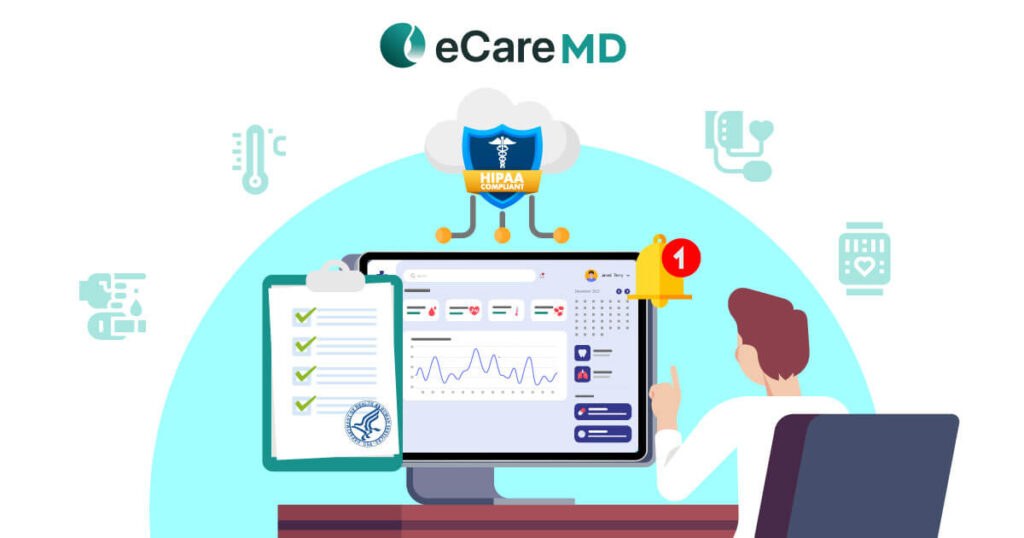
A secure, HIPAA-compliant care-coordination platform that gives sensitive patient health information unparalleled protection.

Mobile App

The Medarch mobile app gives your patients and care staff easy, on-the-go access to care — anytime, anywhere.

Reporting

Customizable, real-time reports and in-depth analytics so you see clearly and continuously optimize patient care.

Audit Logs

Complete audit trails strengthen security across operations, administration, and day-to-day functioning.

Live Support

24/7 customer support that keeps your care continuum running — without ever disrupting your workflow.

Security

Multiple layers of encryption create a secure ecosystem around your entire practice and its data.

CCM Calculator

CCM Revenue Calculator — See What Your CCM Program Can Earn

Estimate your practice's monthly and annual Medicare CCM reimbursement based on eligible patients (2+ chronic conditions), expected enrollment rate, and billing codes — then get a personalized revenue report from the eCareMD team.

Eligible Medicare patients Patients with 2+ chronic conditions 500
5010,000
Expected enrollment rate Share who consent & enroll 45%
5%90%
Care plan type CMS 2024 national average / patient / month
Estimated annual revenue
$167,400

in recurring CCM reimbursement, every year

225
Patients enrolled
$13,950
Monthly revenue

No credit card required — or book a live demo

HIPAA compliant SOC 2 & ISO 27001 Maximized reimbursement

Estimates use CMS national average non-facility reimbursement rates and are for illustration only. Actual revenue varies by locality (GPCI), payer mix, patient eligibility, and billable care management time. eCareMD automates documentation, time tracking, and CPT coding (99490, 99439, 99491, 99487, 99489) to help you capture every eligible CCM reimbursement.
CCM CPT Codes

Chronic Care Management CPT Codes & Reimbursement

eCareMD's Medicare chronic care management software auto-assigns CPT 99490 and logs the required 20 minutes per month for audit-ready monthly claims requiring 2+ chronic conditions.

CPT Code
What It Covers
Requirement
99490Core
CCM — first 20 min of clinical staff time / monthThe core monthly CCM code, auto-assigned once 20 minutes is logged.
Patient has 2+ chronic conditions; comprehensive care plan; consent
99439Add-on
Each additional 20 min of clinical staff time (add-on to 99490)Billed in further 20-minute increments once 99490 is met.
Up to 2 units per month
99491Physician
CCM provided personally by the physician / QHP — first 30 min / monthFor time the physician or QHP delivers directly, not clinical staff.
Physician/QHP time (not clinical staff)
99487Complex
Complex CCM — first 60 min of clinical staff time / monthFor patients needing moderate-to-high complexity medical decision-making.
Moderate–high complexity medical decision-making
99489Add-on
Complex CCM — each additional 30 min (add-on to 99487)Billed in further 30-minute increments once 99487 is met.
Add-on to 99487

Code descriptors and time thresholds summarise current CMS guidance and are provided for reference only — not billing or legal advice. Payment amounts vary by locality, payer and year; confirm against the CMS Physician Fee Schedule before submitting claims.

See How eCareMD Codes It →

FAQ

Frequently asked questions

Find answers to the most frequently asked questions about our chronic care management Software.

Chronic Care Management (CCM) is a Medicare-covered service that helps patients manage two or more chronic conditions expected to last at least 12 months or until death. CCM includes care coordination, medication management, care-plan development, patient communication, and ongoing monitoring. The goal is to provide continuous, coordinated support and reduce complications or avoidable hospitalizations.
Patients generally qualify for Medicare CCM when they have two or more chronic conditions expected to last at least 12 months or until death and that place them at significant risk of death, acute exacerbation, decompensation, or functional decline. Examples include diabetes, hypertension, COPD, cardiovascular disease, asthma, and depression.
Yes. Providers must obtain the patient's written or verbal consent before billing CCM services. The patient should understand the services available, potential cost-sharing, that only one practitioner can bill CCM during a calendar month, and their right to stop services. Consent must be documented in the patient's medical record.
Standard CCM generally requires at least 20 minutes of clinical staff time per calendar month, directed by a physician or qualified healthcare professional. Additional time can be billed using applicable add-on codes. Physician or qualified professional CCM can use separate time thresholds, while complex CCM has higher time requirements.
CCM activities can be performed by clinical staff working under the direction and general supervision of a physician or other qualified healthcare professional, when Medicare requirements are met. Physicians, nurse practitioners, physician assistants, clinical nurse specialists, and other qualified practitioners may also provide applicable CCM services. State scope-of-practice and supervision requirements must be followed.
Common Medicare CCM codes include 99490 for the first 20 minutes of clinical staff time and 99439 for each additional 20 minutes. For physician or qualified professional time, 99491 covers the first 30 minutes and 99437 each additional 30 minutes. Complex CCM uses 99487 and 99489.
Chronic care management software costs vary based on factors such as patient volume, number of users, features, integrations, customization, implementation, and support. Some vendors charge per provider, patient, or month, while others offer customized pricing. Practices should compare total costs against workflow automation, billing efficiency, staff productivity, and potential reimbursement opportunities.
For most physician practices, CCM and TCM cannot be billed for the same patient during the same month. However, CMS allows RHCs and FQHCs to bill TCM and other care management services for the same beneficiary during the same service period when all applicable requirements are met. Always verify payer-specific billing rules.
A CCM care plan should be comprehensive, patient-centered, and regularly updated. It can include the patient's health problems, treatment goals, expected outcomes, medications, planned interventions, symptom-management strategies, care-team responsibilities, referrals, caregiver needs, and coordination with other providers. The plan should be shared with the patient and relevant members of the care team.
Chronic care management software can improve outcomes by helping care teams consistently track patients, follow care plans, coordinate with providers, communicate with patients, and identify issues requiring attention. Features such as automated reminders, progress tracking, secure communication, and eligibility monitoring can support more proactive care while reducing administrative workload and missed care activities.
CCM focuses on ongoing coordination and management of chronic conditions, while telehealth delivers healthcare services remotely through technologies such as video or audio communication. RPM focuses on remotely collecting and monitoring patient health data, often from connected medical devices. These services address different needs but can work together as part of a broader chronic care strategy.
CCM revenue depends on the number of eligible and enrolled patients, payer mix, applicable reimbursement rates, billable time, staffing costs, and claim collection rates. Practices can estimate potential revenue by multiplying eligible patients by the applicable monthly reimbursement, then accounting for operational costs and denials. Actual reimbursement varies by payer and location.

Yes. FQHCs and RHCs can bill eligible care management services, including CCM, when applicable Medicare requirements are met. Beginning in 2026, CMS allows RHCs and FQHCs to receive separate payment for designated care coordination services established under the Physician Fee Schedule. Practices should verify current CMS and MAC billing requirements before submitting claims.
Outsourcing CCM can reduce staffing demands, provide access to trained care-management resources, and help practices scale programs without building an entire internal team. However, practices may have less direct control over workflows and patient interactions. Vendor quality, communication, compliance, EHR integration, data security, reporting, and transparency should be carefully evaluated before outsourcing.
eCareMD supports technology-driven chronic care management and has published AI-focused applications for CCM, including predictive analytics, personalized care-plan support, remote monitoring insights, NLP, and administrative automation. Its CCM platform also provides automated eligibility checks, time tracking, care-plan management, and billing workflows. AI capabilities should be evaluated based on the specific features available in the current product version.

Blog

Chronic Care Management Insights

Monetizing Chronic Care Management (CCM): CPT Codes, Billing, Reimbursements card image

Monetizing Chronic Care Management (CCM): CPT Codes...

Navigating the Cost of Chronic Care Management Software card image

Navigating the Cost of Chronic Care Management Software

Master the Maze!  Avoid Common Pitfalls in Chronic Care Management card image

Master the Maze! Avoid Common Pitfalls in Chronic Care Management

CCM Patient Engagement with the Right Software Strategies card image

CCM Patient Engagement with the Right Software Strategies

...

temp1 ...


temp2 ...

temp3 ...

temp4 ...

keyboard_control_key