Last Updated: September 24, 2026
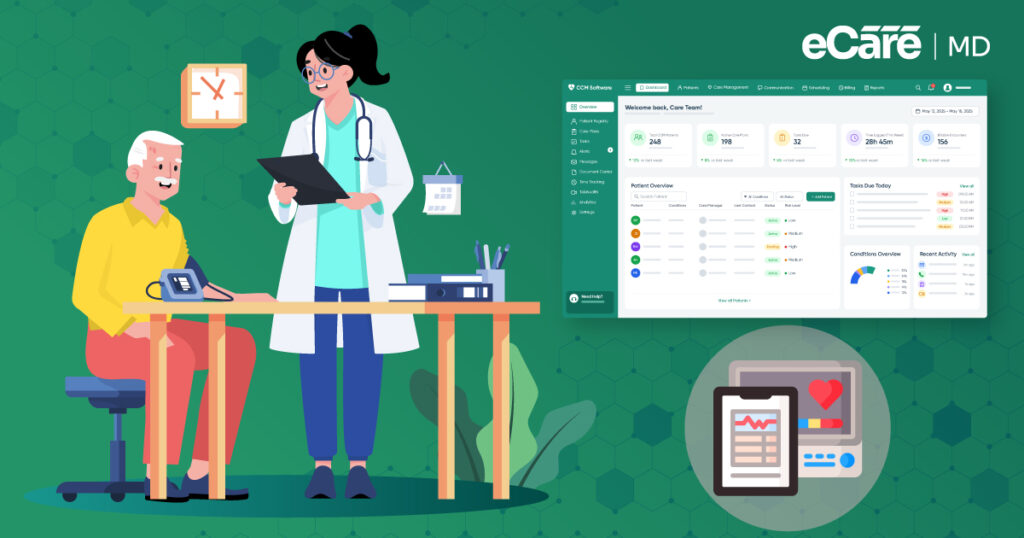
For a patient living with multiple chronic conditions, care does not stop after a clinic visit. There may be medications to manage, follow-ups to remember, and new symptoms to report. For the care team, keeping track of all this takes more than a good visit.
It requires regular communication, coordination, and follow-through. This is where the best care management software can become an important foundation for a value-focused CCM workflow.
Healthcare is also moving from paying for the volume of services toward focusing on the value those services create. Better quality, stronger patient outcomes, coordinated care, and lower unnecessary costs are now at the center of this shift.
Chronic Care Management (CCM) fits well into this model because it keeps patients connected with their care team between visits. Regular follow-ups and proactive support can help teams stay ahead of changing patient needs.
That connection is what makes value-based care with CCM worth exploring. When CCM and value-based care work together, everyday care activities can support bigger goals, from improving patient engagement to strengthening care coordination and using resources more efficiently.
This blog explores how the two approaches connect and how technology can help care teams make that connection work in daily practice.
What Is Value-Based Care With CCM?
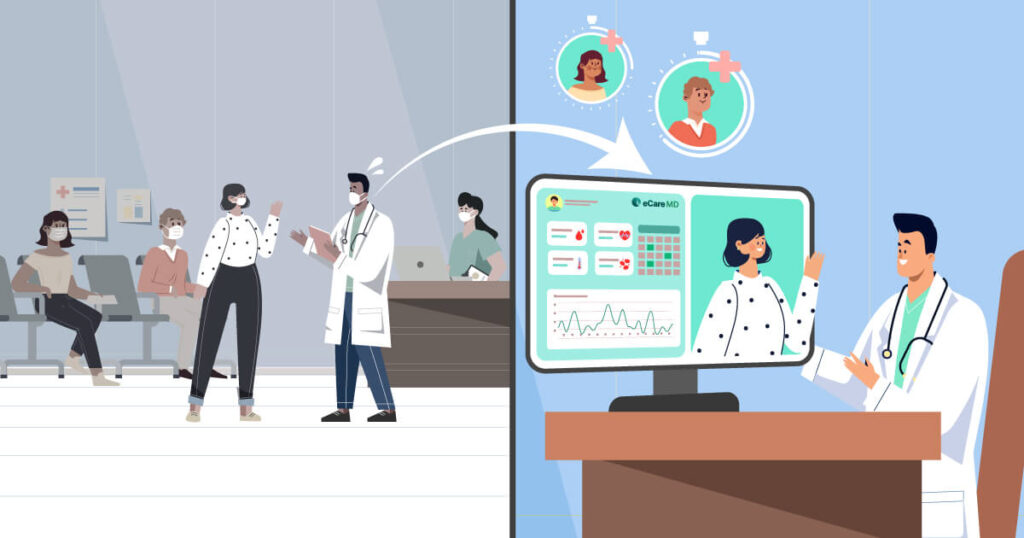
A patient with diabetes may visit the clinic several times a year, but those visits are only small pieces of the care journey. Under a traditional fee-for-service model, the focus is largely on the services provided during those visits. More visits, tests, and procedures generally mean more billable services. The challenge is that the patient’s health does not follow a billing schedule.
Value-based care takes a different approach. Instead of focusing mainly on how many services are delivered, it looks at the quality and value of care patients receive. Are their conditions being managed well? Are problems being addressed early? Is care coordinated across providers? Are patients getting the support they need to stay on track?
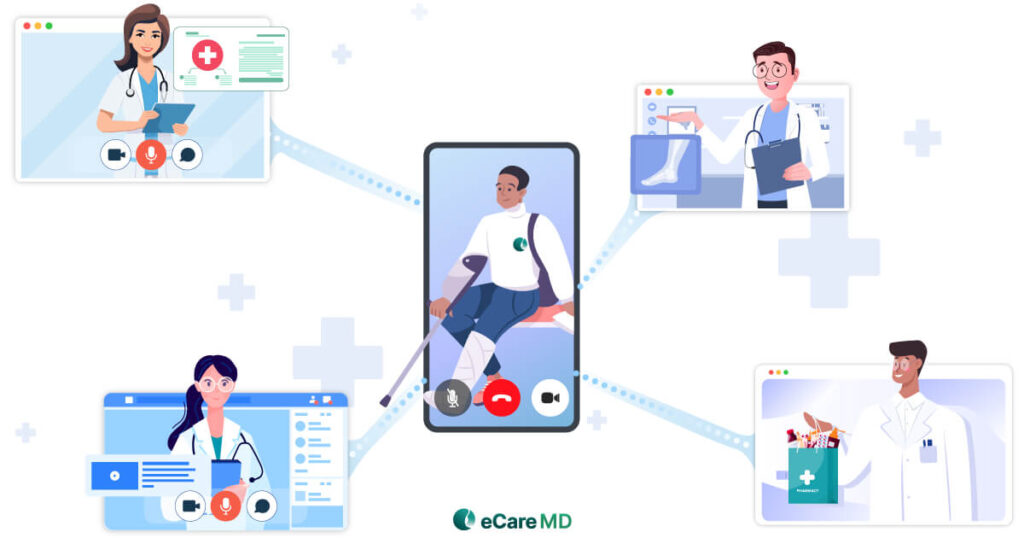
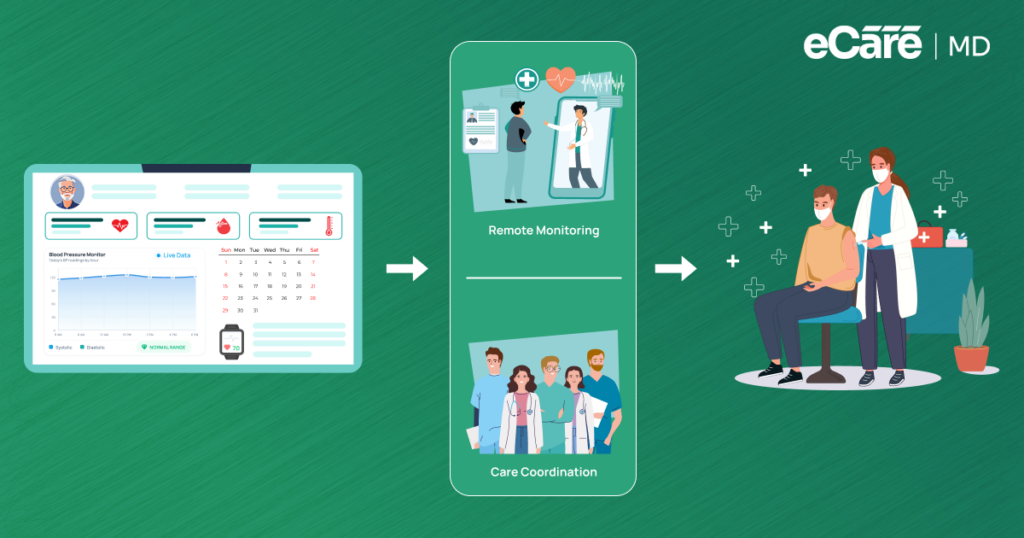
This is where CCM fits in. Chronic Care Management extends care beyond the office by giving teams a way to stay connected with patients through regular follow-ups, care coordination, medication support, and ongoing monitoring.
A patient may not have an appointment that week, but the care team can still check in, identify a concern, and take action before it grows into a bigger issue. That makes CCM value-based care a practical connection.
CCM gives practices an operational framework for managing chronic conditions between visits, while value-based care provides the broader goal: better quality, stronger outcomes, and more efficient care. When the two work hand in hand, everyday CCM activities become part of a larger effort to deliver meaningful value to patients.
How CCM Supports Value-Based Care
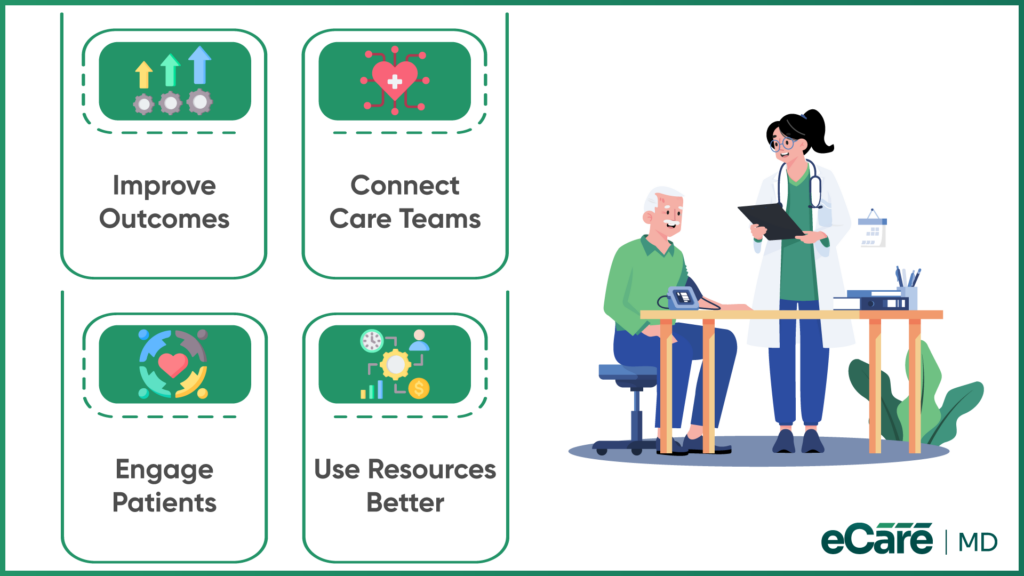
1. Improving Chronic Disease Outcomes
A care plan only helps when someone keeps an eye on what happens after the patient leaves the clinic. CCM gives care teams a way to do that through regular follow-ups, proactive monitoring, and care-plan updates.
When a patient’s condition changes, the team can respond instead of waiting for the next appointment. This ongoing management connects CCM and value-based care by keeping the focus on better chronic disease outcomes.
2. Strengthening Care Coordination
Chronic care often involves several providers, and keeping everyone on the same page can be difficult. CCM helps connect primary care providers, specialists, patients, and other care-team members around the patient’s needs. With better coordination and continuity, care becomes less fragmented, and important follow-ups are less likely to fall through the cracks.
3. Boosting Patient Engagement and Preventive Care
Patients are more likely to stay involved when their care team stays connected with them. Regular outreach, education, and follow-ups give teams opportunities to address concerns, close care gaps, and support healthier choices. This makes CCM value-based care more proactive rather than waiting for problems to surface during the next visit.
4. Optimizing Resource Efficiency
A coordinated workflow can also help practices use their time and resources more effectively. When teams can see what needs attention and organize follow-ups around patient needs, they can reduce avoidable gaps and unnecessary duplication.
It is a practical part of value-based care and chronic disease management, where quality and efficient care go hand in hand.
Strategic Benefits for Healthcare Practices
For a practice, the value of CCM becomes clearer when the day-to-day work starts translating into better care and smoother operations. A team that stays connected with patients, coordinates care, and follows up consistently is better positioned to focus on outcomes rather than simply completing more services.
These are some of the benefits of value-based care with CCM that can shape both clinical care and long-term practice performance.
1. Clinical and Operational Wins
When care teams have a clearer view of what patients need between visits, they can keep care plans updated, follow up on concerns, and maintain continuity. This can support care quality, patient satisfaction, and relevant performance measures without treating any single improvement as guaranteed.
2. Supporting Long-Term Practice Performance
As practices move from service volume toward outcomes, chronic care needs a workflow that can keep up. Chronic care management value-based care can support sustainable chronic-care workflows by helping teams manage patient populations, coordinate ongoing care, and use their time more effectively.
Over time, this creates a more consistent rhythm: identify what needs attention, act on it, and keep the patient connected. That approach can help practices manage growing chronic-care needs without constantly putting out fires.
How to Build CCM Into a Value-Based Care Strategy
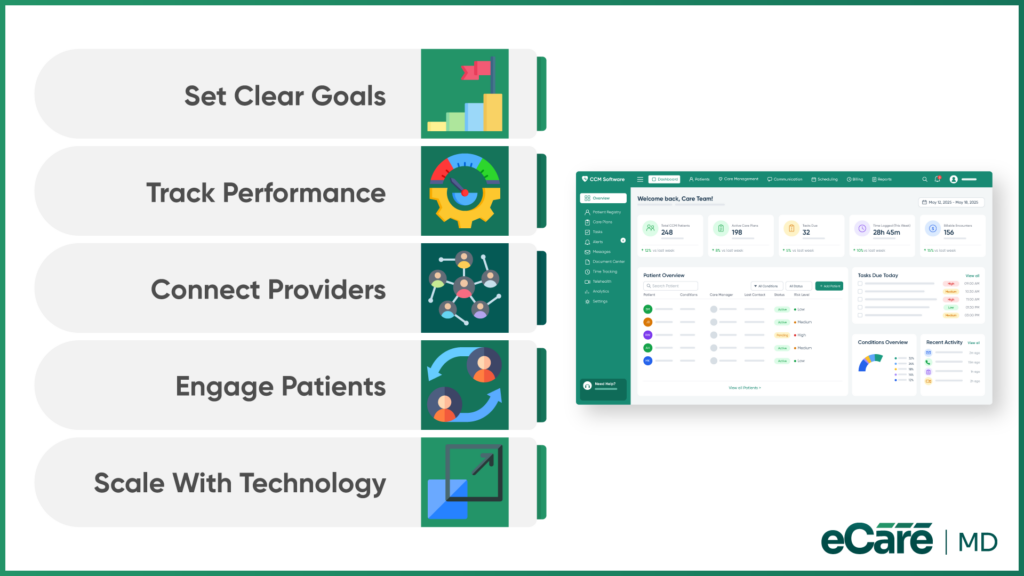
Knowing that CCM supports value-based care is one thing; making it part of everyday practice is another. The key is to connect CCM activities with the outcomes the practice is trying to improve.
In value-based care chronic disease management, that means setting clear goals, tracking what matters, keeping care teams connected, and making patients active participants in their care.
1. Align CCM Goals With Patient Outcomes
Start with the patient, not the task list. A practice can set goals around chronic disease outcomes, patient engagement, and care coordination, then connect those goals with its broader quality objectives. This gives the CCM team a clear direction and makes everyday follow-ups more purposeful.
2. Track Meaningful Performance Measures
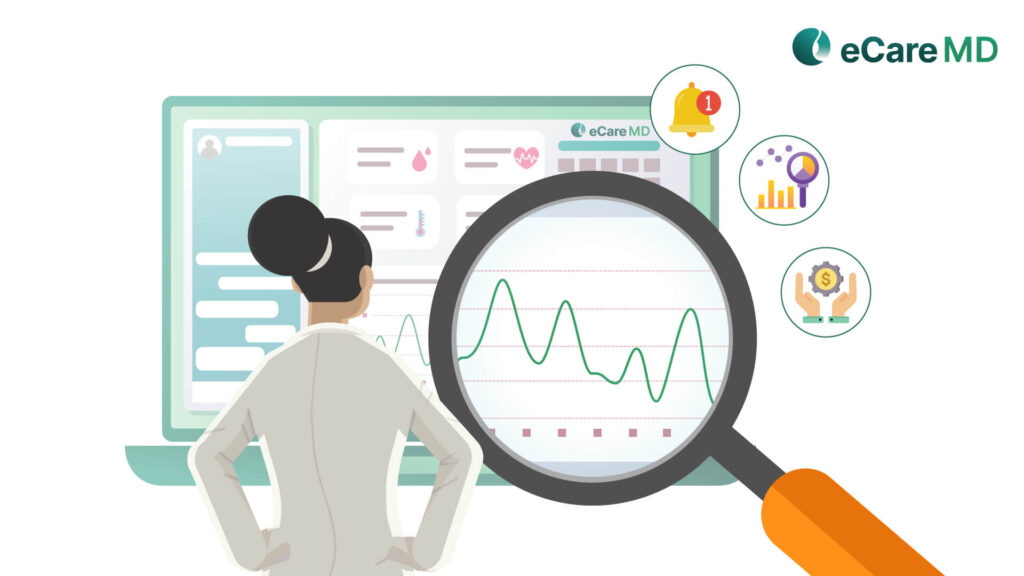
Once goals are clear, teams need a way to see whether their efforts are making a difference. Relevant clinical, operational, and patient-centered measures can show where a CCM program is working well and where it needs attention. Reviewing this data regularly helps practices make informed improvements rather than relying on guesswork.
3. Standardize Cross-Provider Communication
Good care can quickly become fragmented when every provider follows a different communication process. Consistent methods for sharing updates, coordinating follow-ups, and keeping care plans aligned can help everyone work from the same picture. This supports continuity as patients move between providers and care settings.
4. Strengthen Patient Education and Engagement
A value-based strategy also depends on what patients do between visits. Clear education, shared goals, regular communication, and ongoing follow-up can help patients stay involved in their care. Rather than treating engagement as a one-time conversation, CCM can make it part of the ongoing relationship.
5. Use Technology to Scale Value-Based CCM
As the number of patients grows, managing these activities manually can become difficult. Technology can help teams track populations, organize workflows, coordinate care, and maintain consistency across the program.
A connected care management system can bring these pieces together, making it easier for teams to put a value-based CCM strategy into practice without adding unnecessary complexity.
Simplify Value-Based CCM Streamline connected CCM workflows with eCareMD.
How eCareMD Supports Value-Based Care Success
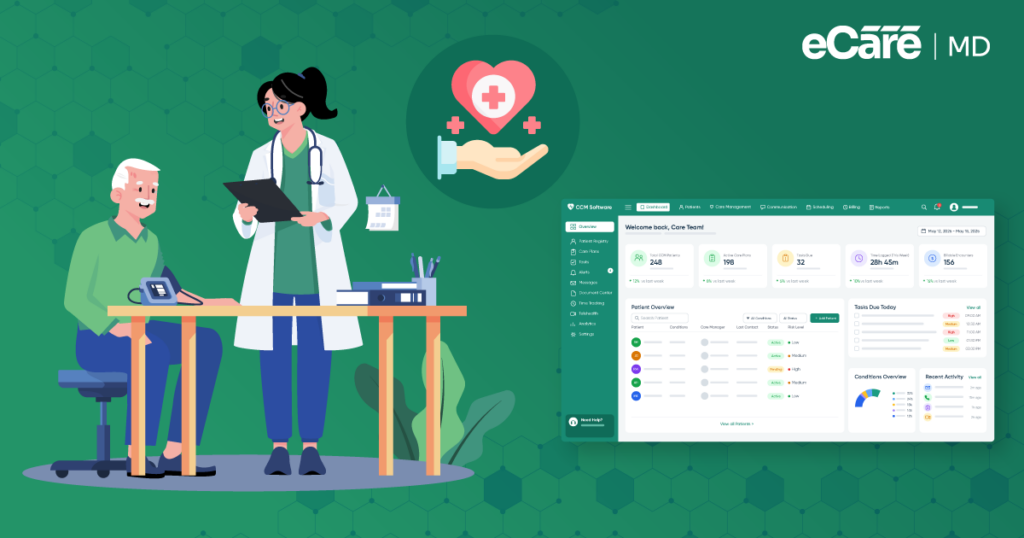
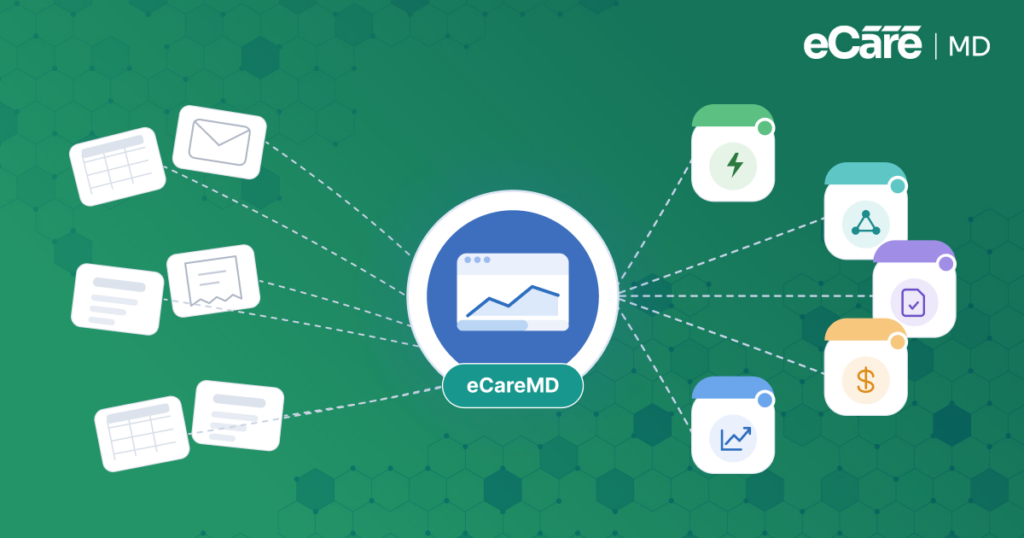
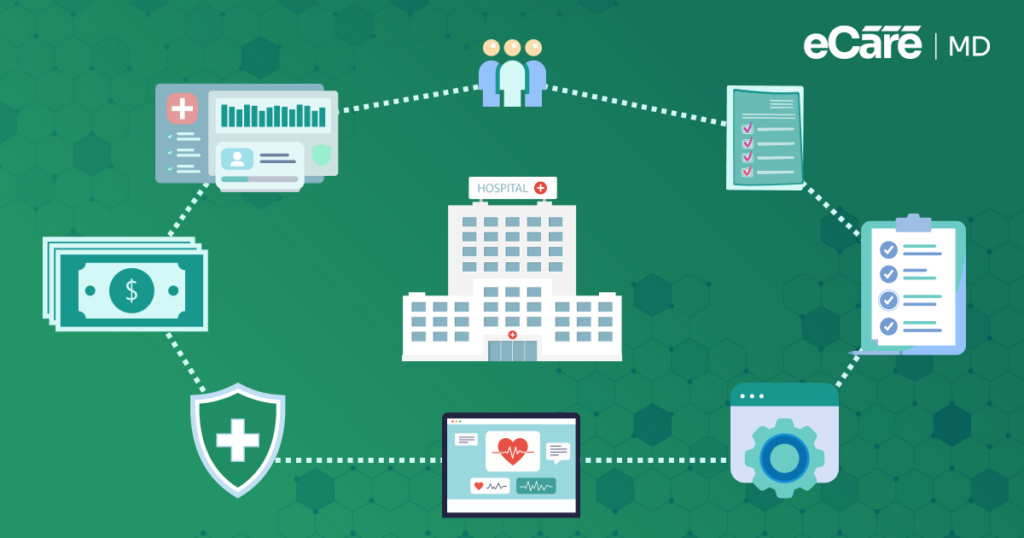
A value-based CCM strategy needs more than good intentions. Care teams need to keep patient information organized, follow care plans, coordinate activities, and stay connected with patients day after day. eCareMD brings these CCM workflows together in one platform, helping practices put their value-focused goals into everyday care.
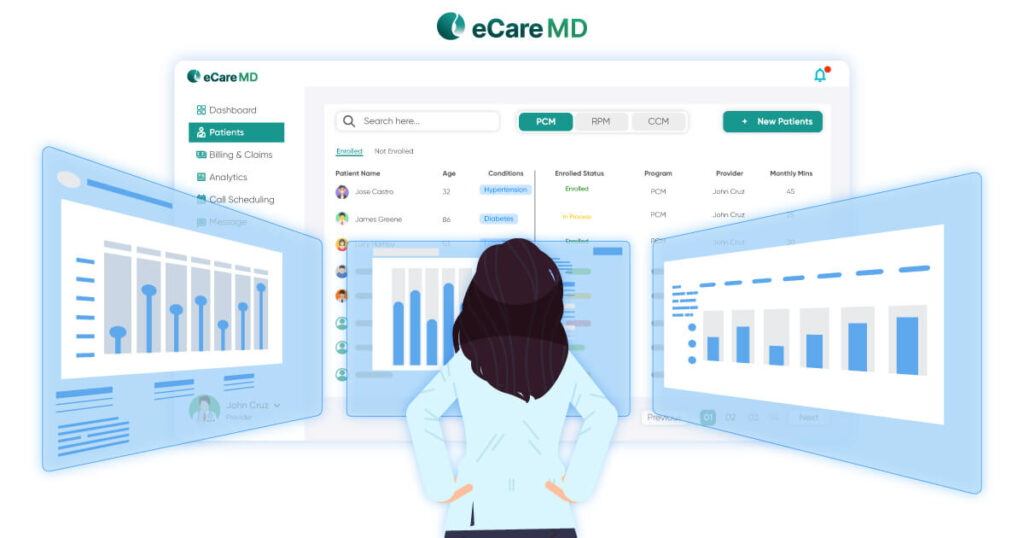
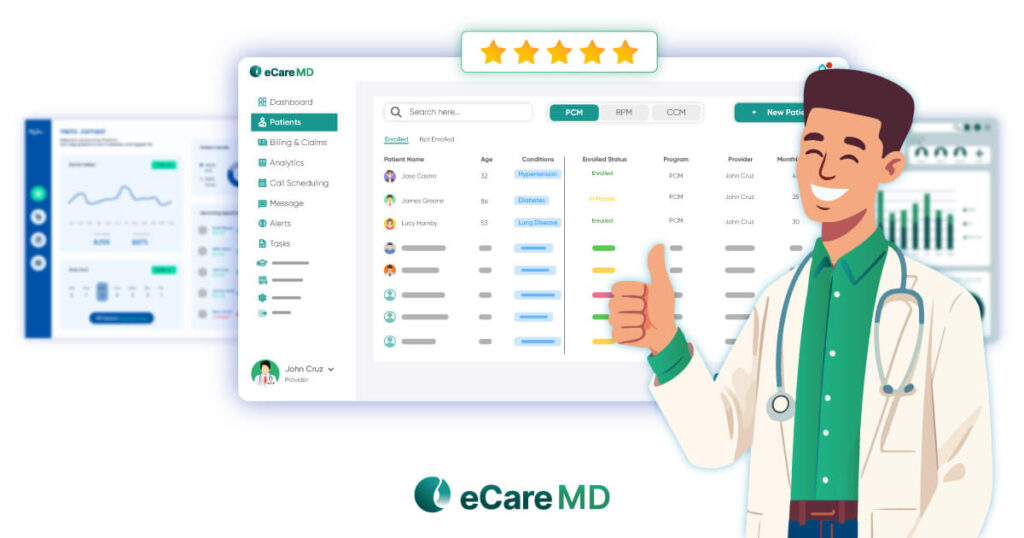
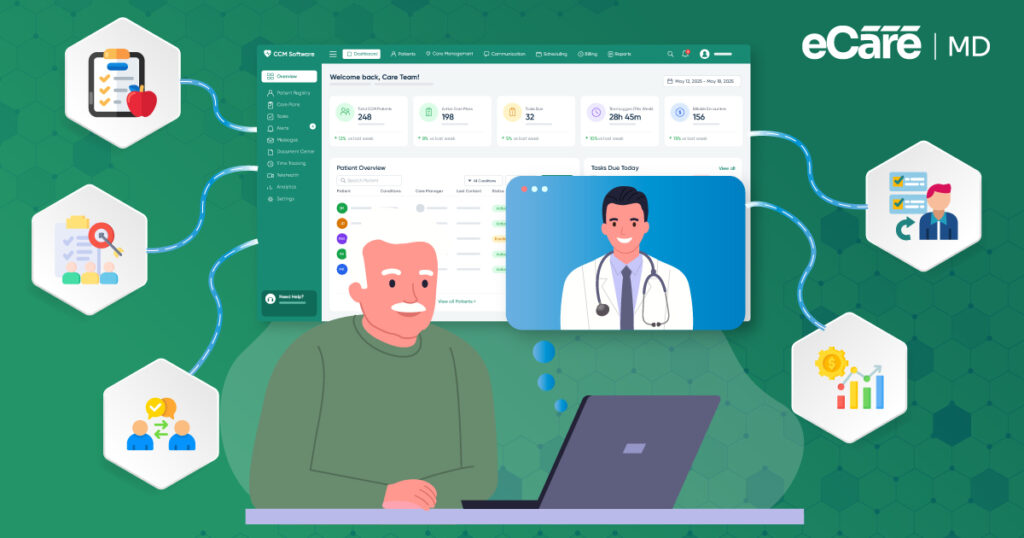
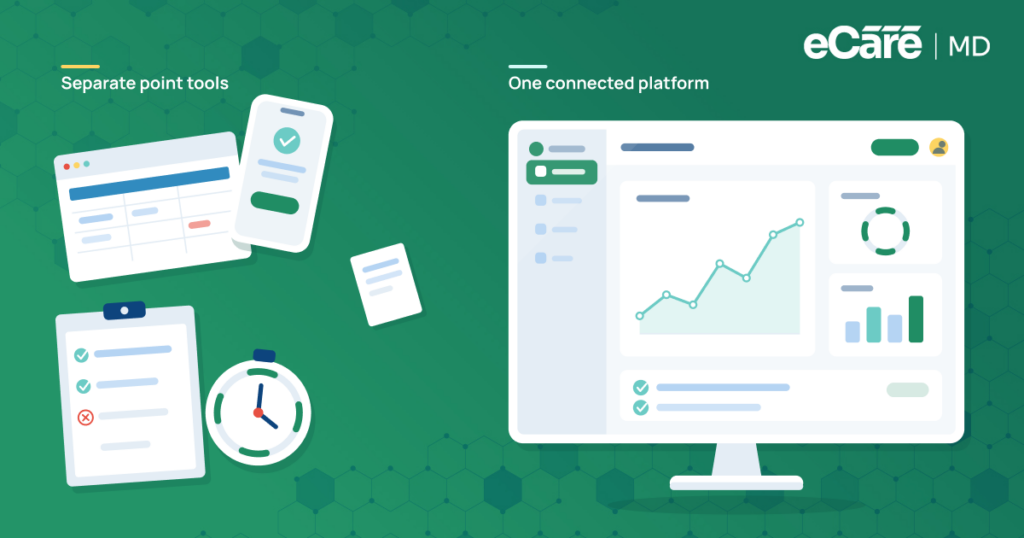
When information is spread across different tools, it can be difficult for a care team to see the full picture. eCareMD provides a centralized place to organize patient information, care plans, care activities, and ongoing CCM workflows. This gives teams a clearer view of what is happening with each patient and what needs attention next.
Care plans also need to change as patient needs change. With eCareMD, teams can maintain individualized care plans and track progress toward patient goals. Instead of losing track of previous actions or starting from scratch during each follow-up, care teams can use the patient’s ongoing information to guide the next step.
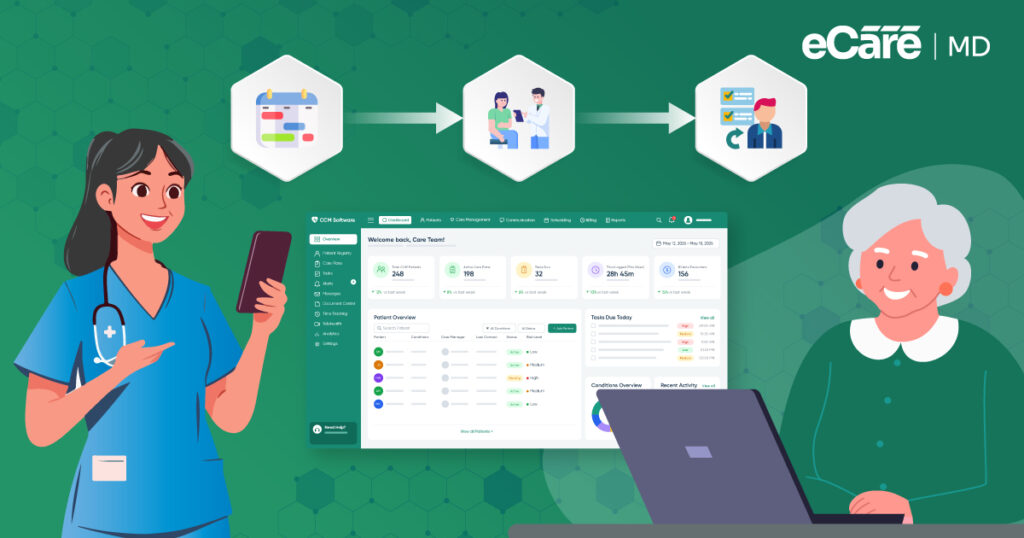
The same visibility can support better coordination across the care team. Primary care providers, specialists, and other staff may all contribute to a patient’s care, and keeping those activities aligned is important for continuity.
eCareMD helps teams stay informed about ongoing care activities, reducing the chances of important tasks being lost between different people or workflows.
Patient engagement is another piece that cannot be overlooked. A patient may need a reminder, follow-up, education, or simply a conversation about how their care is going. eCareMD supports consistent patient outreach and communication, helping care teams maintain that connection between visits rather than letting the relationship go quiet.
As the chronic-care population grows, these activities can become harder to manage manually. eCareMD provides structured CCM workflows that help practices organize and manage a growing patient population more consistently.
It does not guarantee specific financial or quality results, but it can give care teams the workflow and visibility needed to pursue the goals of CCM and value-based care more effectively.
Conclusion
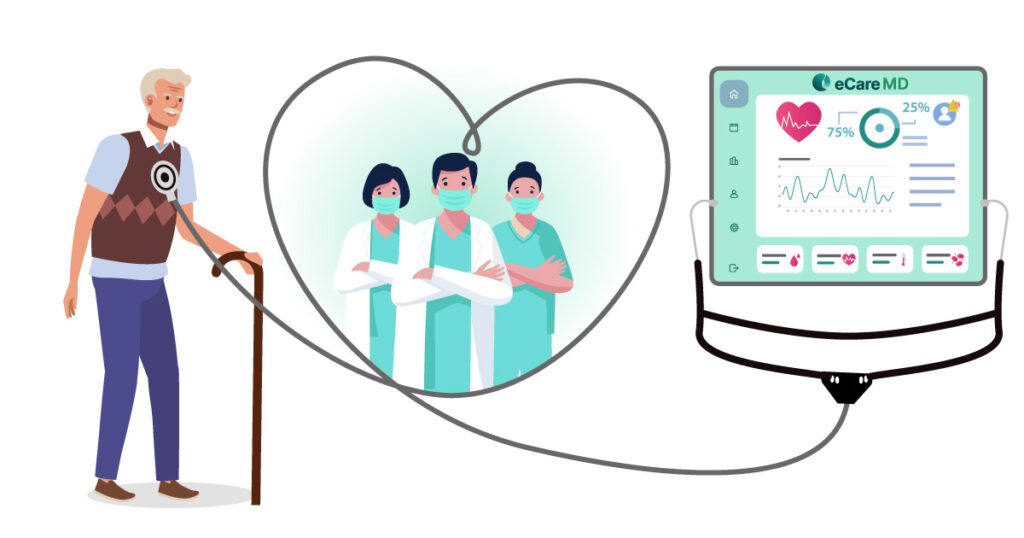
Value-based care is not built around a single visit or service. It depends on what happens throughout the patient’s care journey. CCM helps practices stay connected with patients, coordinate care, follow changing needs, and keep chronic disease management moving between visits.
When these efforts are aligned, practices can work toward better quality, stronger patient engagement, improved care continuity, and more efficient care delivery. But as the number of patients and care activities grows, keeping everything organized can become a challenge.
This is where technology can provide the infrastructure needed to scale a value-focused CCM strategy.
eCareMD brings patient information, care plans, communication, coordination, and CCM workflows together to help practices manage ongoing care in a more organized way. With the right care management system, teams can spend less time piecing workflows together and more time keeping patients at the center of care.
Frequently Asked Question’s
Value-based care with CCM combines ongoing chronic disease management with a focus on care quality, patient outcomes, engagement, and coordination. Instead of concentrating mainly on the number of services delivered, practices use CCM to maintain regular patient support and address changing needs throughout the care journey.
CCM supports value-based care by keeping patients connected with their care teams between office visits. Regular follow-ups, care coordination, care-plan management, and patient education help teams respond to changing needs. This ongoing approach can support better care quality, patient engagement, continuity, and more coordinated chronic disease management.
The benefits of value-based care with CCM can include more consistent patient engagement, stronger care coordination, better continuity, and improved visibility into chronic care needs. CCM also gives practices a structured way to manage ongoing patient relationships while aligning daily care activities with broader quality and outcome goals.
CCM can support chronic disease outcomes through regular monitoring, follow-ups, care-plan management, patient education, and proactive communication. These activities help care teams identify changing patient needs and respond earlier. While outcomes vary by patient and program, consistent ongoing management can support more coordinated and patient-focused chronic care.
Practices can start by aligning CCM goals with patient outcomes and broader quality objectives. They can then track meaningful performance measures, standardize communication across providers, strengthen patient engagement, and use technology to organize workflows. The key is making CCM part of the practice’s broader approach to ongoing, outcome-focused care.
Practices can track a mix of clinical, operational, and patient-centered measures. Examples include care-plan completion, follow-up activity, patient engagement, care-gap closure, care coordination, patient satisfaction, and relevant quality measures. Reviewing these metrics over time can help teams understand program performance and identify areas for improvement.
Technology can bring patient information, care plans, communication, tracking, and care activities into a more organized workflow. This helps teams manage ongoing patient needs, coordinate work across the care team, and monitor performance. As CCM populations grow, technology can also provide the structure needed to maintain consistent workflows.
Yes. CCM can provide a structured framework for managing ongoing care across a larger chronic disease population. With organized patient information, care plans, follow-ups, and care-team workflows, practices can manage activities more consistently. Technology can further support this process by improving visibility and reducing reliance on disconnected manual workflows.











![The Future of Remote Patient Monitoring: CMS Innovations & Emerging Trends [2026]](/wp-content/uploads/2024/07/Blog-36-The-Future-of-Remote-Patient-Monitoring_-Trends-AI-Innovation-CMS-Updates-for-2026-1024x538.png)