Last Updated: August 26, 2026
Imagine your practice is reviewing its CCM numbers at the end of the month. Your team has enrolled patients, completed care activities, followed up with them, and spent hours coordinating their care.
On paper, the program looks busy and productive. However, when the billing numbers come in, the reimbursement does not quite match the work that went into it, leaving you questioning “Where did the gap come from?”
It probably is not a lack of patients or billable services. A missed time entry, incomplete documentation, or a care activity that never made it into the billing workflow can be enough to leave eligible revenue behind.
When all these small gaps happen repeatedly, CCM reimbursement can fall short of what the practice actually earned. This is why maximizing CCM reimbursement is less about increasing billing volume and more about capturing every eligible dollar already tied to the care being delivered. The challenge is keeping care activity, time, documentation, and billing connected from start to finish.
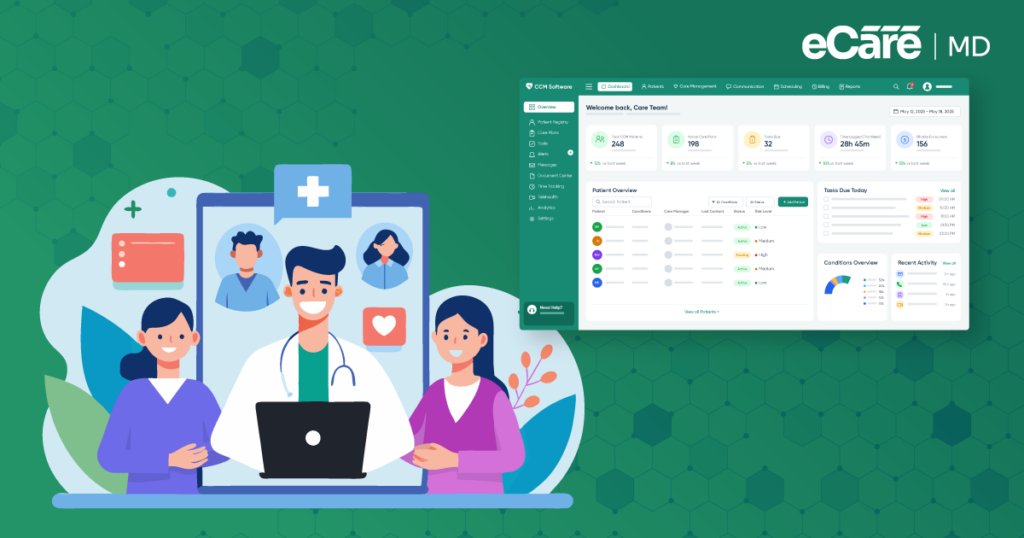
This is where CCM software for mid-size practices can help bring the pieces together. By connecting these workflows, practices can reduce revenue leakage, improve billing accuracy, and get more financial value from the CCM work already being performed.
In the sections ahead, we’ll look at where reimbursement gets lost, how software helps close those gaps, and how practices can build a more reliable path from CCM care to payment.
How to Avoid Missed Chronic Care Management Reimbursements
The reason behind your revenue slip away is not always a denial claim. Many times, it never makes it to the claim in the first place.
Think back to the monthly CCM workflow. Your patient who could have been enrolled is never identified. Your care team spends extra time with your patients: even so, those minutes are not visible while reviewing bills.
Even though documentation is complete, missing detail can prevent the service from being accurately supported. Despite the fact that each gap seems small on its own, together they can leave a significant amount of chronic care management reimbursement on the table.
However, all these gaps are not random. Most of the time, they appear at specific points in the workflows, making them easier to identify and address.
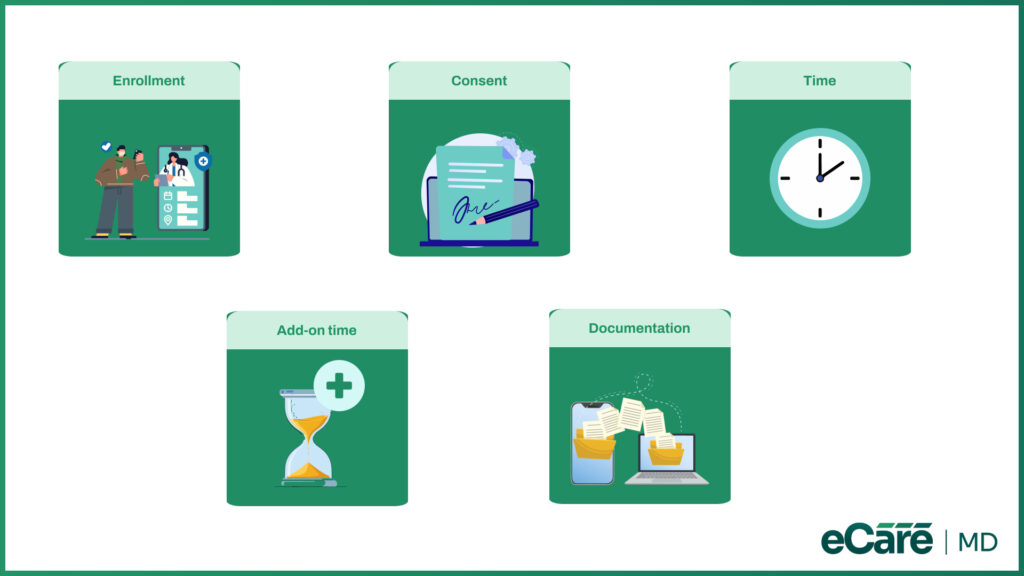
| Revenue Leak | Where It Happens | Financial Impact | Workflow Fix |
|---|---|---|---|
| Eligible patients not enrolled | The eligible patient population is not consistently identified or reviewed | Potential monthly reimbursement remains uncaptured | Systematic eligibility screening |
| Add-on services not captured | Documented care time exceeds the base threshold, but the eligible time is overlooked | Additional reimbursement is missed | Clear threshold and time visibility |
| CCM minutes not captured | Care activities take place outside the primary tracking workflow | The patient may appear to fall below the applicable threshold | Automated time capture |
| Incomplete documentation | An activity is recorded without enough supporting information | The claim may lack adequate documentation support | Documentation checks and workflow prompts |
| Missing consent records | Required consent information is unavailable or difficult to verify | The CCM service may not be billable | Centralized consent tracking |
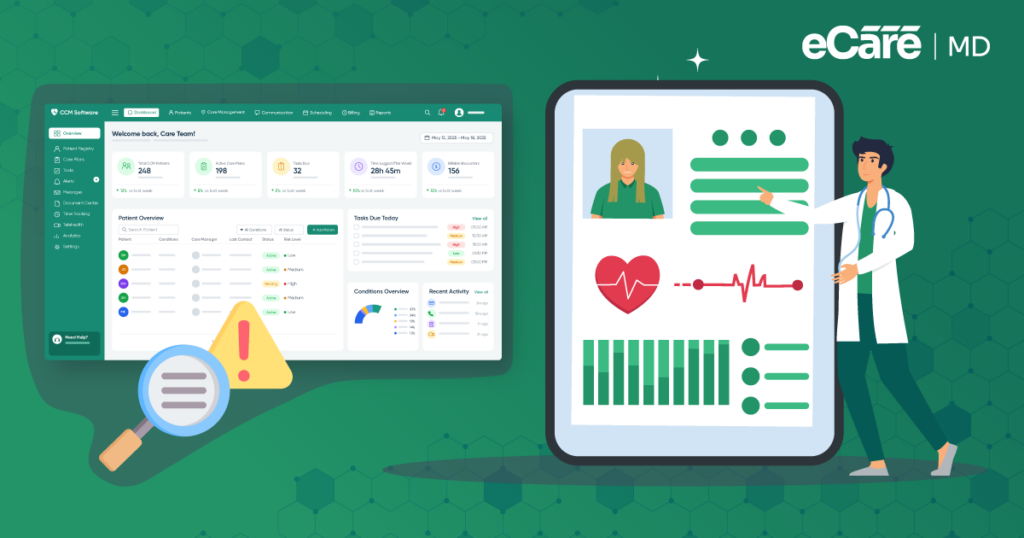
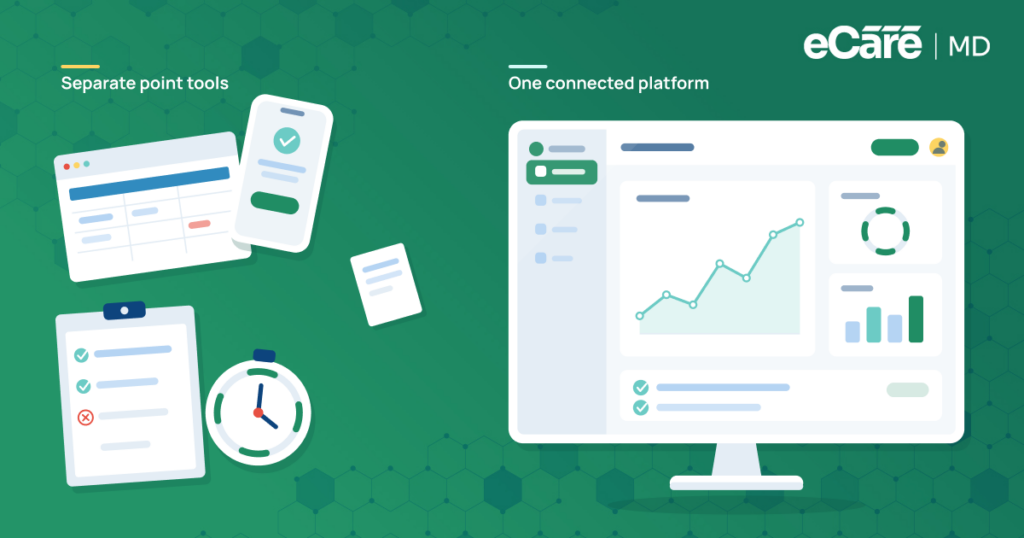
Visibility is the common thread here. When enrollment, care activities, time, documentation, and billing are all handled in separate places, it becomes easier for something to fall through the cracks. Simply put, your practice may do the work but still fail to capture the full value of that work.
Avoiding missed reimbursement, therefore, starts with making each part of the CCM workflow visible and connected. This creates the foundation for better CCM reimbursement optimization, not by increasing the amount of care delivered, but by ensuring eligible services and activities do not get lost between care delivery and billing.
How Does CCM Software Help Maximize Reimbursement?
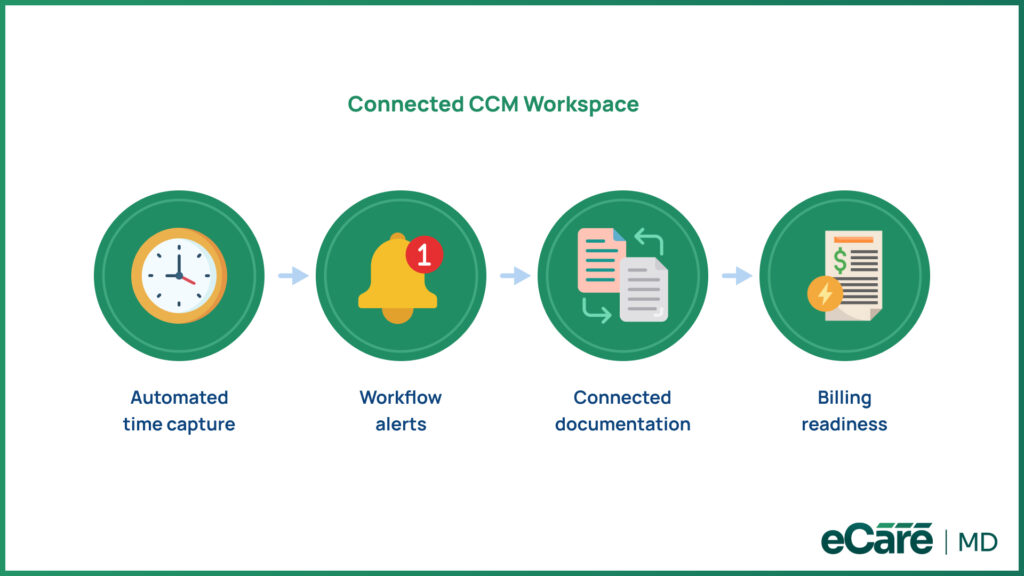
Once your practice identifies where revenue is being lost, the next key challenge is to prevent those gaps from becoming part of the monthly routine. And this is exactly where CCM software starts to play a key role in maximizing CCM revenue.
The real value never lies in simply adding systems to the workflow. It actually comes from connecting the activities that determine whether completed CCM work is ready for reimbursement. There are fewer chances for eligible revenue to fall through the cracks when time is recorded consistently, patient progress is visible, documentation stays connected to care activities, and missing information can be identified before billing.
1. Automated Time Capture
Across the month, CCM involves multiple touchpoints, and not all of them can happen at the same time or through the same team member. Valuable minutes can easily go unaccountable without a steady way for recording qualifying activity.
Automated or centralized time capture allows you to keep all those activities within the same workflow, while creating a more clear picture of the care delivered to each patient. Rather than reconstructing the month’s work at the end of the billing cycle, your team has a more reliable record of the time already spent.
2. Workflow Alerts
One missed task should not become a missed reimbursement opportunity. Workflow alerts can help care teams see which patients are approaching applicable monthly thresholds or may require additional attention before the billing cycle closes.
This visibility allows teams to act while there is still time, rather than discovering gaps after the month has ended. It is a simple shift, but it can help turn reimbursement management from a reactive process into a more proactive one.
3. Connected Documentation
Care activities, notes, and supporting records are often spread across different systems or workflows. The more disconnected the process becomes, the harder it is to confirm whether the necessary documentation is complete.
Connected documentation keeps relevant records organized alongside patient care activity, making it easier to review what has been completed and identify what may still be missing. This can strengthen CCM reimbursement optimization by reducing the disconnect between delivering care and documenting the work that supports it.
4. Billing Readiness
The final review before claim preparation can often feel like a scramble to find missing time entries, incomplete records, or other information needed to support billing. By the time those gaps are discovered, it may already be too late to address them efficiently.
CCM software can help surface missing or incomplete information earlier, giving teams a clearer view of which patient records are ready for the next stage of the billing workflow. In short, it helps ensure that completed care does not get stuck at the finish line.
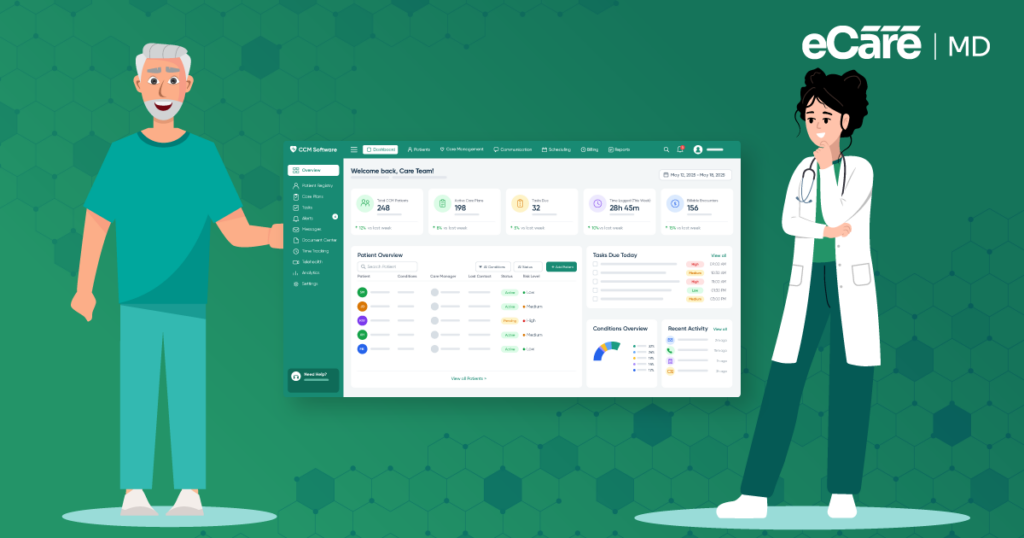
For CCM software for mid-size practices, this connected approach can be particularly valuable as patient volume and care-team responsibilities grow. Rather than relying on staff to manually connect time, documentation, and billing information, a unified workflow can make it easier to track what has been completed, what still needs attention, and where eligible reimbursement may otherwise be missed.
How Can Practices Improve CCM Reimbursement Optimization?
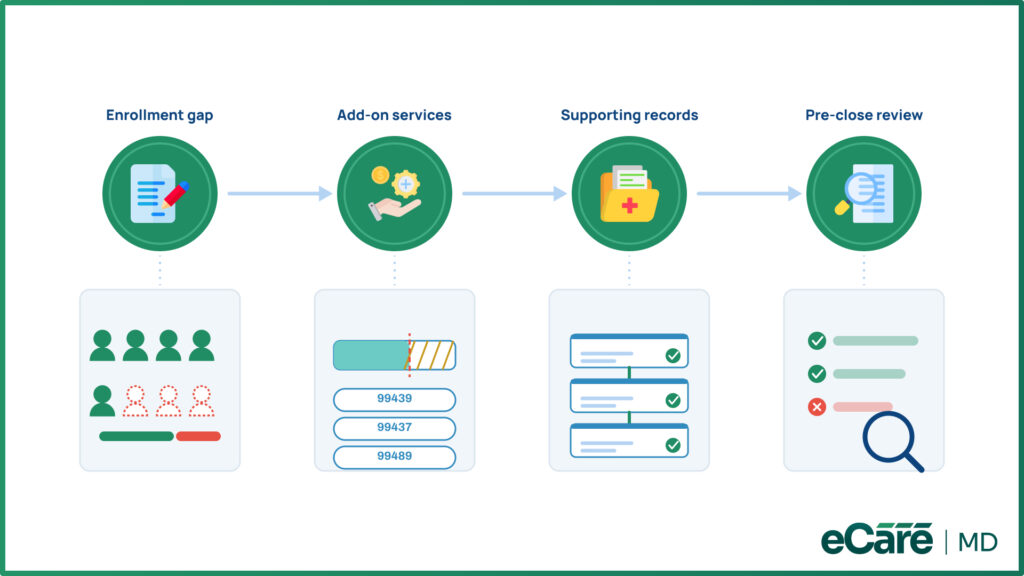
Identifying reimbursement gaps is only half of the story. The next key step is to understand where those gaps have the greatest financial impact and address them before they become a recurring part of the CCM program.
For many practices, CCM reimbursement optimization does not require completely changing how care is delivered. Often, the opportunity lies in taking a closer look at the patients, services, time, and records already moving through the monthly workflow. Here’s where practices can focus their efforts.
1. Close the Enrollment Revenue Gap
Every eligible patient who is not part of the CCM program represents a potential source of recurring CCM reimbursement that remains uncaptured. Over time, the gap between the eligible patient population and the patients actually enrolled can become much larger than it initially appears.
Practices can review these two groups side by side: patients who may be eligible for CCM and patients currently generating CCM reimbursement. The difference provides a clearer view of the revenue opportunity that may be sitting untapped. The goal is not simply to increase enrollment numbers, but to understand how much potential recurring revenue is being left on the table.
2. Capture Eligible Add-On Services
Another opportunity can be missed when the care team documents more CCM time than the base service threshold, but that additional eligible time is not reflected in reimbursement.
This is where add-on codes such as 99439, 99437, and 99489 may come into the picture. Practices do not necessarily need to focus on more billing activity; they need visibility into the care time already being documented and whether additional eligible reimbursement opportunities are being overlooked.
Detailed coding requirements and billing rules belong within the main CCM billing process. From a revenue perspective, however, the key takeaway here is that when additional eligible work is performed but not recognized during billing, the practice may be leaving money on the table.
3. Maintain Complete Supporting Records
A completed care activity does not automatically mean the service is ready to move through the billing workflow. Consent records, care activities, time entries, and supporting documentation all need to remain organized and accessible.
When this information is scattered across spreadsheets, notes, or disconnected systems, teams may spend valuable time chasing missing records at the end of the month. A more connected workflow helps reduce these gaps and gives practices a clearer view of whether the information supporting each eligible service is complete.
4. Review Before the Monthly Close
The end of the month should not be the first time a practice looks for missing time or incomplete documentation. A structured review before monthly billing closes gives teams an opportunity to reconcile completed CCM activity, recorded time, and supporting documentation while there is still time to address any gaps.
This final check can act as a safety net for the entire workflow. It helps ensure that a missed entry or incomplete record does not quietly turn into lost chronic care management reimbursement.
Ultimately, maximizing CCM revenue comes down to visibility and consistency. By closing the enrollment gap, recognizing additional eligible services, keeping supporting records complete, and reviewing activity before monthly close, practices can reduce the amount of reimbursement that slips through the cracks.
How Can eCareMD Support CCM Reimbursement Optimization?
Getting to know where reimbursement is lost is only the beginning. The actual challenge is to keep care activities, time, documentation, and billing information connected so that completed CCM work does not get lost somewhere along the way. This is where eCareMD, developed by Medarch Inc., can support a more organized reimbursement workflow.
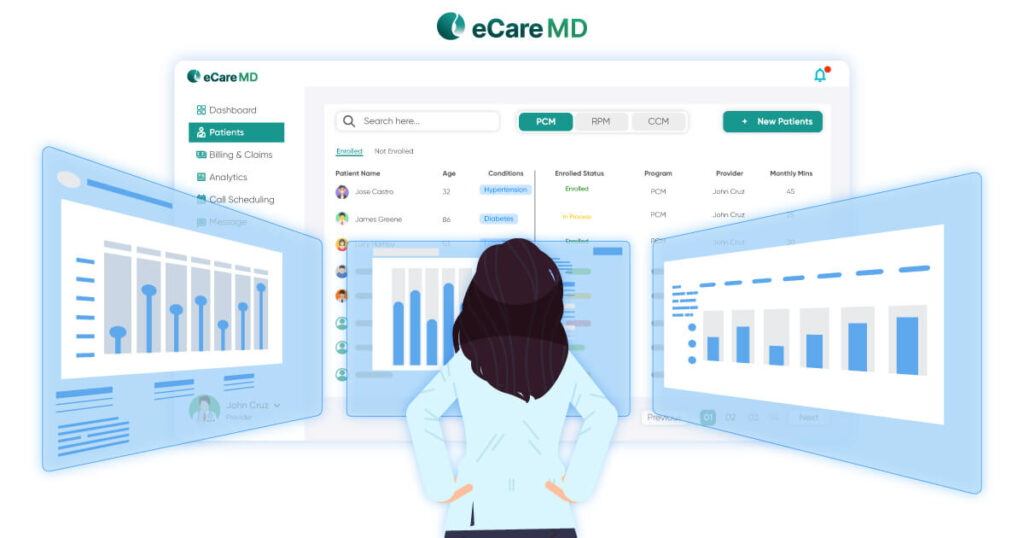
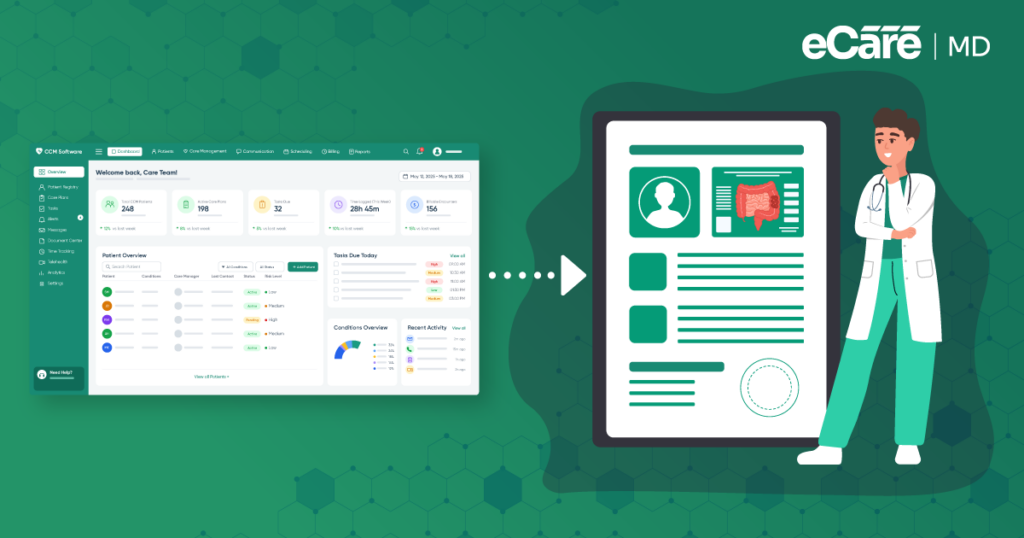
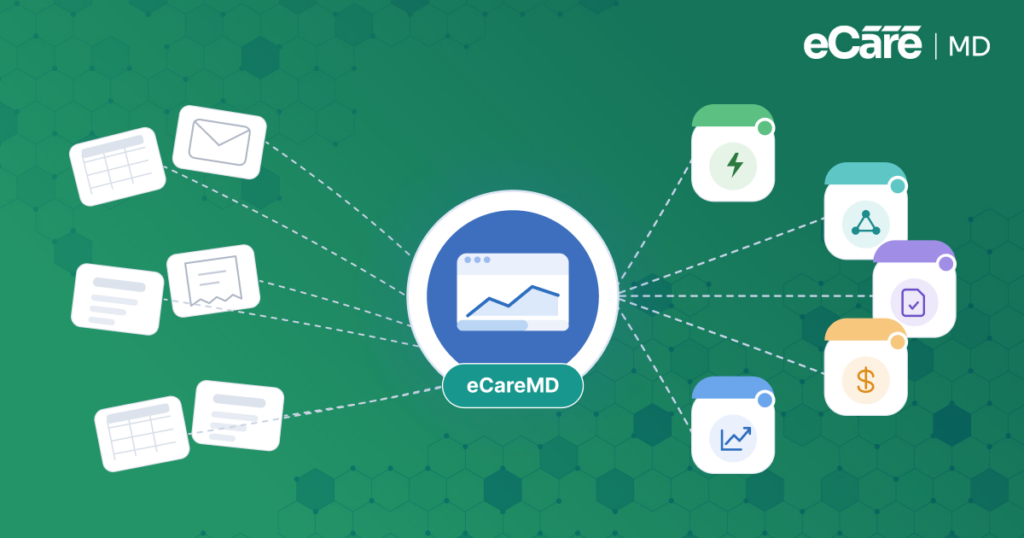
By bringing CCM activities, time tracking, and patient records into one connected workflow, eCareMD can give teams better visibility into the work completed throughout the month.
This makes it easier to identify outstanding activities or missing information before the monthly close, rather than scrambling to find them during billing. Centralized records can also reduce the manual back-and-forth between care coordination and billing teams.
For practices evaluating CCM software for mid-size practices, this connected approach can help create a clearer path from completed care to reimbursement. Among the available care management software solutions, eCareMD can help teams reduce workflow gaps and capture more of the eligible CCM revenue they have already earned.
Conclusion
Maximizing CCM revenue is not about submitting more claims. It is about making sure eligible CCM services do not get lost between patient enrollment, care delivery, documentation, and billing.
Closing enrollment gaps, capturing eligible additional services, maintaining complete records, and improving visibility throughout the workflow can help practices capture reimbursement more accurately and consistently. When these pieces stay connected, there is less chance of eligible revenue slipping through the cracks.
The right technology should support compliant, accurate, and well-documented CCM workflows, not encourage billing beyond applicable requirements. By evaluating the right care management software solutions, practices can build a stronger connection between the care they provide and the reimbursement they are eligible to receive.
Frequently Asked Question’s
CCM software can help connect care activities, time tracking, documentation, and billing workflows that might otherwise be managed separately. This gives teams better visibility into the work completed for each patient and makes missing information easier to identify before claims are prepared. Instead of manually reconciling records at the end of the month, teams can monitor activity throughout the billing cycle. This can reduce the chances of eligible CCM services falling through the cracks.
Practices can reduce missed reimbursements by creating a consistent process for tracking patient activity, care time, documentation, and other supporting information. It is also important to review records before the monthly billing cycle closes rather than waiting until claims are being prepared. This gives staff an opportunity to identify missing activities or incomplete information while they can still be addressed. Connected workflows can make this process easier by keeping relevant information visible in one place.
Missed CCM reimbursement can result from several gaps throughout the monthly workflow. Common examples include eligible patients not being enrolled, qualifying care time not being recorded, additional eligible services being overlooked, incomplete documentation, and missing consent records. In some cases, the care may have been delivered, but the information needed to support billing is incomplete or difficult to find. Over time, these small gaps can add up and create significant revenue leakage.
As patient volumes increase, tracking CCM activities manually can become more difficult, particularly when multiple team members are involved in patient care. CCM software can provide a centralized view of patient activity, recorded time, documentation, and outstanding work. This reduces the need for staff to manually piece together information from different systems before billing. For mid-size practices, this added visibility can help create a more consistent process for capturing eligible reimbursement.
Practices may bill CCM add-on codes when the services provided meet the applicable requirements and are supported by the necessary documentation. Codes such as 99439, 99437, and 99489 can represent additional reimbursement opportunities when applicable service and time thresholds are met. However, practices should not bill these codes simply because additional time was recorded. Current CMS guidance, payer requirements, and documentation requirements should always be reviewed before submitting a claim.
Automated time tracking can help create a more consistent record of qualifying care activities throughout the month. Without a reliable tracking process, staff may forget to record time or need to reconstruct patient interactions later, which increases the risk of missed minutes. Better time visibility also makes it easier to identify when additional eligible services may need to be reviewed. This supports CCM reimbursement optimization by reducing the gap between care delivered and time available for billing review.
Practices can review patient activity, recorded time, outstanding tasks, and supporting documentation before the monthly billing cycle closes. A centralized workflow or automated alerts can help teams identify patients with missing information or incomplete activities earlier in the process. This gives staff time to investigate and address gaps before claims are prepared. Rather than discovering a problem at the last minute, teams can use the review process as a final safety net.
Before submitting monthly CCM claims, practices should review completed care activities, recorded qualifying time, supporting documentation, consent information, and any other applicable billing requirements. They should also check whether additional eligible services have been captured appropriately. A final review helps ensure that the information moving from care coordination to billing is complete and consistent. This can reduce avoidable gaps while supporting accurate and compliant reimbursement.



















![The Future of Remote Patient Monitoring: CMS Innovations & Emerging Trends [2026]](/wp-content/uploads/2024/07/Blog-36-The-Future-of-Remote-Patient-Monitoring_-Trends-AI-Innovation-CMS-Updates-for-2026-1024x538.png)