Last Updated: September 24, 2026
A CCM team can start the day with a clear plan and still end it chasing missing details. One patient’s consent needs checking, another’s care plan needs an update, and care activities need to be recorded.
When these steps are handled differently from one patient to the next, compliance can easily slip through the cracks. For practices providing Medicare CCM services, CMS CCM compliance depends on more than knowing the rules.
Teams need a consistent way to manage eligibility, consent, care plans, ongoing care, and activity tracking. A chronic care management solution can bring these tasks into one workflow and help teams follow the process more consistently.
So, what does staying compliant actually involve?
This guide covers the key CMS chronic care management requirements, common CCM compliance requirements, and how technology can support Medicare CCM compliance without making daily CCM work harder.
Understanding CMS CCM Compliance and Regulations
A CCM program does not run on patient visits alone. Behind every successful program is a process that makes sure the right patients are enrolled, the right care is provided, and every important activity is recorded. When those steps are missed, even a busy CCM team can face compliance gaps.
For Medicare Part B providers, CMS CCM compliance means following CMS rules while delivering and documenting CCM services. These rules are not limited to billing. They influence how the team handles patients throughout the program, from enrollment to ongoing care.
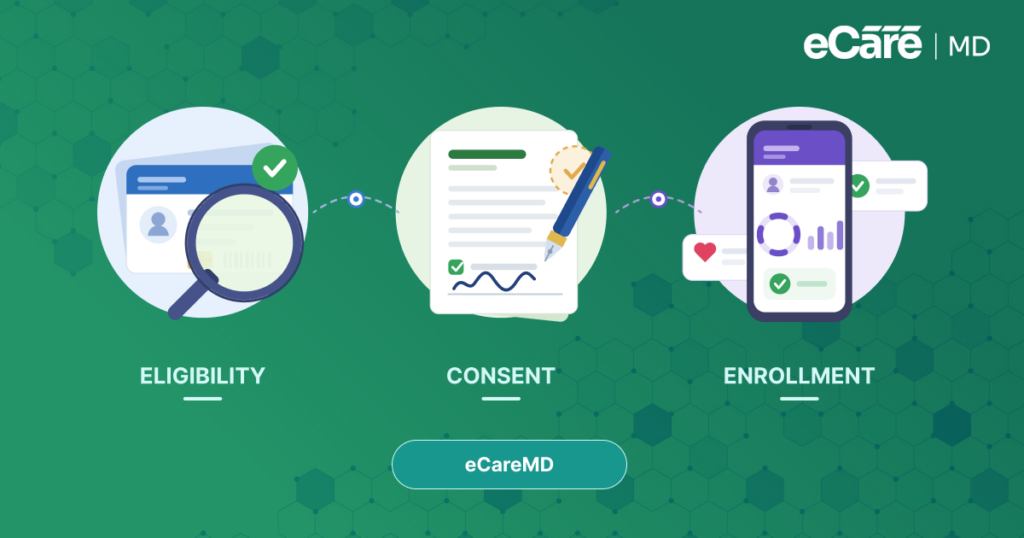
The process starts with checking patient eligibility and getting patient consent. Next comes a comprehensive care plan that guides the patient’s care. Once care begins, teams need to provide ongoing management, coordinate with other providers, communicate with patients, and keep accurate records of their activities and time.
This is why chronic care management regulations need to be part of the daily workflow, rather than something the team thinks about only when a claim is submitted. Understanding these core areas makes it easier to see where a CCM program can stay organized, meet CMS expectations, and avoid preventable compliance gaps.
Core CMS Chronic Care Management Requirements
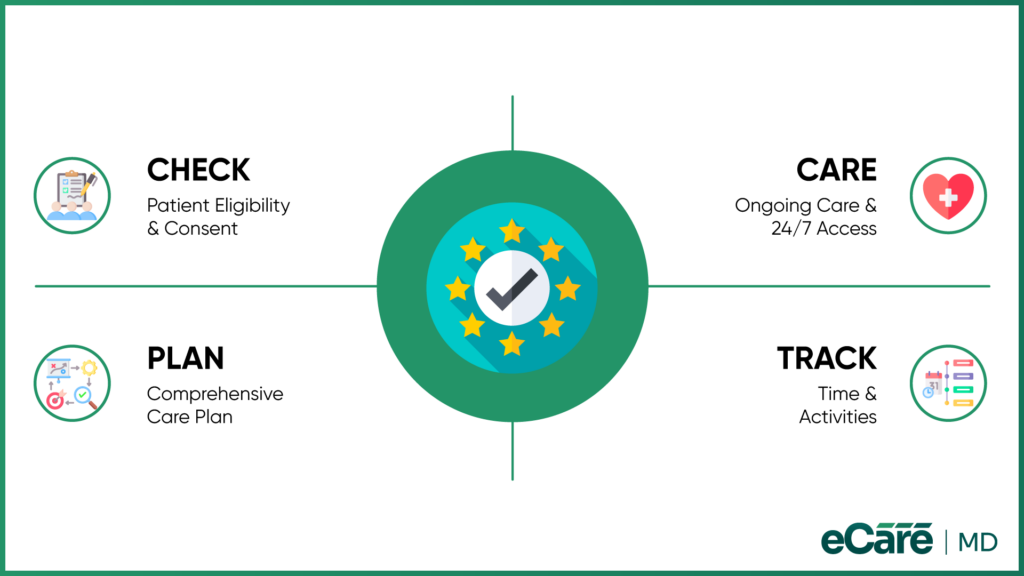
1. Establishing Patient Eligibility and Consent
The process starts with making sure the patient qualifies. A patient generally needs two or more chronic conditions expected to last at least 12 months or until death. The practice must also explain CCM, including applicable cost-sharing and the patient’s right to stop the service. An initiating visit may be required in certain cases.
Getting these details right at the start gives the care team a clear foundation for the rest of the CCM process.
2. Creating and Maintaining a Comprehensive Care Plan
Once the patient is enrolled, the care team needs a clear plan. CMS expects an individualized electronic comprehensive care plan that reflects the patient’s diagnoses, medications, goals, and care needs.
The plan should not sit unchanged in the record. As the patient’s needs change, the team should update it. Appropriate members of the care team and the patient should also be able to access the plan when needed.
3. Delivering Ongoing Care and 24/7 Access
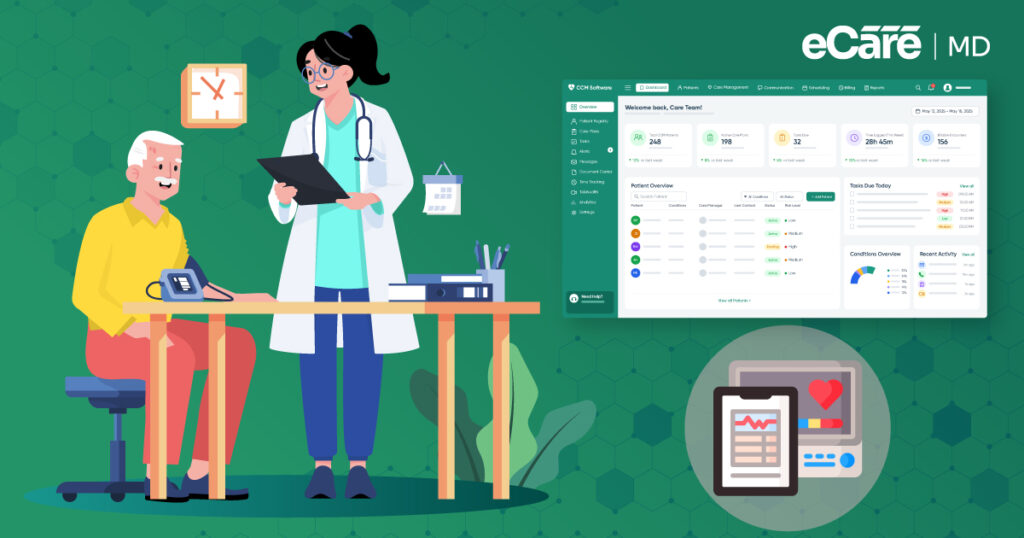
CCM continues between regular office visits. The care team may follow up with patients, monitor their needs, or coordinate with other providers. This keeps care connected instead of leaving each interaction on its own.
Applicable 24/7 access expectations also help patients know where to turn when an urgent need comes up. That ongoing support is a key part of CCM.
4. Recording Service Time and Activities
The work also needs to be recorded clearly. Practices must track clinical staff time and the activities completed during CCM. The applicable monthly time requirements differ for non-complex and complex CCM, so teams need to follow the right threshold.
Records should also capture relevant dates, activities, and the staff involved. When these details are kept together, it becomes easier to show what care was provided and support accurate billing.
How to Stay CMS Compliant With Chronic Care Management
Knowing the rules is one thing. Following them every day is another. A practice may understand CCM compliance requirements, but small gaps can appear when different staff members follow different processes. The goal is to make compliance part of the normal CCM workflow rather than another task to remember.
So, how to stay CMS compliant with chronic care management? Start by making the important steps consistent across the team.
1. Standardize Operational SOPs
A simple, repeatable process can keep CCM work on track. Create clear SOPs for eligibility checks, consent, care planning, service delivery, and documentation.
When everyone follows the same process, there is less room for missed steps. The same approach should apply to documentation. Standardized records make it easier to keep CCM work organized and audit-ready.
2. Build Consistent Eligibility and Enrollment Checks
Eligibility should be checked before a patient enters CCM, not after the work has already started. A clear enrollment process helps staff confirm the required details before moving forward.
It is also worth checking patient status over time. A patient’s conditions, coverage, or participation may change, and those changes can affect CCM services or billing.
3. Use Reliable Time-Tracking Processes
Time tracking should happen as the work happens. Care managers can record CCM activities as part of their daily routine instead of trying to remember everything at the end of the month.
Retrospective estimates can leave gaps and make accurate documentation harder. Clear staff procedures for recording time and activities give the practice a more reliable record of the CCM work performed.
4. Train and Monitor Care Teams
Even a good workflow can fall apart if the team is not familiar with it. Regular training helps care managers and clinical staff understand both CCM requirements and the practice’s internal procedures.
Periodic reviews can also reveal missed steps before they become bigger problems. And because CMS guidance and billing rules can change, practices should be ready to update their processes when requirements evolve.
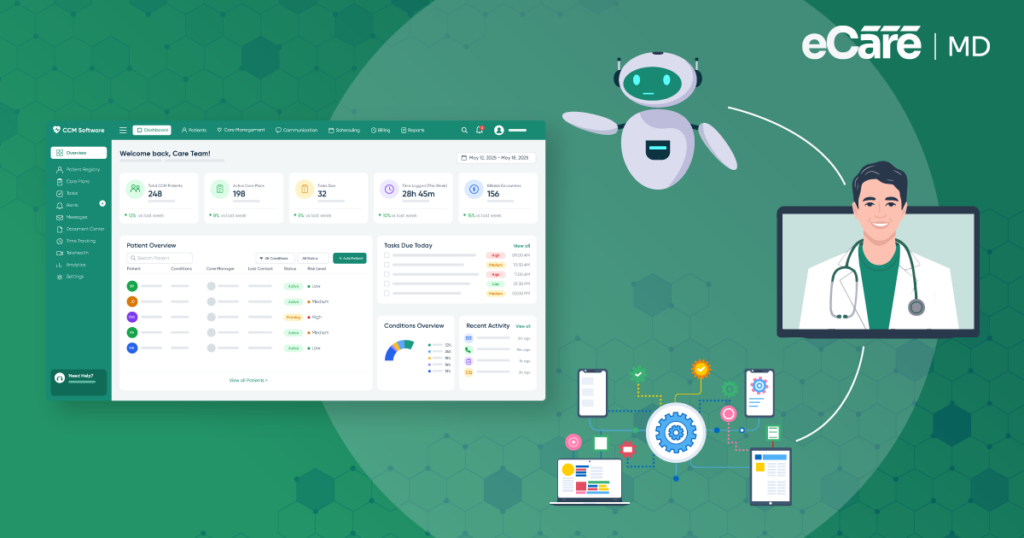
AI-Powered CCM Workflows Reduce repetitive work and simplify CCM.
How eCareMD Supports CMS-Compliant CCM Workflows
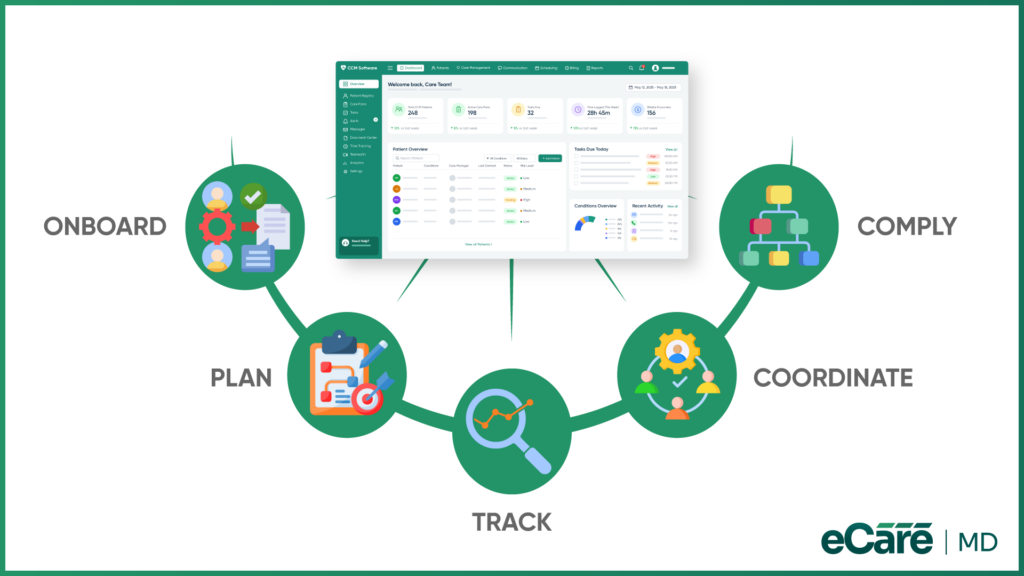
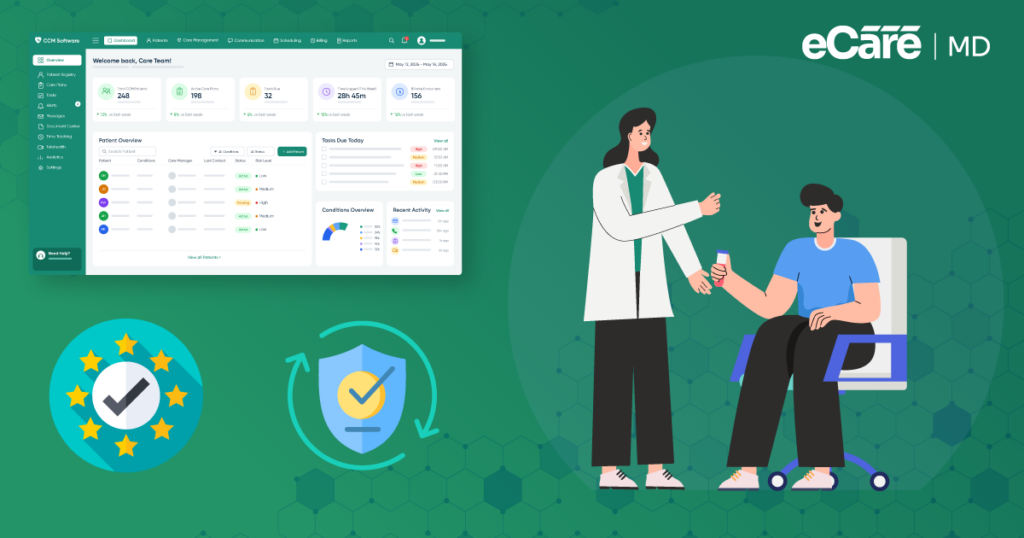
Knowing the rules is easier when the daily workflow supports them. eCareMD helps practices organize CCM activities around applicable Medicare CCM compliance requirements, so care teams have a consistent process to follow.
A patient’s journey starts with onboarding, eligibility, and consent. eCareMD helps guide these steps and keeps the process organized. As care continues, teams can create and update individualized electronic care plans, keeping patient information and goals aligned with changing needs.
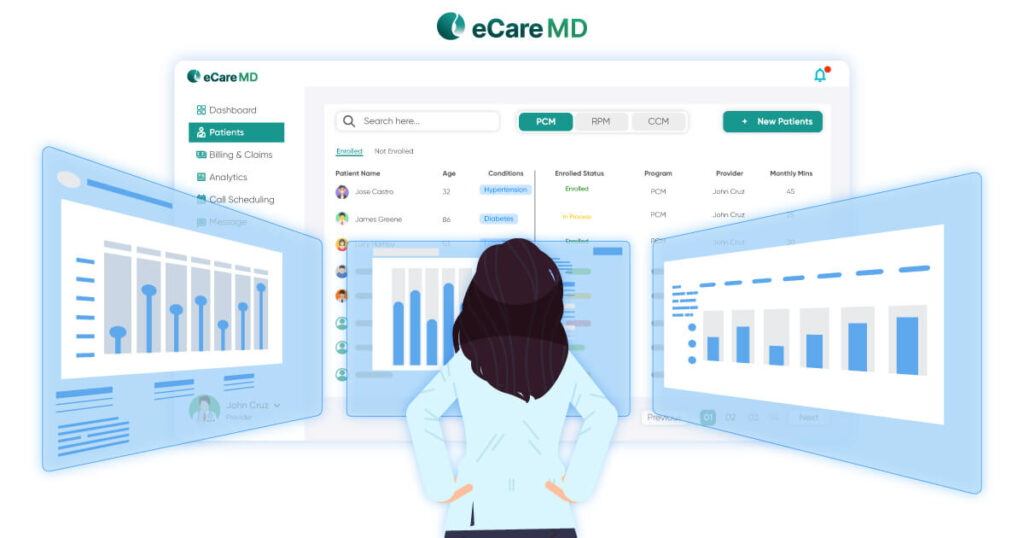
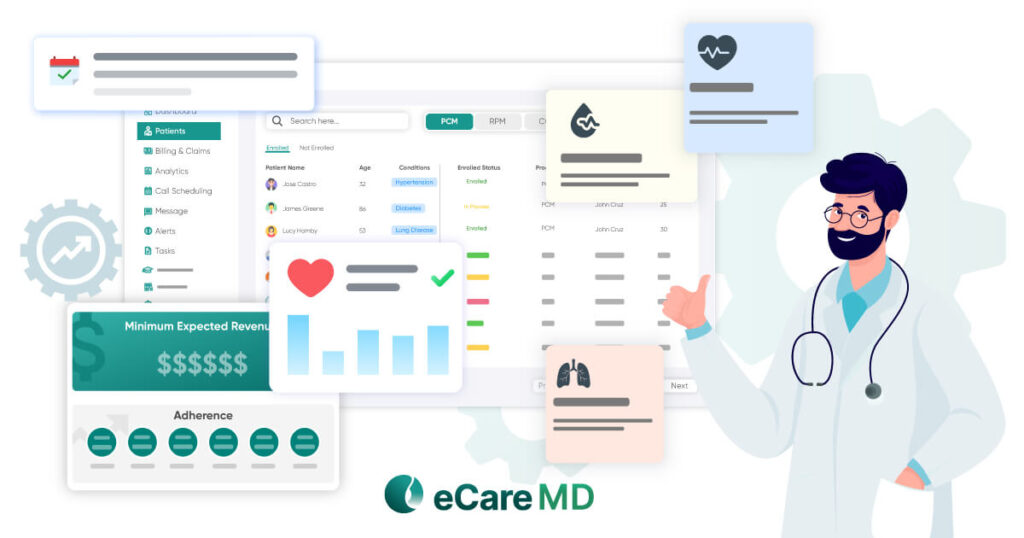
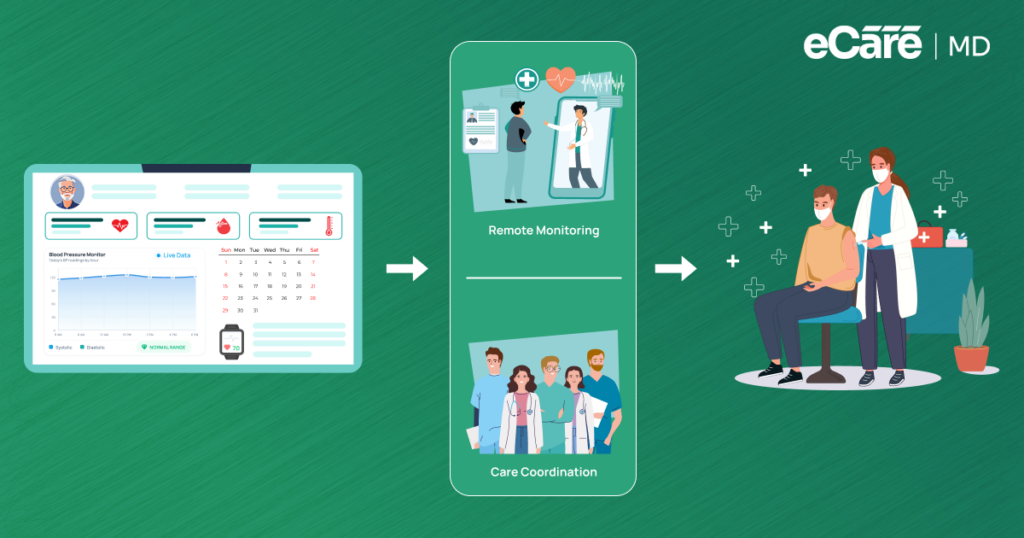
The work does not stop there. Calls, follow-ups, and other CCM activities need to be tracked as they happen. eCareMD supports time and activity tracking, giving care teams a clearer view of ongoing work. Its coordination tools also help care managers share responsibilities, document activities, and keep care connected across the team.
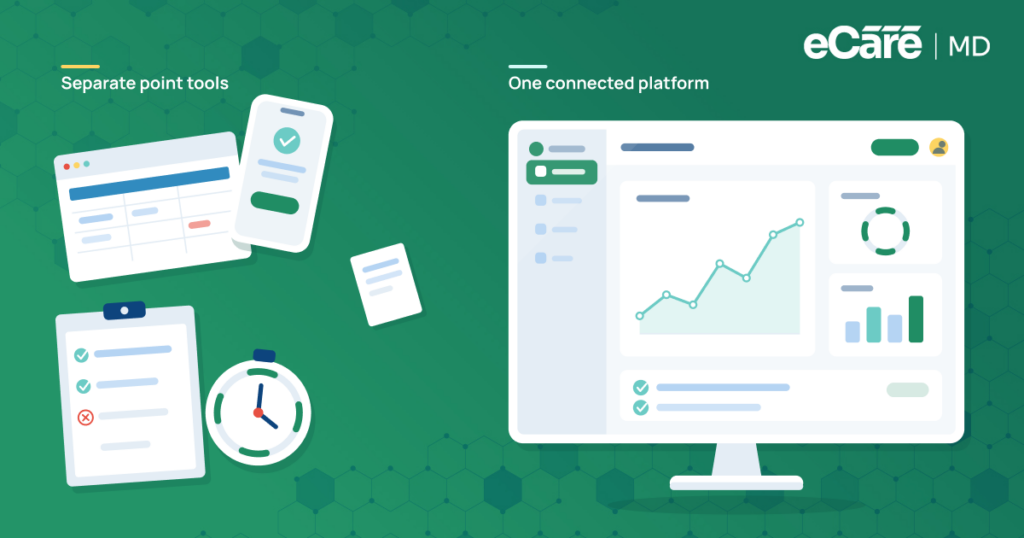
This can support better quality and outcomes as practices move toward value-based care. Patient information also needs to stay protected while these workflows are carried out. Overall, eCareMD brings key CCM tasks into one connected workflow, helping practices make compliance part of everyday care.
Conclusion
CMS compliance depends on getting the key parts of CCM right: eligibility, consent, care planning, ongoing care, coordination, and accurate service tracking. When these requirements are built into daily workflows, teams can manage compliance more consistently instead of fixing gaps later.
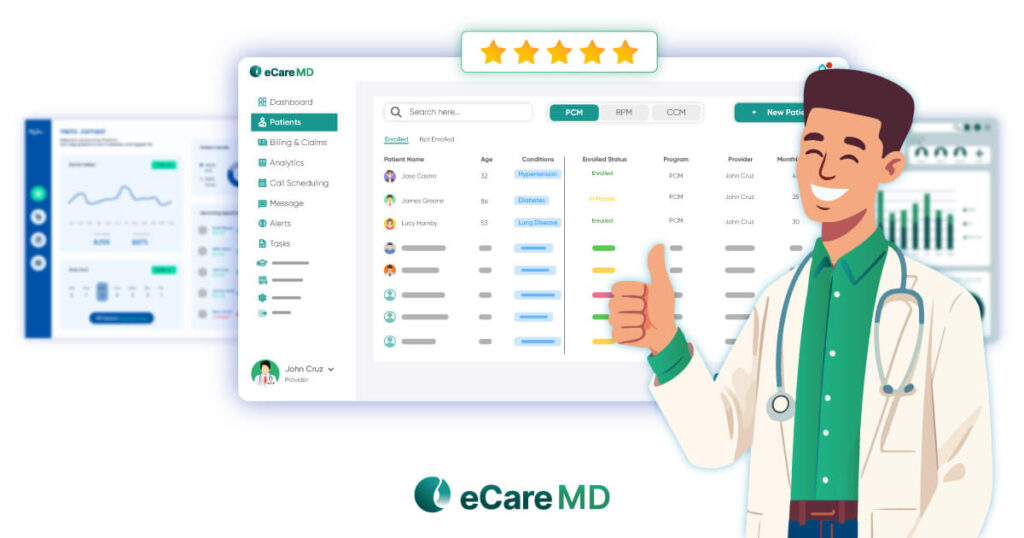
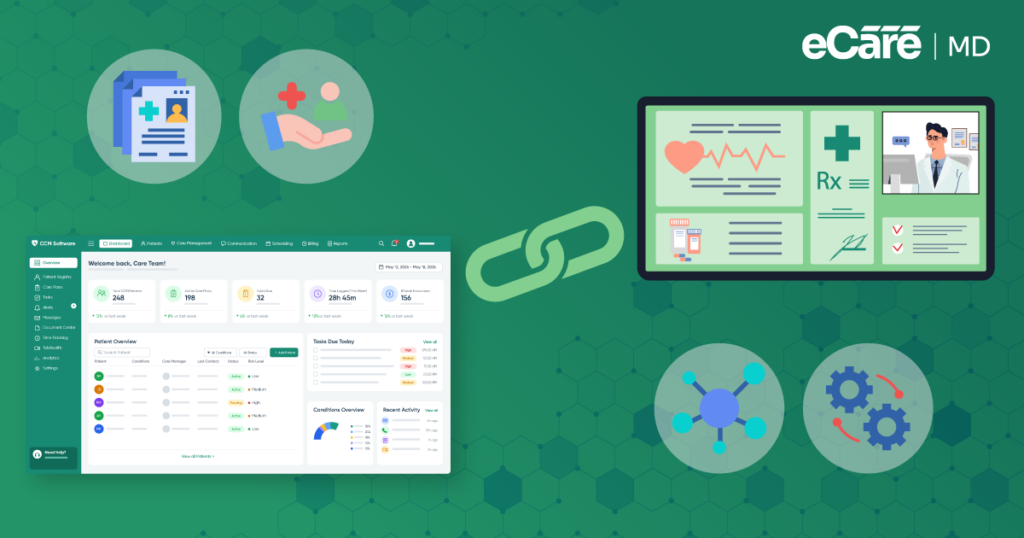
eCareMD helps practices bring these CCM activities into a connected workflow, making daily work easier to manage. The right care manager software can help teams keep patient care, responsibilities, and service activities organized as the program grows.
Take a fresh look at your current CCM workflow. Identify where manual steps may create gaps, and consider how a more consistent process can make compliance easier to maintain.
Free Guide to HIPAA-Compliant Chronic Care Management Software
Download NowFrequently Asked Question’s
Practices must meet CMS requirements for patient eligibility, documented consent, a comprehensive care plan, ongoing care management, access to care, and accurate service-time tracking. They also need proper documentation to support the CCM services billed and show that required activities were performed.
Medicare CCM generally applies to patients with two or more chronic conditions expected to last at least 12 months or until death. The conditions should also place the patient at significant risk of death, acute exacerbation, decompensation, or functional decline.
Yes. Patient consent is generally required before CCM services begin. The practice should explain the service, applicable cost-sharing, and the patient’s right to stop CCM. The consent must also be documented in the patient’s record according to applicable Medicare requirements.
A comprehensive CCM care plan should be individualized to the patient and include relevant health information, diagnoses, goals, treatments, and care needs. It should be updated as the patient’s situation changes and made available to the patient and appropriate care team members.
CCM requires patients to have access to appropriate care and support for urgent needs outside normal office hours. The care team should maintain continuity and provide a way for patients to reach qualified clinical support when urgent issues arise.
For non-complex CCM, Medicare generally requires at least 20 minutes of clinical staff time directed by a physician or qualified healthcare professional each month. Complex CCM has different time requirements. Practices should verify the current requirements for the specific CCM services they bill.
Documentation should support the services provided, including patient eligibility and consent, the comprehensive care plan, care activities, service dates, clinical staff involved, and applicable time spent. Clear records help demonstrate that the billed CCM services were actually delivered.
Non-compliance can lead to denied or recouped claims, payment issues, and increased scrutiny during audits or reviews. Repeated documentation or billing problems can also create administrative and financial burdens for a practice. Following CMS requirements consistently helps reduce these risks.
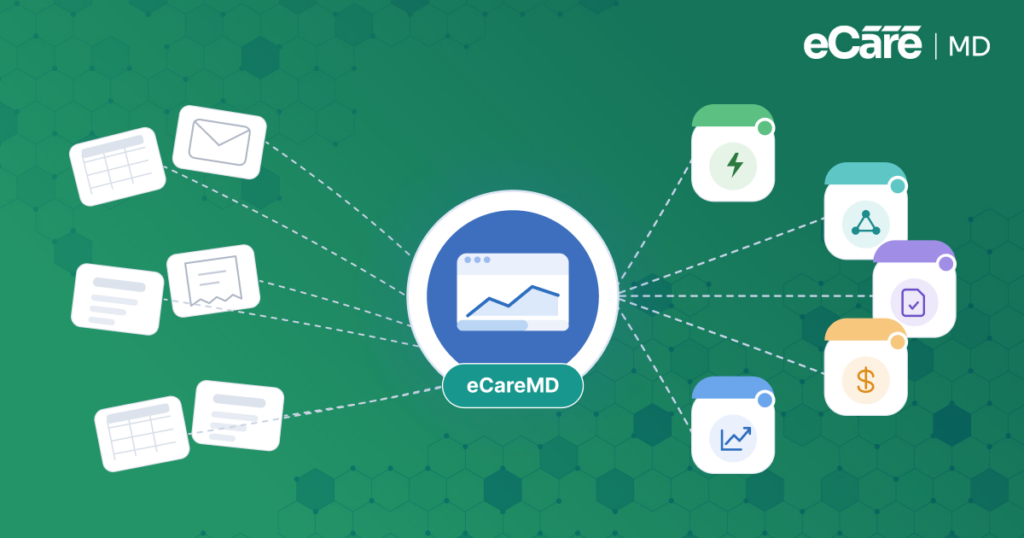
Technology can bring eligibility checks, consent, care planning, activity tracking, documentation, and team coordination into a more consistent workflow. This reduces dependence on spreadsheets and memory while giving care teams better visibility into the work completed for each CCM patient.

















![The Future of Remote Patient Monitoring: CMS Innovations & Emerging Trends [2026]](/wp-content/uploads/2024/07/Blog-36-The-Future-of-Remote-Patient-Monitoring_-Trends-AI-Innovation-CMS-Updates-for-2026-1024x538.png)